
Psychological health and wellbeing represents far more than the absence of mental illness. It encompasses the complete state of emotional, cognitive, and social functioning that enables individuals to realize their potential, cope with normal life stresses, work productively, and contribute meaningfully to their communities. For workplace leaders and HR professionals, understanding this distinction is fundamental to creating environments where employees thrive rather than merely survive. The World Health Organization defines mental health as a state of wellbeing enabling individuals to cope with life’s stresses, realize abilities, learn and work effectively, and contribute to their community. This holistic perspective shifts organizational focus from reactive crisis management to proactive cultivation of flourishing work environments.
Understanding the Core Components of Psychological Wellbeing
Psychological health and wellbeing operates across multiple interconnected dimensions that require integrated attention. Emotional wellbeing involves the capacity to recognize, express, and regulate feelings appropriately while maintaining positive affect. Psychological wellbeing includes autonomy, environmental mastery, personal growth, positive relationships, purpose in life, and self-acceptance as identified in Carol Ryff’s multidimensional model.
Social wellbeing encompasses the quality of relationships, sense of belonging, and perceived social support within workplace contexts. Research demonstrates that health psychology plays a crucial role in understanding how relationships, environments, and experiences shape overall wellbeing outcomes.
The cognitive dimension addresses mental clarity, decision-making capacity, and the ability to process information effectively under varying conditions. These components don’t function in isolation but interact dynamically, creating complex patterns that influence workplace performance and satisfaction.
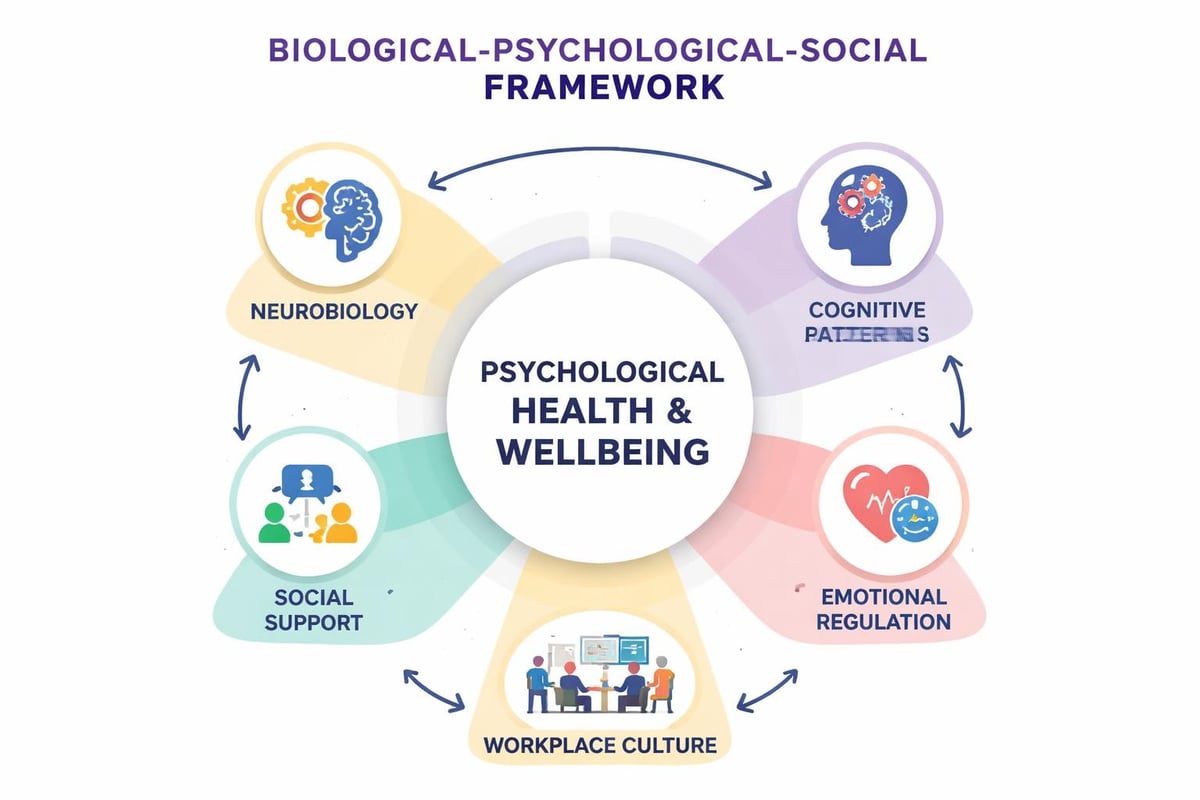
The Biological-Psychological-Social Framework
Modern understanding recognizes psychological health and wellbeing as emerging from biological, psychological, and social factors operating simultaneously. Neurobiological processes including neurotransmitter function, stress hormone regulation, and neural plasticity provide the physiological foundation. Psychological factors encompass cognitive patterns, coping strategies, emotional regulation skills, and belief systems. Social determinants include workplace culture, leadership quality, team dynamics, and organizational policies.
| Dimension | Key Indicators | Workplace Implications |
|---|---|---|
| Emotional | Affect balance, emotional regulation | Conflict resolution, team cohesion |
| Cognitive | Mental clarity, focus, decision quality | Productivity, error reduction |
| Social | Connection, trust, support | Collaboration, retention |
| Physical | Energy, sleep, stress response | Absenteeism, presenteeism |
This integrated perspective requires organizations to address multiple leverage points rather than implementing single-dimension interventions.
Psychological Health Versus Mental Illness: Critical Distinctions
The dual-continua model establishes that psychological health and wellbeing exists on a separate spectrum from mental illness. An employee can experience clinical depression while simultaneously possessing strong purpose, positive relationships, and personal growth capacity. Conversely, someone without diagnosable conditions may struggle with low life satisfaction, limited autonomy, or poor emotional regulation.
This framework carries profound implications for workplace interventions. Traditional employee assistance programs focused exclusively on treating pathology miss opportunities to enhance flourishing among the majority of workers. Comprehensive approaches address both prevention of illness and promotion of positive psychological functioning.
Measuring What Matters
Assessment frameworks for psychological health and wellbeing include validated instruments measuring multiple dimensions:
- PERMA model: Positive emotion, Engagement, Relationships, Meaning, Accomplishment
- Warwick-Edinburgh Mental Wellbeing Scale: Covering both hedonic and eudaimonic wellbeing
- WHO-5 Well-Being Index: Brief measure of subjective wellbeing
- Psychological Capital (PsyCap): Hope, efficacy, resilience, optimism
Organizations implementing workplace wellbeing assessments gain baseline data enabling targeted interventions and outcome tracking. These measurements should occur regularly, maintaining confidentiality while providing aggregate insights for strategic planning.
Evidence-Based Strategies for Organizational Implementation
Promoting psychological health and wellbeing requires systematic approaches grounded in research evidence rather than intuitive assumptions. The most effective interventions operate at individual, team, and organizational levels simultaneously.
Individual-Level Interventions
Skills-based training programs equip employees with practical capabilities for maintaining psychological health and wellbeing:
- Emotional regulation techniques including cognitive reappraisal, mindfulness practices, and values clarification exercises
- Stress management protocols incorporating physiological regulation, boundary setting, and workload prioritization
- Resilience development through growth mindset cultivation, social connection building, and meaning-making practices
- Social skills enhancement addressing communication, conflict resolution, and empathy development
Research indicates that trauma-informed care training significantly improves psychological safety perceptions and interpersonal effectiveness. These programs recognize that many workplace challenges stem from unrecognized trauma responses requiring specialized awareness.
Team-Level Dynamics
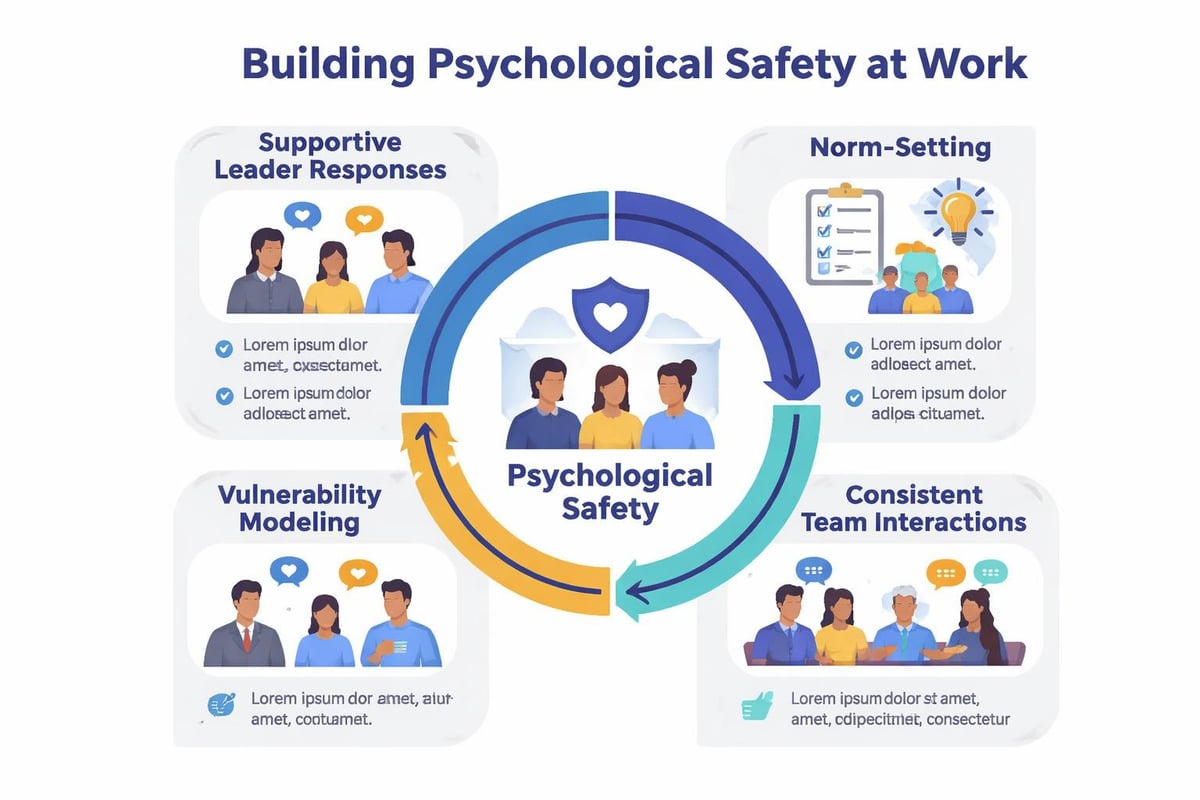
Psychological health and wellbeing flourishes in team environments characterized by specific conditions. Psychological safety enables members to take interpersonal risks, share concerns, and admit mistakes without fear of punishment or humiliation. Leaders cultivate this through consistent responses to vulnerability, explicit norm-setting, and modeling appropriate disclosure.
Collective efficacy represents shared belief in the team’s capacity to accomplish objectives. This develops through successful collaboration experiences, vicarious learning from peer teams, and supportive feedback systems.
| Team Factor | Impact on Wellbeing | Implementation Strategy |
|---|---|---|
| Psychological Safety | Reduces anxiety, increases engagement | Leader modeling, explicit norms |
| Role Clarity | Decreases stress, improves autonomy | Clear documentation, regular check-ins |
| Inclusive Practices | Enhances belonging, social wellbeing | Diverse participation, value differences |
| Recognition Systems | Boosts positive affect, meaning | Specific feedback, peer acknowledgment |
Organizational Culture and Systems Design
Sustainable psychological health and wellbeing requires embedding supportive practices into organizational DNA rather than treating them as peripheral programs. Culture transformation begins with leadership commitment demonstrated through resource allocation, policy development, and behavioral modeling.
Policy and Structural Considerations
Organizations serious about psychological health and wellbeing implement structural changes including:
- Flexible work arrangements supporting autonomy and work-life integration
- Reasonable workload management preventing chronic stress and burnout
- Clear career pathways enabling personal growth and development
- Fair compensation systems addressing security needs and perceived equity
- Inclusive decision-making processes enhancing autonomy and voice
Authoritative research in psychology emphasizes that isolated wellness initiatives fail without complementary systemic changes addressing fundamental working conditions.
Leadership Development for Wellbeing
Managers represent the primary determinant of employee psychological health and wellbeing, wielding greater influence than organizational programs or policies. Leadership competencies critical for wellbeing promotion include:
- Emotional intelligence enabling accurate perception and response to team member states
- Supportive communication patterns balancing performance expectations with genuine care
- Fair treatment practices ensuring procedural and distributive justice
- Developmental orientation prioritizing long-term growth over short-term outputs
- Boundary respect recognizing limits between professional and personal domains
Training programs for managers should emphasize practical skills application rather than theoretical knowledge alone. Australian organizations implementing comprehensive manager training report significant improvements in team psychological safety and engagement metrics.
Prevention, Early Intervention, and Support Systems
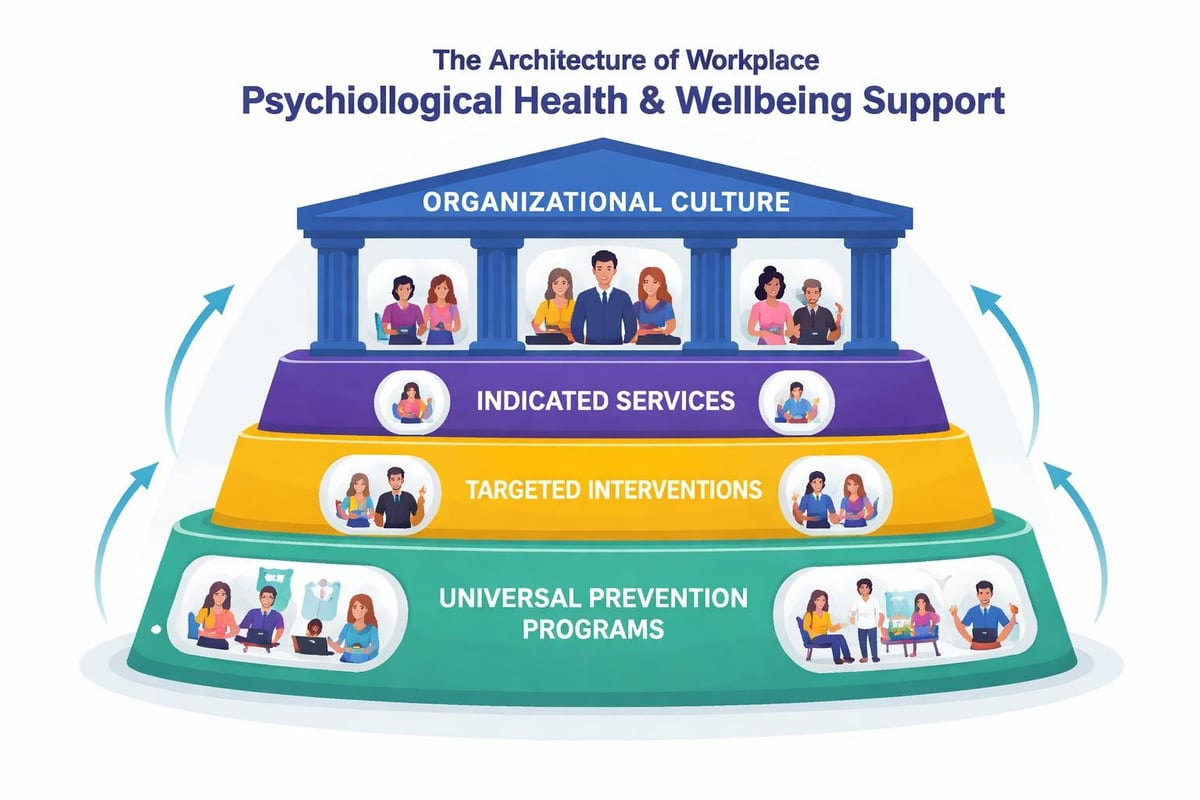
Comprehensive approaches to psychological health and wellbeing include primary prevention (reducing risk factors), secondary prevention (early detection and intervention), and tertiary prevention (supporting recovery and preventing deterioration).
Creating Psychologically Healthy Work Environments
Primary prevention strategies modify workplace conditions before problems emerge:
- Conducting regular psychosocial hazard assessments identifying stress sources
- Implementing job design principles ensuring adequate control, support, and reward
- Establishing clear role expectations preventing ambiguity and conflict
- Promoting work-life balance through realistic deadline setting and boundary respect
- Building inclusive cultures where diversity is genuinely valued
Secondary prevention focuses on early identification and response. Training managers to recognize early warning signs enables timely support before significant deterioration occurs. These indicators include performance changes, withdrawal from social interaction, increased irritability, concentration difficulties, and altered communication patterns.
Support System Architecture
Effective organizations construct multi-tiered support systems addressing varying needs:
| Support Level | Target Population | Examples |
|---|---|---|
| Universal | All employees | Wellness programs, skills training, culture initiatives |
| Targeted | At-risk groups | Stress management for high-demand roles, transition support |
| Indicated | Experiencing difficulties | EAP services, reasonable accommodations, return-to-work programs |
These systems function optimally when employees understand available resources, access remains confidential and convenient, and utilization carries no stigma or career consequences.
The Role of Individual Agency and Organizational Responsibility
Psychological health and wellbeing results from dynamic interaction between individual actions and organizational conditions. While employees bear responsibility for self-care practices, recovery activities, and help-seeking when needed, organizations must create conditions enabling these behaviors.
Individual Protective Factors
Research identifies personal characteristics associated with sustained psychological health and wellbeing:
- Purpose and meaning derived from work alignment with personal values
- Growth mindset viewing challenges as development opportunities
- Social connection through quality relationships inside and outside work
- Self-awareness enabling early recognition of declining wellbeing
- Adaptive coping strategies matched appropriately to stressor characteristics
Organizations support individual agency by providing skill-building opportunities, creating time and space for reflection, and modeling healthy behaviors through leadership examples.
Organizational Enablers
Even highly resilient individuals struggle when organizational conditions undermine basic psychological needs. Research grounded in self-determination theory demonstrates that psychological health and wellbeing requires satisfaction of autonomy, competence, and relatedness needs. Workplace practices either facilitate or frustrate these fundamental requirements.
Autonomy support includes meaningful input into decisions affecting one’s work, flexibility in approach methods, and respect for individual preferences. Competence support provides adequate resources, skill development opportunities, and constructive feedback. Relatedness support cultivates genuine connection, collaborative practices, and caring relationships.
Measuring Impact and Continuous Improvement
Organizations committed to psychological health and wellbeing implement robust measurement systems tracking both leading and lagging indicators. Leading indicators include participation rates in wellbeing programs, manager training completion, psychological safety scores, and workplace culture metrics. Lagging indicators encompass absenteeism rates, turnover statistics, workers’ compensation claims, and productivity measures.
Data-Driven Strategy Refinement
Effective measurement enables identification of what works, for whom, and under which conditions. Analysis should examine:
- Program utilization patterns revealing access barriers or design flaws
- Demographic variations indicating differential impact across employee groups
- Temporal trends showing sustainability of intervention effects
- Cost-benefit ratios justifying continued investment and resource allocation
- Qualitative feedback providing contextual understanding of quantitative patterns
Organizations should establish baseline measurements before intervention implementation, enabling accurate impact assessment. Regular reassessment identifies emerging needs and changing priorities requiring strategic adjustment.
Building Continuous Learning Cultures
Psychological health and wellbeing initiatives succeed when embedded within continuous improvement frameworks. This involves creating feedback loops enabling employees to share experiences, establishing cross-functional teams reviewing effectiveness data, and maintaining leadership commitment to evidence-based refinement.
The most sophisticated organizations treat wellbeing strategy as dynamic rather than static, adjusting approaches based on emerging research, workforce changes, and environmental shifts. Reference materials for mental health administrators provide evidence-based guidance supporting informed decision-making.
Integration with Broader Performance and Engagement Strategies
Psychological health and wellbeing represents neither separate from nor opposed to organizational performance. Research consistently demonstrates positive relationships between employee wellbeing and productivity, innovation, customer satisfaction, and financial outcomes. High-performing organizations recognize these as mutually reinforcing rather than competing priorities.
The Business Case Beyond Compliance
Strategic leaders understand psychological health and wellbeing initiatives as competitive advantages rather than mere compliance requirements. Benefits include:
- Enhanced productivity through improved focus, energy, and cognitive function
- Reduced costs from decreased absenteeism, turnover, and health insurance claims
- Improved innovation enabled by psychological safety supporting creative risk-taking
- Stronger employer brand attracting and retaining high-quality talent
- Better customer outcomes resulting from engaged, energized workforce
These advantages accrue most significantly when interventions address root causes rather than applying superficial solutions. Comprehensive strategies implemented with genuine commitment outperform token programs designed primarily for public relations purposes.
Psychological health and wellbeing in workplace contexts requires integrated approaches addressing individual capabilities, team dynamics, and organizational systems simultaneously. Evidence demonstrates that sustainable improvements emerge from leadership commitment, cultural transformation, and continuous refinement based on outcome data rather than isolated wellness programs. Workplace Mental Health Institute provides comprehensive training and strategic consultation enabling organizations to develop psychologically healthy environments where employees and businesses flourish together through practical, evidence-based approaches tailored to specific organizational contexts.

