
Up to 79% of employees report mental health challenges impacting their work, making this issue impossible to ignore. As we look toward 2026, the urgency to prioritize mental health at work has never been greater for organizations aiming to thrive.
This guide delivers actionable, forward-thinking strategies to support mental health at work. You will discover the latest workplace trends, new legal frameworks, proven organizational strategies, and empowering resources for employees.
Explore how technology is reshaping mental health at work and see future predictions that can help your organization take meaningful action now. Build a healthier, more productive workplace for all.
The State of Mental Health at Work in 2026
The landscape of mental health at work in 2026 is shaped by a mix of progress, persistent challenges, and new pressures. Recent data highlights a complex picture. According to Workplace Mental Health Statistics 2026, organizations that invest in mental health at work have seen up to 33% reduction in absenteeism and a notable increase in employee engagement. Despite these gains, up to 79% of employees still report that mental health challenges impact their job performance.
Over the last two years, global events have left a significant mark on mental health at work. The tail end of the pandemic, ongoing economic instability, and rapid technological shifts have all influenced how employees experience stress and wellbeing. As companies adapt to these changes, the need for robust mental health at work strategies has never been clearer.
Major stressors are evolving. Remote and hybrid work arrangements bring flexibility but also introduce new forms of social isolation and blurred boundaries between work and life. Burnout remains a top concern, especially in roles that demand constant connectivity. Job insecurity, driven by automation and restructuring, adds to the pressure. Employees are seeking greater psychological safety and support from their employers.
Generational differences are increasingly pronounced. Younger workers, particularly Gen Z, expect open conversations about mental health at work, access to digital support tools, and flexibility in how, when, and where they work. Older generations may prioritize traditional benefits, but all age groups value a stigma-free environment.
The cost of poor mental health at work is substantial. Organizations face higher rates of absenteeism, presenteeism, and turnover, which translate to billions in lost productivity each year. A recent WHO report estimates that depression and anxiety alone cost the global economy over one trillion dollars annually in lost productivity. The Department of Labor (DOL) echoes these findings, emphasizing the importance of prevention and early intervention in the workplace.
Industries are not affected equally. Healthcare professionals continue to report high levels of burnout and secondary trauma. In education, teachers face mounting stress from ongoing change and increased workloads. The tech sector, while often innovative in its approach to mental health at work, still struggles with issues like overwork and a lack of boundaries.
Demand for comprehensive mental health at work support is on the rise. Employees want more than basic Employee Assistance Programs—they seek proactive mental health at work initiatives, manager training, and access to both digital and in-person support. Organizations that prioritize these needs are seeing measurable improvements in retention, satisfaction, and overall performance.
As 2026 unfolds, the evidence is clear: prioritizing mental health at work is not only a moral imperative but a business necessity. Companies that stay ahead of the curve and invest in holistic, data-driven support systems will be best positioned to thrive in this evolving landscape.
Legal Frameworks and Employee Rights
Legal protections for mental health at work have never been more critical. As organizations and employees navigate complex workplace landscapes, understanding the evolving legal frameworks is essential for building safe, inclusive environments. These laws not only safeguard individual rights but also establish clear standards for employer responsibilities.
A range of key laws shape mental health at work in the United States and globally. The Americans with Disabilities Act (ADA) requires employers to provide reasonable accommodations and prohibits discrimination based on mental health conditions. The Family and Medical Leave Act (FMLA) ensures eligible employees can take unpaid leave for serious health issues, including mental health. The Mental Health Parity and Addiction Equity Act (MHPAEA) mandates that mental health benefits must be provided on par with physical health benefits.
| Law/Regulation | Coverage Area | Key Provisions | Year Enacted/Updated |
|---|---|---|---|
| ADA | Disability rights | Anti-discrimination, accommodations | 1990 (amended 2008) |
| FMLA | Medical leave | Unpaid leave for medical/mental health | 1993 |
| MHPAEA | Insurance parity | Equal coverage for mental/physical health | 2008 |
| Psychosocial Safety | Workplace environment | Risk assessment, prevention, compliance | 2025-2026 (emerging) |
Employers must meet several obligations to support mental health at work. These include providing non-discriminatory environments, offering reasonable accommodations, and maintaining strict confidentiality regarding employee health information. Failure to comply with these requirements can result in legal action, fines, and reputational harm.
Looking ahead to 2026, new regulations are emerging to address psychosocial risks. Jurisdictions are introducing psychosocial safety standards, requiring proactive risk assessments and mental health strategies. For organizations seeking practical guidance, Managing psychosocial safety training offers insights into compliance and best practices for supporting mental health at work.
Recent legal cases have highlighted the consequences of neglecting mental health obligations. For example, enforcement actions under the ADA have resulted in significant penalties for employers failing to accommodate anxiety disorders or depression. These cases underscore the financial and ethical risks of non-compliance.
Compliance not only protects organizations from legal repercussions but also builds trust with employees. Demonstrating a commitment to mental health at work can enhance reputation, boost morale, and improve retention. The World Health Organization (WHO) and Occupational Safety and Health Administration (OSHA) both emphasize the importance of psychosocial safety in their guidelines, reinforcing the global shift toward comprehensive mental health protections.
Employees have the right to access mental health benefits, request accommodations, and expect fair treatment. Resources such as government portals, advocacy organizations, and legal aid services can help individuals understand and assert their rights. Staying informed about evolving laws and protections is essential for everyone invested in mental health at work.

Organizational Strategies for a Mentally Healthy Workplace
Creating a sustainable approach to mental health at work requires intentional strategies at every level. Organizations in 2026 are expected to lead with evidence-based practices that foster wellbeing, productivity, and resilience. Let us explore four pillars that drive real impact.
Building a Supportive Culture
A mentally healthy workplace culture in 2026 is defined by openness, trust, and proactive care. Leadership sets the tone by prioritizing mental health at work, modeling vulnerability, and supporting balance. When leaders openly discuss their own wellbeing, it gives permission for others to follow.
Open communication is vital for reducing stigma. Regular mental health wellbeing conversations build trust and encourage early intervention. Successful organizations invest in stigma reduction campaigns, such as peer storytelling sessions and mental health awareness days. These initiatives help employees feel seen and supported.
Data shows that companies with supportive cultures experience higher engagement and lower turnover. In fact, employees who feel their mental health at work is valued are more likely to stay and perform at their best. Regular check-ins, confidential feedback loops, and visible leadership commitment are essential.
Diversity, equity, and inclusion are also crucial. Culturally responsive programs ensure that all voices are heard and needs are met. By embedding mental health at work into the organizational fabric, companies create environments where people can thrive.
Implementing Comprehensive Training and Education
Ongoing mental health training for managers and staff is a non-negotiable in 2026. These programs equip teams to recognize signs of distress and respond with empathy. Trauma-informed care and resilience-building workshops are especially effective, supporting recovery and adaptability.
Effective training modules often include real-life scenarios, role-playing, and action planning. Integrating mental health at work topics into onboarding and leadership development ensures that support is continuous, not a one-off event. Organizations with robust training have reported up to a 50 percent decrease in psychological injury claims.
Culturally responsive and accessible formats, such as multilingual e-learning or interactive webinars, make training inclusive. Internal champions and peer support networks amplify impact, fostering a sense of shared responsibility for mental health at work.
Training should be evaluated regularly for effectiveness. Collecting feedback and tracking participation rates help refine offerings, ensuring ongoing relevance.
Partnering with Experts: The Role of External Providers
External providers, especially those led by psychologists, bring specialized expertise to mental health at work. These experts conduct thorough wellbeing assessments, identifying both strengths and gaps. They then co-create strategies tailored to organizational needs.
Expert-led interventions can lead to measurable improvements, such as reduced absenteeism and increased productivity. Independent evaluation and benchmarking ensure that programs meet industry standards and deliver results.
Industry-specific solutions address unique challenges, whether in healthcare, education, or technology. Global reach capabilities mean that even multinational organizations can benefit from cohesive, scalable approaches to mental health at work.
Ongoing consultancy is vital. As workplace dynamics evolve, so too must support strategies. Providers work in partnership with organizations to adapt, review, and continuously improve mental health at work initiatives.
Workplace Mental Health Institute: Expert-Led Solutions for Organizations
The Workplace Mental Health Institute stands out as a global leader in mental health at work training and consultancy. Their psychologist-designed programs empower both leaders and employees with practical skills in resilience, trauma-informed care, and holistic wellbeing strategy.
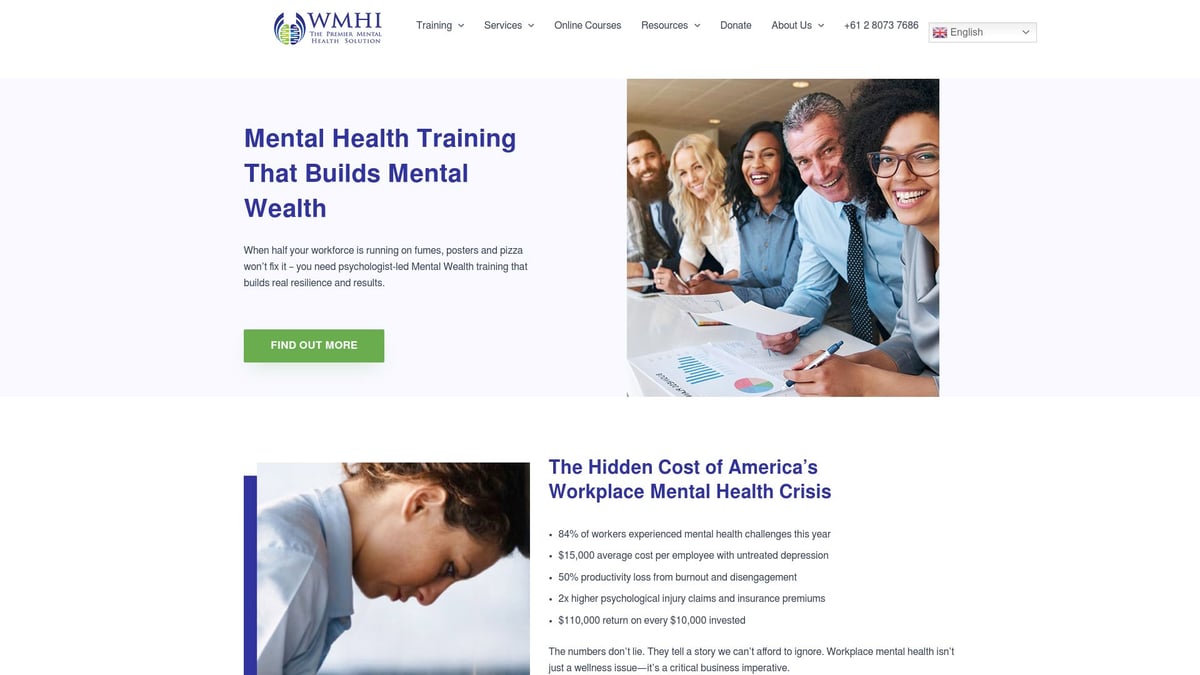
Proven outcomes include up to a 33 percent reduction in absenteeism and a 79 percent drop in depression rates, with consistently high participant satisfaction. Delivery is flexible, offering in-person, virtual, and on-demand options, and can be tailored to specific industries.
Organizations seeking to build mentally healthy, high-performing teams are invited to explore WMHI’s tailored solutions. Investing in these strategies ensures that mental health at work becomes a core driver of success and sustainability.
Empowering Employees: Tools, Resources, and Self-Advocacy
Taking charge of mental health at work is essential for both personal wellbeing and professional performance. Employees today have access to more resources, support options, and tools than ever before. By understanding how to navigate these offerings and advocate for their needs, individuals can foster resilience and thrive in demanding environments.
Accessing Mental Health Benefits and Support
Understanding the full range of mental health at work benefits is the first step toward effective self-care. Employees should review their health insurance policies to identify coverage for counseling, therapy, and psychiatric services. Many organizations offer Employee Assistance Programs (EAPs) that provide confidential counseling, referrals, and guidance for personal or work-related challenges.
It is vital to utilize external resources as well. The SAMHSA support portal and the 988 crisis line offer immediate help in times of distress. Employees should also explore local community services, peer helplines, and online directories for culturally appropriate and multilingual support. Knowing how to file claims and appeal denials ensures access to entitled services and supports ongoing mental health at work.
Regularly checking available resources and asking HR about new offerings can reveal additional support options. Taking these proactive steps empowers employees to optimize their mental health at work benefits.
Promoting Self-Advocacy and Peer Support
Effective self-advocacy is a cornerstone of mental health at work. Employees are encouraged to communicate openly with supervisors about their needs and to request reasonable accommodations, such as flexible scheduling or quiet workspaces. Legal protections exist for those disclosing mental health conditions, ensuring privacy and non-discrimination.
Peer support networks play a significant role in reducing isolation and building community. Joining or forming internal support groups allows employees to share experiences and strategies, fostering a culture of openness. For example, employee-led initiatives like mental health ambassadors or wellness committees can drive positive change throughout the organization.
According to the NAMI/Ipsos Workplace Mental Health Poll 2025, employees who participate in peer networks and advocacy efforts report higher satisfaction with mental health at work resources. Practical self-care strategies, such as setting boundaries, regular exercise, and mindfulness practices, further support ongoing wellbeing. Encouraging open dialogue and supporting one another helps reduce stigma and promotes a healthier workplace for all.
Tools for Everyday Wellbeing
Incorporating practical tools into daily routines can make a significant difference in mental health at work. Mindfulness apps, such as guided meditation or stress tracking tools, offer immediate relief from daily pressures. Digital wellbeing trackers can help monitor mood and identify stress patterns over time.
Employees can access downloadable guides and resources, including Mental Health Awareness Posters, to enhance awareness and foster supportive conversations. Regular wellbeing check-ins, whether self-directed or with a manager, provide opportunities to reflect and adjust coping strategies.
Making use of these accessible tools empowers individuals to manage stress, build resilience, and maintain a positive outlook. Prioritizing these habits contributes to a sustainable approach to mental health at work.
Leveraging Technology and Innovation for Mental Health
Technology has become a powerful ally in supporting mental health at work. Digital transformation is reshaping how organizations deliver care, monitor wellbeing, and empower employees. As we look toward 2026, embracing innovation is essential for building resilient, healthy workplaces.
Digital Solutions and Platforms
The landscape of mental health at work is rapidly evolving, with digital platforms leading the way. Employees now access teletherapy, self-guided apps, and online support communities from anywhere, removing barriers to care.
Teletherapy connects employees with licensed professionals through secure video calls, making mental health at work support more accessible and discreet. Mobile apps offer mindfulness exercises, daily check-ins, and mood tracking, helping users manage stress in real time.
Organizations also deploy digital platforms for early intervention. These systems identify patterns of absenteeism or low engagement, enabling timely outreach. As digital adoption grows, more employees receive support tailored to their unique needs.
AI, Analytics, and Wearables
Artificial intelligence is transforming mental health at work by enabling real-time support and personalized recommendations. AI-powered chatbots answer questions, guide users to resources, and provide crisis intervention 24/7.
Wearable devices, such as smartwatches and fitness trackers, monitor physiological indicators like heart rate and sleep. These tools offer insights into stress levels and overall wellbeing, allowing for proactive support.
Integrating mental health data into HR analytics helps organizations identify trends and allocate resources more effectively. Leaders can spot early warning signs of burnout or disengagement, responding before issues escalate.
Privacy, Ethics, and Future Trends
As technology advances, privacy and ethics are critical. Protecting sensitive employee data is essential for maintaining trust in mental health at work initiatives. Employers must comply with data protection laws and communicate transparently about information use.
Ethical considerations include informed consent, equitable access, and avoiding bias in AI algorithms. Looking ahead, we expect greater collaboration between mental health professionals and tech developers to ensure solutions remain evidence-based and ethical.
Future innovations may include virtual reality therapy, predictive analytics for stress management, and more advanced wearable sensors. By 2026, technology will continue to enhance mental health at work through improved accessibility and personalization.
Online Training and Continuous Support
Continuous learning is vital for a mentally healthy workplace. Online mental health courses and virtual resilience programs allow employees and leaders to build skills on their own schedule.
Interactive modules cover topics like stress management, trauma-informed care, and peer support. Organizations increasingly use digital platforms to deliver ongoing education, making knowledge accessible across locations and time zones.
To explore comprehensive training options, visit Workplace mental health courses and training, where programs are designed to address the unique challenges of mental health at work.
Addressing Special Populations and Emerging Challenges
Supporting special populations is critical to advancing mental health at work. Diverse groups face unique challenges, requiring tailored solutions. By understanding these needs, organizations can create inclusive environments where every employee thrives.
Supporting Young Workers and New Generations
Gen Z and younger millennials are reshaping mental health at work. They value open conversations about wellbeing and expect employers to prioritize psychological safety. Many young professionals seek purpose-driven roles, flexible schedules, and clear support systems.
Mentorship programs help bridge generational gaps and provide essential guidance. Access to mental health at work resources, such as Employee Assistance Programs and peer networks, empowers young workers to manage stress. The U.S. Department of Labor offers valuable youth-focused materials that help organizations address emerging needs.
Youth-led advocacy is also on the rise. Many companies now support mental health at work by encouraging employee resource groups and hosting awareness events. These initiatives foster belonging and build resilience among early-career staff.
Managing Workplace Stress, Burnout, and Trauma
Workplace stress and burnout remain among the most significant threats to mental health at work. High-risk sectors like healthcare, emergency services, and education face amplified pressures. Employees in these fields often experience secondary trauma and vicarious stress, impacting their wellbeing and performance.
Organizations are adopting trauma-informed care and resilience training to mitigate these risks. Leaders are encouraged to promote manageable workloads, set clear boundaries, and support regular recovery breaks. According to recent data, companies with robust mental health at work initiatives report notable decreases in burnout rates.
- Offer flexible scheduling to prevent overload
- Implement regular debrief sessions for high-stress teams
- Provide confidential counseling and peer support
For practical solutions, many employers turn to resources on preventing and managing burnout to create sustainable strategies. Addressing burnout is not just about reducing stress but building a culture where mental health at work is a shared priority.
Suicide Prevention and Crisis Response
Suicide prevention is a vital aspect of mental health at work. Employers must be proactive in recognizing warning signs and providing immediate support. Training staff to use resources like the 988 Suicide & Crisis Lifeline and implementing clear intervention protocols can save lives.
Organizations are increasingly investing in crisis response programs and ongoing education for at-risk teams. Employer responsibilities extend to maintaining safe environments and fostering open communication about mental health at work. Guidance from OSHA on Supporting Workers’ Mental Wellbeing helps organizations establish effective support systems.
Successful companies regularly review their crisis response plans, ensure access to professional help, and encourage employees to seek assistance without fear of stigma.
The Future of Mental Health at Work: Trends and Predictions for 2026
The landscape of mental health at work is rapidly evolving as we approach 2026. Organizations worldwide face new challenges and opportunities, with technology, workforce expectations, and global events reshaping the way mental health at work is prioritized. In this section, we will explore the central trends and future predictions that will define the next era of workplace wellbeing.
Global Trends Shaping Mental Health at Work
Hybrid work models continue to dominate, with more than 60% of companies adopting flexible arrangements. This shift has amplified the need for robust mental health at work programs, as employees navigate blurred boundaries between home and office. Artificial intelligence is playing a larger role in wellbeing, from AI-powered chatbots offering real-time support to predictive analytics identifying early signs of distress.
A growing emphasis on generational diversity is also influencing mental health at work. Gen Z and millennials expect transparent communication, purpose-driven work, and accessible mental health resources. Older workers may prioritize stability and traditional support systems. Organizations must balance these perspectives to create inclusive, adaptive strategies.
Evolving Legal and Ethical Standards
Legal frameworks are expanding to address psychosocial safety and mental health at work. By 2026, many countries are expected to introduce or strengthen regulations that require organizations to assess and mitigate psychological risks. Ethical considerations, such as data privacy with digital mental health tools, are at the forefront. Employers must ensure confidential handling of sensitive information and transparent communication about data use.
Leadership and Organizational Strategy
Leaders are increasingly recognized as pivotal to the success of mental health at work initiatives. Forward-thinking organizations invest in leadership development that emphasizes empathy, psychological safety, and proactive engagement. Mental health at work is becoming a core component of business strategy, reflected in ESG (Environmental, Social, and Governance) reporting and organizational KPIs.
A table summarizing key trends:
| Trend | Impact on Mental Health at Work | Action for Organizations |
|---|---|---|
| Hybrid Work | Increased need for flexible support | Update policies and benefits |
| AI and Digital Tools | Early detection and support | Invest in tech, train staff |
| Generational Shifts | Diverse expectations, new priorities | Tailor programs by cohort |
| Legal/Ethical Standards | Greater compliance and transparency | Regular audits, policy review |
| ESG Integration | Mental health as part of business value | Report outcomes, set targets |
Emerging Best Practices and International Insights
Leading organizations are piloting innovative approaches, such as dynamic wellbeing assessments, digital resilience training, and global peer support networks. According to SHRM 2025 Insights: Workplace Mental Health, employers that embed mental health at work into strategic planning see measurable gains in engagement, retention, and overall performance. International bodies like the WHO provide guidance on psychosocial risk management, emphasizing continuous improvement and cultural responsiveness.
Proactive Steps for Future-Proofing
To prepare for the future, organizations should:
- Regularly assess mental health at work risks and opportunities.
- Engage leadership at all levels in wellbeing initiatives.
- Leverage technology responsibly, prioritizing privacy and accessibility.
- Integrate mental health at work metrics into business reviews and ESG reports.
- Foster a culture of openness, flexibility, and continuous learning.
In summary, the future of mental health at work will be shaped by innovation, regulation, and a deepening understanding of employee needs. By taking proactive steps today, organizations can build resilient, high-performing teams and demonstrate a lasting commitment to workplace wellbeing.
As we look ahead to 2026, it’s clear that prioritizing mental health at work isn’t just beneficial—it’s essential for thriving organizations and resilient teams. Throughout this guide, we’ve explored actionable strategies, practical tools, and the critical role that expert-led training plays in creating supportive, high-performing workplaces. If you’re ready to take the next step and see how tailored programs and evidence-based solutions can make a real difference for your team, I encourage you to Find Out More. Together, we can build a healthier, more empowered workplace for everyone.

