
Workplace anxiety has emerged as one of the most significant challenges facing modern organizations, affecting productivity, employee retention, and overall workplace culture. With approximately 40% of workers reporting increased stress levels in 2026, managing workplace anxiety has become a critical competency for leaders, managers, and HR professionals. This comprehensive guide explores evidence-based strategies that create supportive work environments while equipping individuals with practical tools to navigate anxiety effectively.
Understanding the Nature of Workplace Anxiety
Workplace anxiety manifests differently across individuals and organizational contexts. Unlike general stress, anxiety involves persistent worry, physical symptoms, and cognitive disruption that interferes with job performance and professional relationships.
Distinguishing Normal Stress from Clinical Anxiety
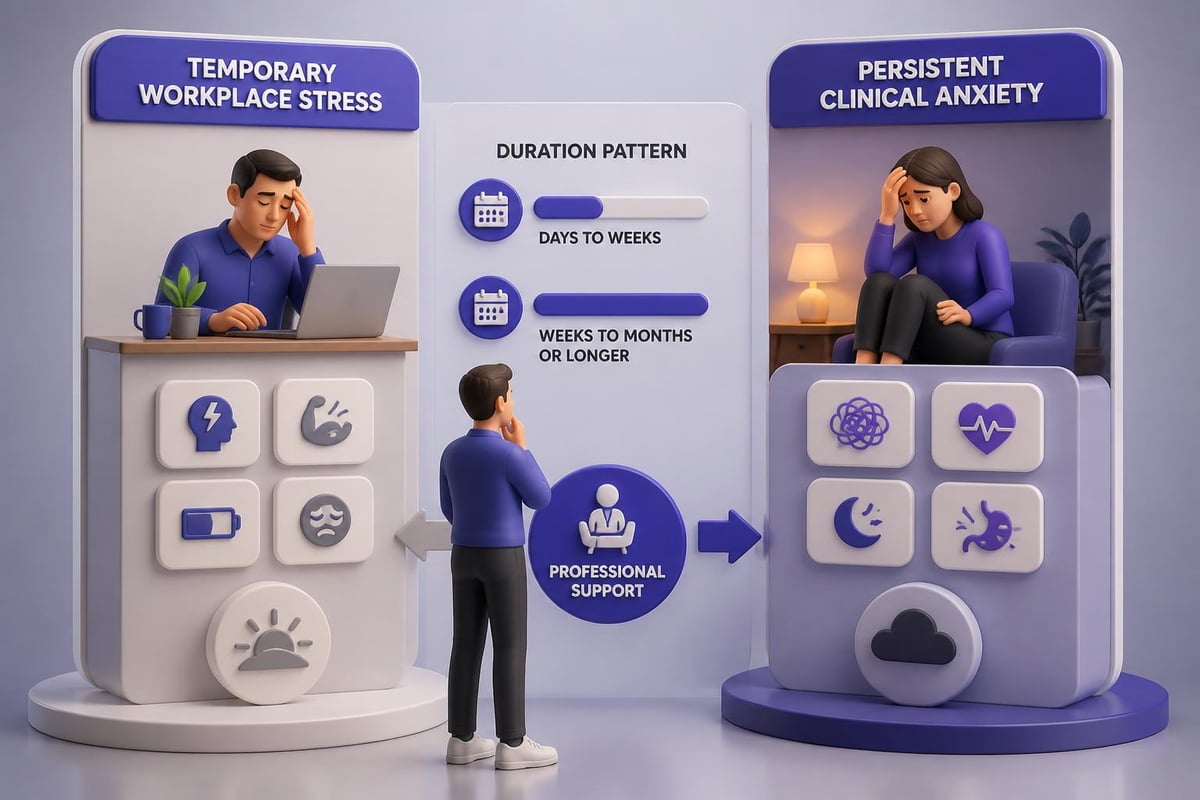
Normal workplace stress typically arises from specific situations like deadlines, presentations, or performance reviews. This stress subsides once the triggering event passes. Clinical anxiety, however, persists regardless of immediate circumstances and may require professional intervention.
Key indicators of workplace anxiety include:
- Persistent worry about job security or performance
- Physical symptoms such as tension headaches, digestive issues, or rapid heartbeat
- Difficulty concentrating or making decisions
- Avoidance of specific tasks, colleagues, or situations
- Sleep disturbances related to work concerns
- Irritability or emotional reactivity in professional settings
Research on mind and body approaches for stress management demonstrates that understanding these distinctions enables more targeted interventions. Organizations that differentiate between temporary stress and persistent anxiety can allocate resources more effectively.
Environmental and Individual Contributors
Managing workplace anxiety requires acknowledging both organizational factors and individual susceptibility. Environmental contributors include unclear expectations, inadequate resources, toxic workplace cultures, and job insecurity. Individual factors encompass personality traits, prior trauma, cognitive patterns, and personal circumstances outside work.
| Environmental Factors | Individual Factors | Interactive Elements |
|---|---|---|
| Role ambiguity | Perfectionist tendencies | Mismatch between values and culture |
| Excessive workload | Previous anxiety history | Lack of control over work processes |
| Poor leadership | Cognitive distortion patterns | Insufficient recovery time |
| Limited autonomy | Personal life stressors | Inadequate skill-task alignment |
This interaction explains why identical workplace conditions affect employees differently. Effective interventions address both dimensions simultaneously.
Building Individual Resilience Through Practical Techniques
Individual-level strategies form the foundation of managing workplace anxiety. These evidence-based techniques empower employees to regulate their responses and maintain psychological wellbeing.
Cognitive Restructuring for Anxious Thought Patterns
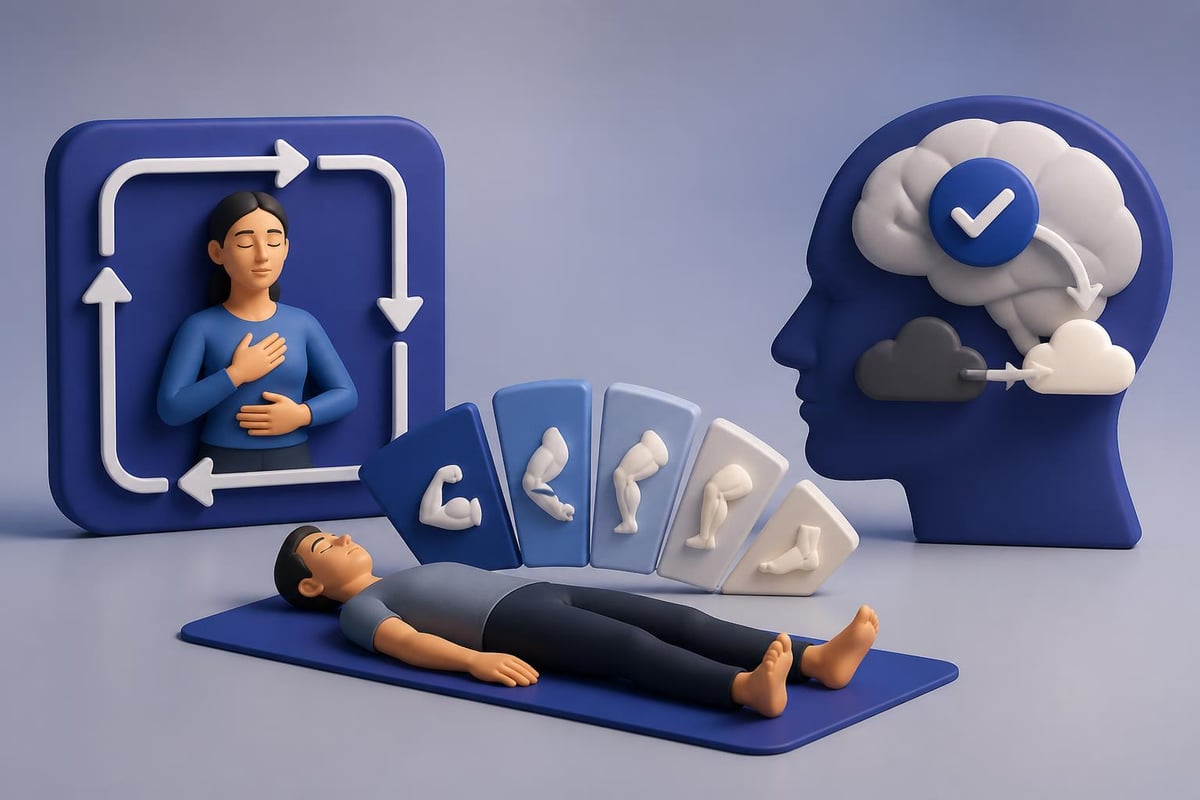
Cognitive restructuring involves identifying and challenging distorted thinking patterns that fuel anxiety. Common workplace cognitive distortions include catastrophizing ("If I make one mistake, I'll be fired"), all-or-nothing thinking ("This presentation must be perfect"), and mind-reading ("My manager thinks I'm incompetent").
The restructuring process follows these steps:
- Identify the anxious thought when physical anxiety symptoms arise
- Examine the evidence supporting and contradicting the thought
- Generate alternative interpretations based on factual information
- Test the revised thought against reality and behavioral outcomes
- Reinforce balanced thinking through consistent practice
This approach aligns with guidance on managing anxiety at work through cognitive techniques, which emphasizes breaking overwhelming situations into manageable components.
Physiological Regulation and Somatic Techniques
Physical anxiety symptoms often precede conscious awareness of worry. Mastering physiological regulation provides immediate relief and prevents anxiety escalation.
Breathing techniques offer portable anxiety management tools. Box breathing (inhaling for four counts, holding for four, exhaling for four, holding for four) activates the parasympathetic nervous system within minutes. Diaphragmatic breathing reduces cortisol levels and improves focus during high-pressure situations.
Progressive muscle relaxation systematically releases tension held in the body. Starting with the feet and moving upward, individuals tense muscle groups for five seconds before releasing, creating awareness of the distinction between tension and relaxation.
Grounding exercises anchor attention in the present moment, interrupting rumination about future threats. The 5-4-3-2-1 technique (identifying five things you see, four you feel, three you hear, two you smell, one you taste) redirects attention from internal worry to external reality.
Organizations supporting employees in managing workplace anxiety often integrate brief physiological regulation practices into meeting structures or provide dedicated spaces for these techniques.
Manager and Leadership Responsibilities
Managers play a pivotal role in either exacerbating or alleviating workplace anxiety. Leadership approaches directly influence team psychological safety and anxiety levels.
Creating Psychologically Safe Environments
Psychological safety allows employees to take interpersonal risks without fear of punishment or humiliation. Teams with high psychological safety report lower anxiety and greater innovation.
Managers build psychological safety through:
- Modeling vulnerability by acknowledging mistakes and uncertainties
- Responding constructively to questions, concerns, and errors
- Soliciting input before making decisions that affect team members
- Normalizing struggle as part of professional growth
- Maintaining consistency between stated values and actual behavior
When employees observe leaders managing their own stress transparently, anxiety about appearing "weak" diminishes. This cultural shift is fundamental to managing workplace anxiety at the organizational level.
Communication Practices That Reduce Uncertainty
Ambiguity amplifies anxiety. Clear, consistent communication addresses this core anxiety driver.
Effective managers provide:
- Explicit expectations regarding responsibilities, deadlines, and quality standards
- Regular feedback delivered constructively and frequently, not just during formal reviews
- Context for decisions explaining the reasoning behind organizational changes
- Advance notice of transitions, restructures, or policy modifications
- Defined escalation paths for concerns, conflicts, or resource needs
According to comprehensive workplace anxiety management strategies, predictability and control significantly reduce anxiety symptoms. Organizations can enhance these communication practices through manager training programs that develop these specific competencies.
Organizational Policies and Systemic Interventions
Individual and managerial efforts prove insufficient without supportive organizational infrastructure. Systemic interventions create environments where managing workplace anxiety becomes sustainable rather than heroic.
Workload Management and Resource Allocation
Chronic overwork represents one of the most significant anxiety drivers in modern workplaces. Organizations committed to employee mental health conduct regular workload audits and adjust expectations accordingly.
Effective workload management includes:
- Realistic project timelines developed collaboratively
- Protection of non-working hours through communication norms
- Regular capacity assessments identifying overburdened teams
- Transparent prioritization when demands exceed resources
- Strategic "no" decisions that prevent overwhelming commitments
Research suggests that individualized approaches to workplace stress acknowledge varying capacity and stress responses. Flexible policies accommodate these differences without penalizing those who require adjustments.
Mental Health Support Infrastructure
Robust support infrastructure demonstrates organizational commitment to employee wellbeing beyond superficial initiatives.
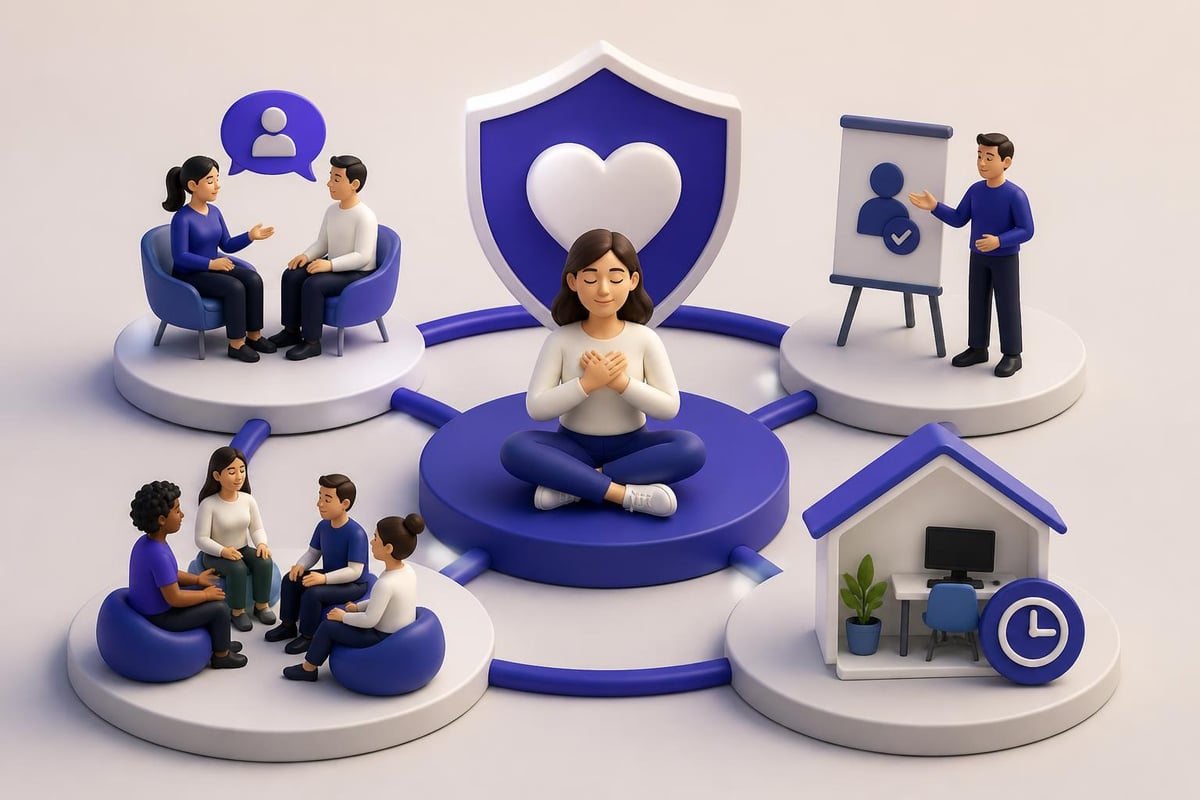
| Support Element | Implementation Approach | Impact on Anxiety |
|---|---|---|
| Employee Assistance Programs | Confidential counseling access with adequate session limits | Provides professional intervention pathway |
| Mental health training | Manager and employee education on recognition and response | Reduces stigma and improves early intervention |
| Workplace wellbeing assessments | Regular climate surveys identifying anxiety hotspots | Enables targeted organizational interventions |
| Flexible work arrangements | Options for remote work, adjusted schedules, or job modifications | Increases sense of control and accommodation |
| Peer support networks | Facilitated employee resource groups focused on mental health | Builds community and normalizes experiences |
Organizations can enhance visibility of mental health resources through mental health awareness posters and regular communication campaigns that destigmatize help-seeking.
Trauma-Informed Approaches to Workplace Anxiety
Traditional anxiety management sometimes overlooks the role of trauma in workplace distress. Trauma-informed approaches recognize that many employees carry experiences that shape their anxiety responses.
Understanding Trauma Responses in Professional Settings
Workplace situations may trigger trauma responses unrelated to current circumstances. A harsh email might activate past experiences of verbal abuse. Performance reviews could trigger fear responses disproportionate to actual stakes. Organizational restructuring may evoke abandonment anxiety rooted in childhood experiences.
Trauma-informed workplaces operate from these principles:
- Safety: Physical and psychological safety as foundational priorities
- Trustworthiness: Transparent operations and consistent follow-through
- Peer support: Mutual assistance and collective care
- Collaboration: Shared decision-making and power distribution
- Empowerment: Skill-building and strength recognition
These principles apply universally while particularly supporting employees managing workplace anxiety connected to traumatic experiences.
Implementing Trauma-Sensitive Practices
Managers need not become therapists to apply trauma-informed practices. Simple adjustments create substantially safer environments:
- Provide agenda and context before difficult conversations
- Offer choice regarding meeting formats (video, phone, in-person)
- Recognize that behavioral changes may signal distress requiring support
- Avoid surprise announcements of consequential decisions
- Create predictable routines and clearly communicated exceptions
Resources on workplace anxiety causes and treatments emphasize the importance of environmental predictability in anxiety reduction.
Performance Management Without Amplifying Anxiety
Performance management systems often inadvertently increase workplace anxiety. Redesigning these systems maintains accountability while supporting mental health.
Continuous Feedback Versus Annual Reviews
Annual performance reviews concentrate anxiety into specific periods, creating anticipatory distress and limiting opportunities for course correction. Continuous feedback distributes evaluation across time, reducing intensity while improving development.
Continuous feedback systems incorporate:
- Weekly or biweekly check-ins focused on progress and obstacles
- Real-time recognition of achievements and contributions
- Immediate, specific feedback on areas for development
- Collaborative goal adjustment based on changing priorities
- Documentation that builds cumulatively rather than retrospectively
This approach transforms performance management from anxiety-provoking judgment to ongoing partnership in managing workplace anxiety and professional growth simultaneously.
Separating Development from Evaluation
When growth conversations occur in evaluative contexts, employees understandably minimize vulnerability. Separating developmental discussions from evaluative decisions creates space for honest dialogue about challenges, including anxiety.
Development conversations focus exclusively on skill-building, learning opportunities, and support needs without immediate consequences for compensation or advancement. Evaluation conversations occur less frequently and draw upon documented performance data rather than subjective impressions from a single discussion.
This separation allows employees to disclose anxiety challenges affecting performance without fear that acknowledgment will trigger punitive responses. Insights from work anxiety management approaches suggest this transparency enables earlier intervention and prevents performance deterioration.
Building Personal Boundaries and Work-Life Integration
Managing workplace anxiety extends beyond work hours. The relationship between professional and personal life significantly influences anxiety levels.
Establishing Sustainable Work Boundaries
Boundaries define where work ends and personal life begins. Without clear boundaries, work expands indefinitely, creating chronic activation that fuels anxiety.
Effective boundaries include:
- Defined work hours communicated to colleagues and managers
- Physical separation of work and personal spaces when possible
- Technology boundaries limiting after-hours email and messaging
- Protected personal time for relationships, hobbies, and rest
- Permission to disengage from work thoughts during non-work hours
Organizations support boundary-setting through policies that discourage after-hours communication, model boundary respect at leadership levels, and evaluate managers based on team wellbeing metrics alongside productivity measures.
Recovery and Restoration Practices
Recovery involves activities that restore psychological and physical resources depleted by work demands. Inadequate recovery perpetuates anxiety regardless of workplace interventions.
Research-supported recovery activities include:
- Physical movement that redirects attention from cognitive rumination
- Creative engagement in activities unrelated to professional competencies
- Social connection with supportive relationships outside work contexts
- Nature exposure which demonstrably reduces cortisol and anxiety
- Deliberate rest including adequate sleep and unstructured downtime
Managers supporting employees in managing workplace anxiety recognize that recovery directly impacts work performance and actively encourage these practices rather than implicitly penalizing their pursuit.
Addressing Stigma and Creating Help-Seeking Cultures
Stigma surrounding mental health remains a substantial barrier to managing workplace anxiety effectively. Cultural transformation requires deliberate, sustained effort.
Leadership Disclosure and Vulnerability
When leaders share their own experiences with anxiety, permission cascades throughout organizations. This disclosure need not involve extensive personal details but acknowledges struggle authentically.
Effective leadership disclosure includes:
- Naming anxiety or stress without dramatization or minimization
- Describing specific strategies used for management
- Acknowledging ongoing nature of mental health maintenance
- Connecting vulnerability to leadership effectiveness
- Directing employees to available resources and support
This modeling demonstrates that anxiety neither disqualifies individuals from leadership nor represents personal failure. Additional guidance on managing workplace anxiety strategies emphasizes the power of normalized conversations.
Training Programs for Recognition and Response
Comprehensive training equips employees and managers to recognize anxiety signs and respond supportively. These programs cover:
- Common anxiety manifestations in workplace contexts
- Conversational approaches for expressing concern
- Boundaries between managerial support and clinical treatment
- Available organizational resources and referral processes
- Legal considerations regarding mental health accommodations
- Self-care strategies for those supporting anxious colleagues
Organizations investing in mental health training report reduced absenteeism, improved retention, and stronger workplace relationships. These outcomes demonstrate that managing workplace anxiety represents sound business strategy alongside ethical imperative.
Measuring Progress and Evaluating Interventions
Assessment enables organizations to determine whether anxiety management efforts achieve intended outcomes. Without measurement, interventions continue regardless of effectiveness.
Wellbeing Metrics and Assessment Tools
Workplace wellbeing assessments capture anxiety prevalence, severity, and contributing factors. Effective assessments measure:
- Self-reported anxiety levels using validated instruments
- Absenteeism and presenteeism patterns
- Employee assistance program utilization rates
- Manager confidence in supporting mental health
- Perceived psychological safety across teams
- Work-life integration satisfaction
Regular assessment intervals (quarterly or biannually) reveal trends while allowing time for interventions to demonstrate impact. Anonymous reporting encourages honest responses while aggregate data protects individual privacy.
Continuous Improvement Cycles
Assessment data should drive organizational learning and adaptation. The continuous improvement cycle involves:
- Collecting baseline and ongoing wellbeing data
- Analyzing patterns identifying high-risk areas or populations
- Designing targeted interventions addressing specific findings
- Implementing changes with clear timelines and responsibilities
- Evaluating impact through subsequent assessment cycles
- Adjusting approaches based on effectiveness evidence
This systematic approach ensures resources target actual needs rather than assumed problems. Organizations serious about managing workplace anxiety institutionalize these cycles rather than treating mental health as a one-time initiative.
Managing workplace anxiety requires coordinated action across individual, managerial, and organizational levels, combining evidence-based techniques with systemic culture change. When organizations prioritize psychological safety, provide adequate resources, and normalize mental health support, anxiety becomes manageable rather than overwhelming. Workplace Mental Health Institute delivers comprehensive training programs that equip managers and employees with practical skills for anxiety management, trauma-informed care approaches, and workplace wellbeing strategies designed to create mentally healthy, high-performing organizations.

