
Organizations increasingly recognize that emotional health and wellbeing forms the cornerstone of effective workplace performance, yet many leaders struggle to translate this awareness into meaningful action. Unlike clinical mental health conditions that require professional treatment, emotional health and wellbeing encompasses the day-to-day capacity to recognize, understand, and manage emotions while maintaining psychological balance under workplace pressures. For managers and HR professionals, developing competence in this domain directly influences team productivity, retention, and organizational culture. The CDC’s comprehensive guide on emotional well-being emphasizes that emotional health involves effectively coping with life’s stresses, which in workplace contexts translates to navigating deadlines, conflicts, change initiatives, and performance expectations.
Defining Emotional Health and Wellbeing in Organizational Contexts
Emotional health and wellbeing represents the capacity to identify, process, and regulate emotions in ways that support functioning and relationships. This differs fundamentally from mental health diagnoses, which involve clinical criteria and often require specialized intervention.
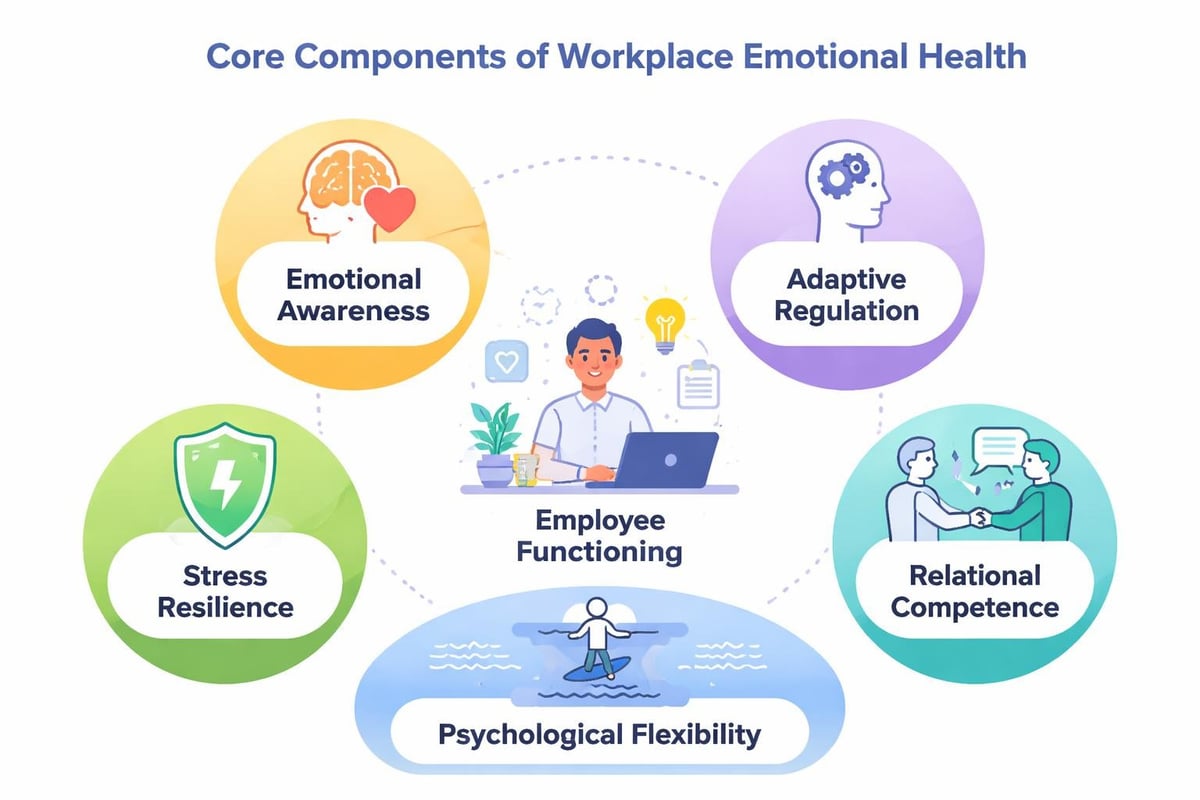
In workplace settings, emotionally healthy employees demonstrate several observable characteristics:
- Emotional awareness: Recognizing and naming their own emotional states
- Adaptive regulation: Adjusting emotional responses appropriate to context
- Relational competence: Navigating interpersonal dynamics without excessive conflict
- Stress resilience: Recovering from setbacks without prolonged impairment
- Psychological flexibility: Adapting thinking and behavior when circumstances change
Research examining emotional wellbeing and the healthcare workforce reveals that occupational demands significantly impact emotional capacity, with compassion fatigue and burnout eroding the very skills that enable effective emotional functioning.
The Distinction Between Emotional and Mental Health
While interconnected, emotional health and mental health occupy different domains. Mental health encompasses broader psychological functioning, including cognition, perception, and clinical symptomatology. Emotional health specifically addresses the affective dimension-how individuals experience, express, and manage feelings.
| Aspect | Emotional Health | Mental Health |
|---|---|---|
| Focus | Feeling states and regulation | Overall psychological functioning |
| Scope | Emotional awareness and expression | Cognition, mood, behavior, perception |
| Assessment | Emotional literacy, regulation skills | Clinical symptoms, functioning levels |
| Intervention | Skills training, psychoeducation | May require clinical treatment |
| Workplace Application | Daily management practices | Accommodation, EAP referral |
This distinction matters for workplace interventions. Managers can directly support emotional health and wellbeing through environment design, communication practices, and skill development, while clinical mental health concerns require appropriate professional referral.
Biological and Environmental Foundations
Emotional health emerges from complex interactions between neurobiological systems, developmental experiences, and current environmental conditions. Understanding these foundations helps leaders create workplace conditions that support rather than undermine emotional capacity.
The autonomic nervous system regulates physiological arousal underlying emotional experiences. When workplace stressors activate threat responses repeatedly without adequate recovery, the nervous system becomes dysregulated, compromising emotional health. Chronic activation of stress systems reduces capacity for emotional regulation and increases vulnerability to psychological distress.
Environmental factors significantly shape emotional wellbeing:
- Physical workspace design influences arousal levels and emotional tone
- Social dynamics either buffer or amplify emotional challenges
- Organizational culture determines whether emotions are acknowledged or suppressed
- Role demands create sustained emotional labor requirements
- Control and autonomy affect capacity to regulate emotional experiences
The factors influencing emotional well-being and mental health include biological predispositions, life experiences, and current circumstances, all of which interact in workplace environments to either support or compromise emotional functioning.
Practical Assessment Approaches for Organizations
Leaders require concrete methods to evaluate emotional health within their teams without overstepping professional boundaries or making clinical assessments. Effective organizational approaches focus on observable indicators and environmental factors rather than diagnostic evaluation.
Observable Indicators of Team Emotional Health
Managers can monitor several workplace markers that reflect collective emotional wellbeing:
- Patterns in interpersonal conflicts and their resolution
- Capacity for constructive feedback exchanges
- Team responses to unexpected changes or setbacks
- Quality of collaboration during high-pressure periods
- Informal social connections among team members
- Expressed concerns about workload or expectations
These indicators provide actionable information without requiring clinical expertise. When teams demonstrate difficulty recovering from setbacks, avoiding necessary conversations, or experiencing frequent interpersonal friction, these signal potential emotional health challenges requiring environmental or structural intervention.
Environmental Audit Framework
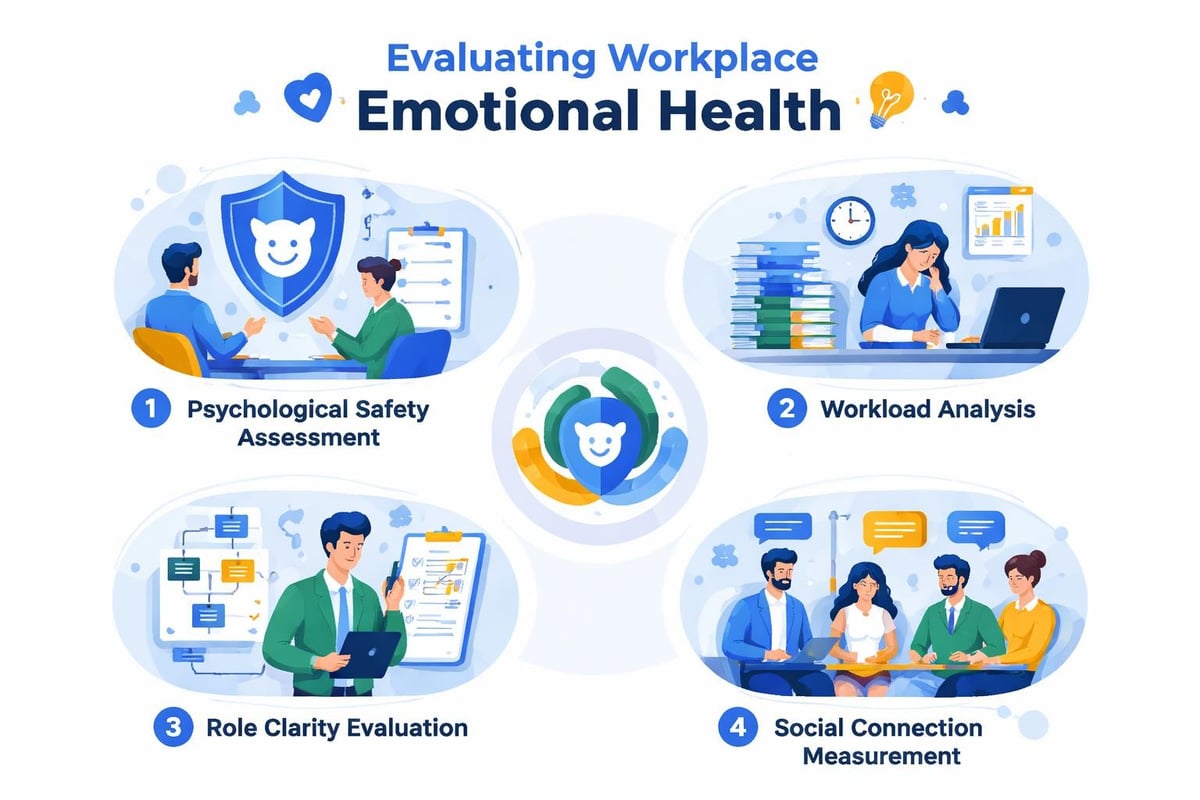
Rather than assessing individual employees, organizations benefit from examining how workplace conditions support or undermine emotional health and wellbeing:
| Environmental Factor | Assessment Questions | Improvement Strategies |
|---|---|---|
| Psychological Safety | Can people express concerns without fear? | Model vulnerability, respond constructively to dissent |
| Workload Management | Are demands consistently sustainable? | Review capacity, redistribute tasks, eliminate non-essential work |
| Role Clarity | Do people understand expectations? | Define roles explicitly, clarify decision authority |
| Recovery Opportunities | Can people genuinely disconnect? | Protect boundaries, model recovery behaviors |
| Social Connection | Do relationships provide support? | Create structured connection opportunities |
The Workplace Mental Health Institute provides comprehensive workplace wellbeing assessments that identify systemic factors affecting emotional health across organizations.
Evidence-Based Strategies for Leaders
Managers directly influence emotional health and wellbeing through daily interactions, expectations, and environmental decisions. Effective leadership in this domain requires specific competencies beyond traditional management skills.
Communication Practices That Support Emotional Health
How leaders communicate during routine and challenging situations substantially impacts team emotional wellbeing. Research on emotional health and positive mental health maintenance highlights the importance of acknowledgment, validation, and appropriate emotional expression.
Effective practices include:
- Acknowledge emotional realities without requiring extensive disclosure
- Validate reasonable emotional responses to challenging circumstances
- Separate emotion from performance in feedback conversations
- Model appropriate emotional expression including acknowledging uncertainty
- Create predictability through consistent communication patterns
When organizational change occurs, leaders who acknowledge the emotional impact while maintaining clarity about direction support better emotional health outcomes than those who either dismiss emotions or become overwhelmed by them.
Designing Work for Emotional Sustainability
Job design fundamentally affects whether employees can maintain emotional health over time. Certain work characteristics consistently predict emotional wellbeing challenges:
- Emotional labor demands: Requiring sustained emotional performance incongruent with genuine feelings
- Role ambiguity: Unclear expectations creating chronic uncertainty
- Low control: Minimal autonomy over work methods or timing
- Effort-reward imbalance: High demands without commensurate recognition or compensation
- Interpersonal conflict: Ongoing difficult relationships without resolution pathways
Organizations committed to emotional health address these structural factors rather than treating resulting symptoms as individual deficits. Australian organizations can access specialized support through WMHI Australia for region-specific workplace wellbeing strategies.
Building Organizational Emotional Capacity
Beyond individual interventions, organizations develop collective emotional capacity through systematic approaches that embed emotional health principles into operations, culture, and leadership practices.
Trauma-Informed Organizational Practices
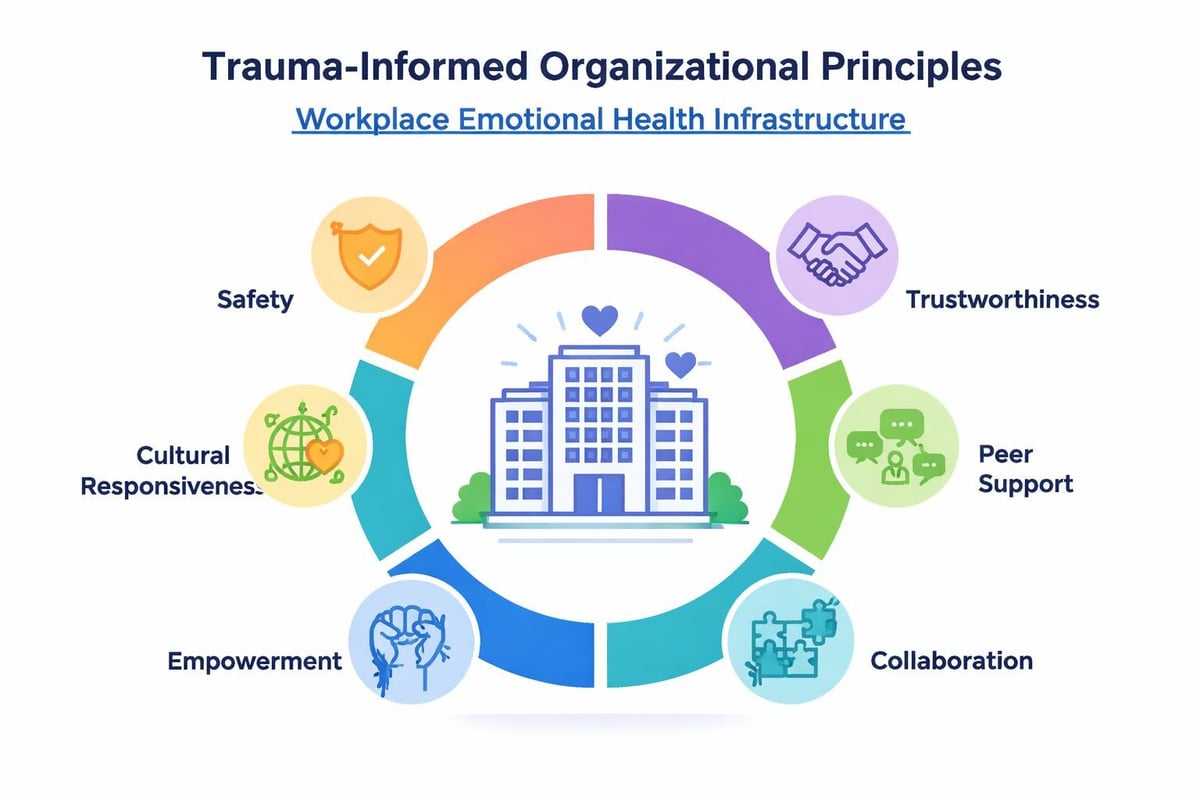
Trauma-informed approaches recognize that many employees carry experiences affecting their emotional responses and create environments minimizing re-traumatization while supporting emotional safety. These principles apply broadly to support emotional health and wellbeing even for those without trauma histories.
Core trauma-informed principles include:
- Safety: Physical and psychological security in the workplace
- Trustworthiness: Consistent, transparent organizational operations
- Peer support: Opportunities for connection and mutual assistance
- Collaboration: Shared power and decision-making where appropriate
- Empowerment: Recognition of strengths and capacity-building
- Cultural responsiveness: Acknowledgment of diverse backgrounds and needs
Implementing these principles requires policy review, leadership training, and cultural transformation rather than one-time interventions. Professional development through platforms like WMHI Online provides structured pathways for building trauma-informed competence across leadership teams.
Skills Development Programs
Organizations effectively support emotional health by providing accessible skills training addressing common emotional challenges. Unlike clinical therapy, these psychoeducational programs teach practical techniques applicable to workplace contexts.
Effective programs address:
- Emotional literacy: Expanding vocabulary for identifying and describing emotional states
- Regulation strategies: Teaching evidence-based techniques for managing difficult emotions
- Cognitive flexibility: Developing capacity to shift perspective and challenge unhelpful thinking
- Interpersonal effectiveness: Building skills for navigating difficult conversations
- Stress physiology: Understanding mind-body connections in emotional experiences
The Centre for Emotional Health’s evidence base demonstrates how psychological research translates into effective educational interventions, with applications extending beyond clinical settings into workplace skill-building.
Manager Competencies for Supporting Emotional Wellbeing
Frontline managers serve as critical leverage points for organizational emotional health. Their daily interactions, responses to challenges, and modeling of emotional management directly influence team wellbeing more than organizational policies or senior leadership statements.
Essential Competencies
Managers supporting emotional health and wellbeing require specific capabilities:
Recognition skills: Identifying signs that individuals or teams may be struggling emotionally without diagnosing or overstepping professional boundaries. This includes noticing changes in patterns rather than isolated incidents.
Conversational capacity: Initiating supportive conversations about challenges while maintaining appropriate boundaries, focusing on observable performance and offering resources rather than becoming a pseudo-therapist.
Referral knowledge: Understanding when situations require professional support and knowing how to facilitate appropriate connections to Employee Assistance Programs, HR resources, or external services.
Environmental modification: Adjusting workload, deadlines, or role expectations when circumstances warrant, recognizing that supporting emotional health sometimes requires practical accommodations.
Self-regulation: Managing their own emotional responses to team challenges, modeling healthy emotional expression, and maintaining boundaries to prevent burnout.
| Competency Level | Characteristics | Development Needs |
|---|---|---|
| Developing | Recognizes importance but lacks confidence | Foundational training, practice scenarios |
| Competent | Handles routine situations effectively | Advanced skills, complex case consultation |
| Proficient | Navigates nuanced situations confidently | Mentoring others, strategic application |
| Expert | Integrates seamlessly into leadership | Thought leadership, organizational design |
Organizations investing in manager development for emotional health capabilities see measurable improvements in team retention, engagement, and performance metrics.
Integration With Broader Wellness Initiatives
Emotional health and wellbeing functions as one dimension within comprehensive workplace wellness approaches. Effective integration recognizes connections between emotional, physical, social, and financial wellbeing while maintaining appropriate focus on each domain.
Physical health initiatives support emotional wellbeing through stress reduction, improved sleep quality, and neurochemical regulation from exercise. Conversely, chronic emotional distress manifests in physical symptoms, compromised immune function, and increased health risks.
Social wellness programs that foster genuine connection, belonging, and supportive relationships directly enhance emotional health by providing emotional resources during challenges and reducing isolation.
Financial wellness reduces a significant source of emotional distress while teaching skills in planning and problem-solving that transfer to emotional regulation contexts.
Organizations achieve optimal outcomes by:
- Recognizing interdependencies without collapsing distinctions between domains
- Coordinating initiatives to reinforce rather than duplicate efforts
- Measuring outcomes across multiple wellbeing dimensions
- Allocating resources proportionate to impact potential
- Maintaining specialized expertise for each wellness domain
The collection of articles on emotional wellness provides additional perspectives on goals, improvement strategies, and activities for enhancing emotional health alongside other wellness dimensions.
Measurement and Accountability
Organizations serious about emotional health establish clear metrics, accountability structures, and continuous improvement processes rather than treating wellbeing as aspirational without concrete evaluation.
Meaningful Metrics
Effective measurement balances quantitative indicators with qualitative insights:
Leading indicators predict future emotional health challenges:
- Participation rates in wellbeing programs
- Manager completion of relevant training
- Environmental audit scores
- Psychological safety survey results
Lagging indicators reveal outcomes:
- Absenteeism and presenteeism rates
- Turnover patterns, particularly regretted losses
- Engagement survey results related to wellbeing
- Workers’ compensation claims for psychological injury
Qualitative data provides context:
- Exit interview themes related to emotional experiences
- Focus group insights about workplace emotional culture
- Manager reports of team dynamics and challenges
- Employee suggestions for environmental improvements
Avoiding vanity metrics that measure activity rather than impact requires discipline. Organizations must resist the temptation to report participation numbers without assessing whether participation translates to improved emotional health and wellbeing outcomes.
Creating Sustainable Systemic Change
Individual interventions and programs produce limited impact without systemic change addressing the organizational factors that either support or undermine emotional health. Sustainable approaches embed emotional wellbeing into core business operations rather than treating it as supplementary programming.
Strategic integration points include:
Leadership selection and development: Prioritizing emotional intelligence and wellbeing competencies in hiring, promotion, and ongoing development for all leaders.
Performance management: Evaluating both results and methods, ensuring achievement doesn’t come at the cost of team emotional health, and recognizing wellbeing contributions.
Workload planning: Building realistic capacity models that account for recovery time, preventing chronic overload that depletes emotional resources.
Change management: Incorporating emotional impact assessment into all significant organizational changes, providing adequate support during transitions.
Budget allocation: Dedicating sufficient resources to wellbeing infrastructure, training, and environmental improvements beyond token gestures.
Resources like the Harvard Graduate School of Design’s newsletter on emotional well-being demonstrate how organizations across sectors implement strategies fostering emotional health and resilience at institutional levels.
Organizations achieve lasting impact when emotional health and wellbeing shifts from HR responsibility to shared organizational value embedded in decision-making at all levels. This requires executive commitment, middle manager capability, and employee engagement working in concert toward psychologically healthy workplace cultures.
Building organizational capacity for emotional health and wellbeing requires specialized knowledge, evidence-based frameworks, and practical implementation skills that extend beyond traditional management training. Workplace Mental Health Institute delivers comprehensive training programs, workplace wellbeing assessments, and strategic consultation designed specifically for leaders and HR professionals committed to creating psychologically healthy work environments. Their trauma-informed, skills-focused approach equips organizations with the tools needed to move from awareness to meaningful action in supporting employee emotional health.

