
Employee wellbeing is rapidly emerging as a crucial driver of business success. As organizations navigate constant change, a robust employee wellbeing programme is no longer just a benefit but a strategic necessity.
This expert guide empowers HR leaders, managers, and decision-makers with practical, evidence-based strategies to create and sustain high-performing teams. You will discover the core principles behind wellbeing, learn how to design impactful programmes, and gain step-by-step advice for effective implementation.
From foundational concepts to future trends, unlock the tools and insights needed to transform your workplace and achieve lasting organizational growth.
Understanding Employee Wellbeing: Foundations and Benefits
Employee wellbeing has evolved from a collection of perks into a core driver of organizational performance. To build a successful employee wellbeing programme, it is crucial to understand the foundational elements and the far-reaching benefits for both individuals and businesses.
Defining Employee Wellbeing
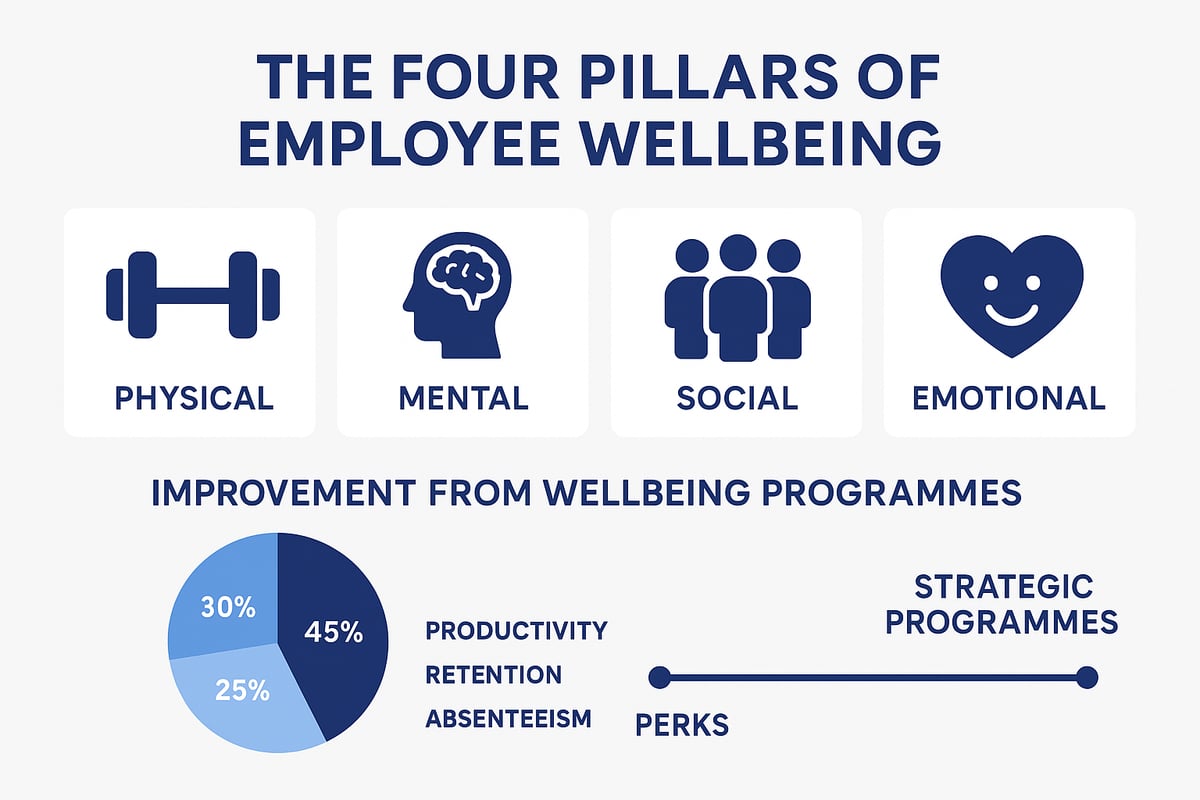
Employee wellbeing is a holistic concept that encompasses physical, mental, emotional, and social health. It goes beyond simply offering gym memberships or snacks. A comprehensive employee wellbeing programme addresses the whole person, fostering a sense of belonging, psychological safety, and clear purpose at work.
Key pillars of wellbeing include:
- Work-life balance: Empowering employees to manage professional and personal responsibilities.
- Psychological safety: Creating an environment where people can speak up without fear.
- Purpose and belonging: Ensuring everyone feels valued and connected.
Modern definitions emphasize that employee wellbeing is no longer a “nice to have” but a strategic imperative. Organizations are recognizing the need for integrated approaches, as explored in Wellbeing in the Workplace, to support their workforce and drive sustainable growth.
The Business Case for Wellbeing Programmes
Investing in an employee wellbeing programme delivers measurable business value. Studies reveal that prioritizing wellbeing leads to higher productivity, improved employee engagement, and lower turnover rates.
Consider these key statistics:
- 79% of employees are more likely to stay with companies that focus on wellbeing (source: Gallup).
- Absenteeism can be reduced by up to 33% with robust wellbeing initiatives.
- According to Deloitte, for every dollar invested in wellbeing, organizations can see a return of up to five dollars.
Companies with comprehensive wellbeing strategies consistently outperform peers in profitability, innovation, and talent retention. An employee wellbeing programme is not just a moral responsibility—it’s a smart business move.
Common Challenges in Employee Wellbeing
Despite its benefits, implementing an employee wellbeing programme is not without obstacles. Many organizations face:
- Persistent stigma around mental health topics
- Disconnected or one-off initiatives that lack cohesion
- Limited leadership buy-in and accountability
- Complexities of supporting hybrid and remote teams
- Data privacy and personalization concerns
Addressing these challenges requires a strategic, inclusive approach. Without alignment and clear leadership support, even the best-intentioned programmes may struggle to achieve impact.
The Evolution of Wellbeing Programmes
The landscape of employee wellbeing programme development has shifted dramatically. Early efforts focused on ad hoc wellness perks. Now, organizations are moving toward integrated, data-driven strategies that align with business goals.
Mental health has emerged as a central focus, with companies offering counseling, resilience training, and digital health solutions. Global trends include supporting hybrid workforces, leveraging technology for engagement, and prioritizing inclusivity for diverse employee needs.
By embracing these evolving practices, organizations can build employee wellbeing programmes that are resilient, adaptive, and positioned for long-term success.
Designing a High-Impact Employee Wellbeing Programme
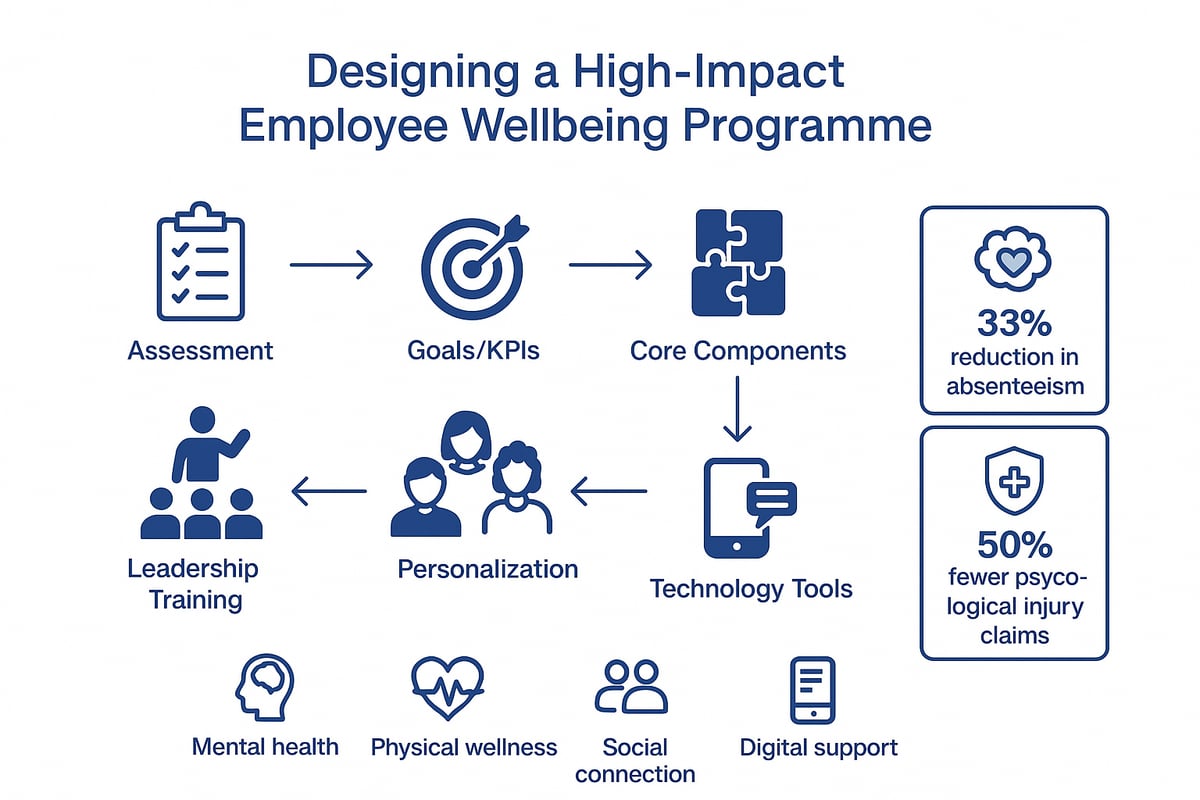
Creating a high-impact employee wellbeing programme requires a strategic, evidence-based approach. From initial assessments to leveraging technology, each step is vital for long-term success and measurable outcomes.
Assessing Organizational Needs and Readiness
The foundation of any employee wellbeing programme begins with a clear understanding of your organization's unique needs. Start by conducting comprehensive wellbeing assessments and anonymous surveys to gather data on employee stressors, mental health trends, and satisfaction levels.
Involve key stakeholders, such as HR, managers, and employee representatives, to ensure diverse perspectives are captured. Consider factors like remote work stress, exposure to trauma, and existing support gaps. Engaging leadership early sets the tone for commitment and resource allocation.
For organizations seeking a structured approach, the Workplace Wellbeing Assessment offers validated tools to identify strengths and areas for improvement. These insights form the blueprint for your employee wellbeing programme and help prioritize initiatives that will have the greatest impact.
Setting Clear Objectives and KPIs
Defining clear objectives and key performance indicators is critical for aligning your employee wellbeing programme with business goals. Objectives might include reducing absenteeism, increasing engagement, or improving mental health outcomes.
KPIs should be specific, measurable, and regularly reviewed. Examples include tracking changes in sick leave rates, monitoring employee engagement scores, and evaluating participation in wellbeing activities. Establishing benchmarks at the outset enables ongoing measurement and continuous improvement.
Ensure objectives resonate with organizational strategy and culture. By integrating wellbeing targets into business planning, you reinforce the message that employee wellbeing programme outcomes are linked to overall success.
Core Components of a Successful Programme
A well-rounded employee wellbeing programme addresses multiple dimensions of health. Key components typically include:
- Mental health support, such as counseling, resilience training, and access to resources.
- Physical wellbeing initiatives, like fitness programs, ergonomic assessments, and nutrition workshops.
- Social connection opportunities, including team-building activities and peer support groups.
- Financial wellness and career development resources.
The most effective programmes blend these elements, ensuring that employees feel supported in every aspect of their work life. Regularly review offerings to keep them relevant and responsive to evolving workforce needs.
Personalization and Inclusivity
Personalizing your employee wellbeing programme increases participation and impact. Tailor initiatives to accommodate varying ages, cultural backgrounds, and work arrangements, such as hybrid or remote roles.
Inclusion goes beyond demographics. Address neurodiversity, disability, and the unique needs of marginalized groups. Case studies show that inclusive programmes result in higher engagement and satisfaction rates.
Use feedback and data to refine offerings. Encourage employee input through suggestion boxes, focus groups, or digital platforms. This ensures your employee wellbeing programme remains accessible and meaningful for everyone.
Leadership and Manager Training
Leaders play a pivotal role in the success of any employee wellbeing programme. Equip managers with the knowledge and skills to recognize signs of distress, foster psychological safety, and support team members proactively.
Training should cover topics like trauma-informed care, active listening, and building resilience. When managers are confident and compassionate, employees are more likely to seek help and engage with wellbeing initiatives.
Research shows that teams led by managers trained in mental health see a 50% reduction in stress. Continuous training and support for leaders are essential to sustaining a culture of wellbeing.
Technology and Digital Wellbeing Tools
Technology can amplify the reach and effectiveness of your employee wellbeing programme. Platforms for mental health support, wellbeing tracking, and virtual engagement make resources accessible to all employees, regardless of location.
Consider using apps for mindfulness, stress management, and pulse surveys to gather real-time feedback. Prioritize data security and ethical use of digital tools, ensuring employee privacy is always protected.
Digital solutions also enable personalization and scalability. By integrating technology thoughtfully, your employee wellbeing programme can adapt to changing workforce needs and deliver measurable results.
Step-by-Step Implementation: From Planning to Launch
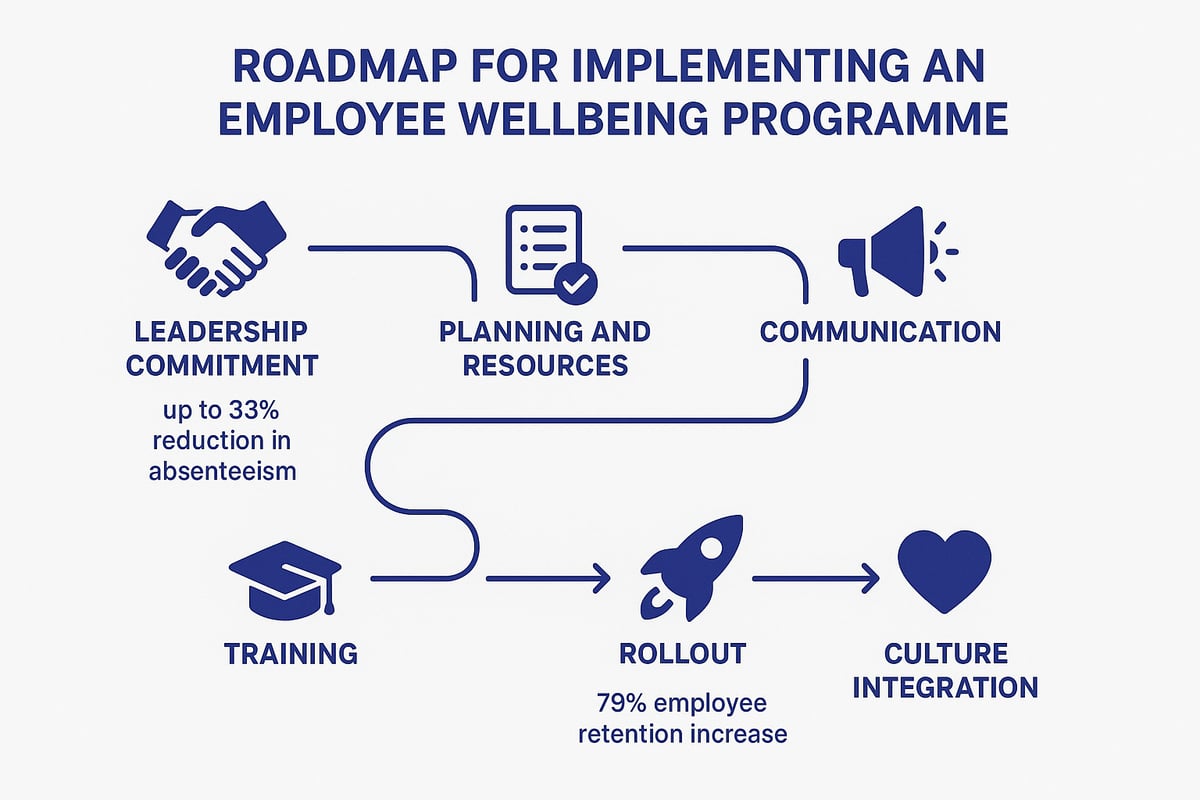
Launching an employee wellbeing programme requires careful planning, commitment, and a structured approach. By following these six essential steps, organizations can transform intentions into lasting impact and create a thriving workplace culture.
Step 1: Securing Leadership Commitment
The foundation of any successful employee wellbeing programme is visible support from senior leaders. Begin by presenting a compelling business case, using data on productivity, engagement, and cost savings. Executive sponsorship signals organizational commitment and paves the way for swift adoption.
Identify C-suite wellbeing champions who can advocate for the programme and foster a culture of accountability. Cross-departmental collaboration ensures buy-in at every level. Companies with dedicated leadership often see faster integration and greater impact.
Step 2: Programme Planning and Resource Allocation
Effective planning is critical for a sustainable employee wellbeing programme. Form a multidisciplinary wellbeing committee that includes HR, line managers, and employee representatives. This group oversees needs assessments, goal setting, and resource allocation.
Allocate budget for programme components, including training, digital tools, and engagement activities. Select reputable vendors and partners who align with organizational values and can scale with workforce needs. Long-term sustainability depends on thoughtful investment and clear governance.
Step 3: Communication and Awareness
Strong communication drives participation in an employee wellbeing programme. Launch a multi-channel campaign using email, intranet, webinars, and manager toolkits. Share the vision and practical benefits, highlighting real employee stories to build trust.
Address potential stigma by providing clear information on confidentiality and support. Encourage open dialogue and feedback. Consistent messaging from leaders and peers helps normalize wellbeing conversations and boost engagement from day one.
Step 4: Training and Capacity Building
Empowering managers and employees through training is a cornerstone of an effective employee wellbeing programme. Offer accessible learning modules, such as mental health first aid, resilience skills, and peer support.
Ongoing education, including eLearning and webinars, strengthens capacity across the organization. For specialized development, explore Leader and Manager Training to equip leaders with evidence-based skills for fostering psychological safety and addressing wellbeing challenges.
Step 5: Programme Rollout and Engagement
When launching the employee wellbeing programme, consider a phased or organization-wide approach based on readiness and resources. Use incentives, recognition, and gamification to drive early participation and sustain interest.
Monitor initial feedback through pulse surveys and informal check-ins. Adapt quickly to address barriers or concerns. Recognize wellbeing champions and celebrate milestones to reinforce positive behaviors and maintain momentum.
Step 6: Integrating Wellbeing Into Organizational Culture
The final step is embedding the employee wellbeing programme into the fabric of the organization. Update policies, performance reviews, and leadership development frameworks to prioritize wellbeing.
Establish continuous feedback loops through surveys and suggestion boxes. Celebrate progress and regularly communicate outcomes to both leadership and staff. Integration ensures that wellbeing is a strategic priority, not a temporary initiative.
Measuring Success: Data, Analytics, and Continuous Improvement
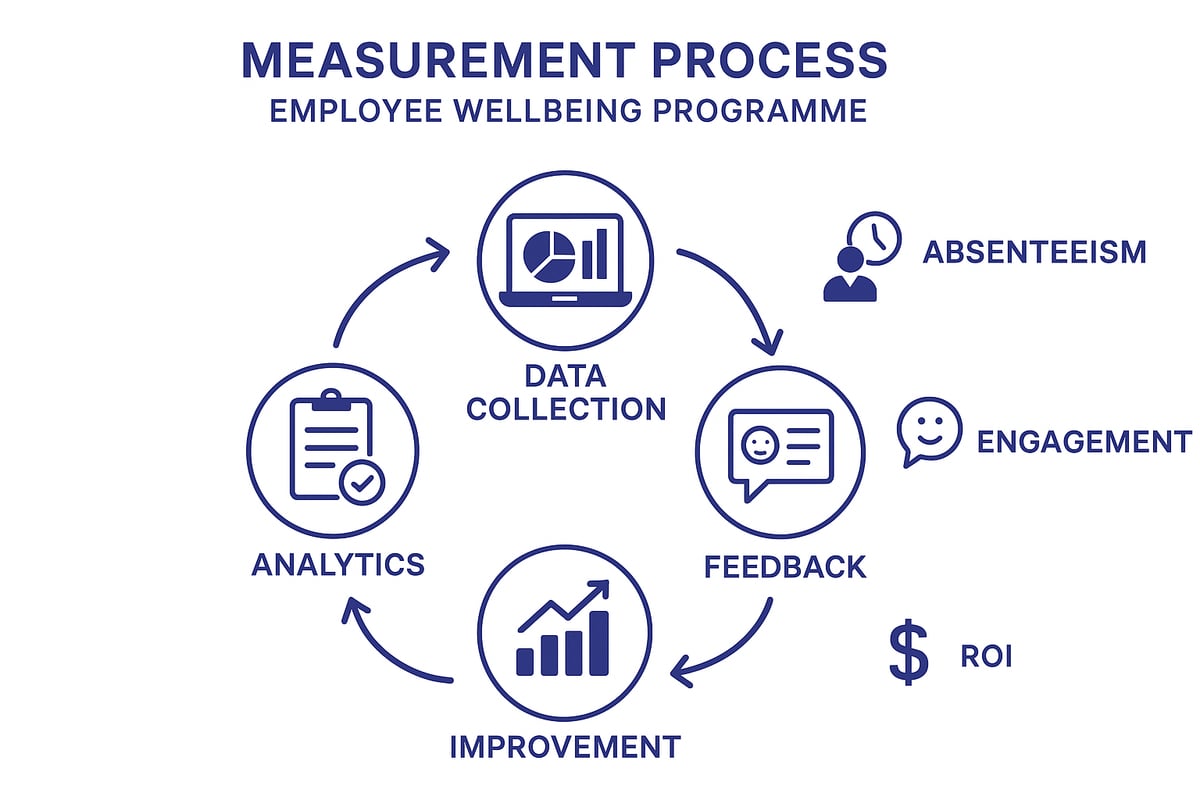
Continuous measurement is the cornerstone of an effective employee wellbeing programme. Without robust data, organizations risk missing critical insights and opportunities for improvement. By establishing clear frameworks, leveraging analytics, and fostering a culture of transparency, companies can transform wellbeing from a set of isolated initiatives into a strategic business driver.
Setting Up Measurement Frameworks
To gauge the true impact of an employee wellbeing programme, it is essential to define what success looks like from the outset. Organizations should select a mix of quantitative and qualitative metrics.
Common indicators include:
- Absenteeism and turnover rates
- Employee engagement and satisfaction scores
- Frequency of mental health claims
- Self-reported wellbeing from surveys
Pulse checks and pre- and post-programme assessments offer timely snapshots of progress. A simple table can help summarize key tools:
| Metric | Tool/Method |
|---|---|
| Absenteeism | HRIS reports |
| Engagement | Survey platforms |
| Wellbeing | Pulse surveys |
| Mental Health Claims | HR data analysis |
By embedding these metrics into regular reporting, companies ensure their employee wellbeing programme remains aligned with organizational goals.
Data-Driven Decision Making
Data is invaluable for identifying trends and pinpointing areas of concern within an employee wellbeing programme. Leveraging analytics allows organizations to see patterns, such as spikes in stress or declining engagement, and act swiftly.
Privacy is vital. Using anonymized data builds trust and encourages honest feedback. Real-world examples show that targeted interventions, informed by data, can cut psychological injury claims by half.
For organizations seeking actionable benchmarks, recent employee wellness statistics 2025 provide valuable insights into satisfaction, health, and retention outcomes linked to robust employee wellbeing programme strategies.
Analytics empower leaders to make informed decisions and prioritize resources where they have the greatest effect.
ROI and Business Impact
Demonstrating the return on investment is crucial for sustaining an employee wellbeing programme. Financial analysis should include both direct and indirect benefits.
Deloitte reports a $5 return for every $1 invested in wellbeing, highlighting the significant impact on productivity and cost savings. Reduced absenteeism, increased innovation, and stronger employer branding all contribute to the programme’s value.
Case studies consistently show that companies with comprehensive wellbeing initiatives outperform peers in profitability and talent retention. By linking these business outcomes directly to programme metrics, leaders can justify continued investment.
Employee Feedback and Programme Adaptation
An effective employee wellbeing programme thrives on continuous feedback. Gathering qualitative data from focus groups, suggestion boxes, and informal check-ins uncovers deeper insights than surveys alone.
Iterative updates based on this feedback keep the programme relevant and responsive. For example, adjusting offerings for remote teams has led to a 20 percent increase in engagement in some organizations.
Encouraging open dialogue and acting on suggestions demonstrate that employee voices truly shape the wellbeing journey.
Reporting and Accountability
Transparent reporting is essential for building trust in an employee wellbeing programme. Regular updates to leadership and the wider workforce keep everyone informed about progress, challenges, and next steps.
Benchmarking results against industry standards provides context and highlights areas for improvement. Clear communication ensures that successes are celebrated and lessons learned are shared.
Embedding accountability at every level, from managers to executives, reinforces the organization’s commitment to a culture of wellbeing.
Future Trends in Employee Wellbeing Programmes
The landscape of employee wellbeing programme design is shifting rapidly, driven by technology, changing employee expectations, and global workplace transformations. Organizations that anticipate these trends are better equipped to foster resilient, engaged teams and future-proof their strategies.
Personalization Through AI and Data Analytics
AI and advanced analytics are revolutionizing the employee wellbeing programme. Predictive models can now identify at-risk individuals and suggest tailored interventions, helping HR teams act proactively. Machine learning tools analyze engagement, workload, and feedback to deliver individualized wellbeing recommendations. According to recent research on employee wellbeing in the age of AI, integrating AI in HR improves not only employee satisfaction but also retention and mental health outcomes. However, organizations must also prioritize data privacy and ethical considerations as they scale these innovations.
Expanding Mental Health and Resilience Focus
Mental health remains at the heart of every employee wellbeing programme. Companies are investing in trauma-informed care, resilience workshops, and psychological safety initiatives. Addressing burnout is a top priority, especially as remote and hybrid work blur boundaries. Leaders are turning to resources like Preventing and Managing Burnout to build comprehensive prevention strategies. Integrating regular mental health check-ins and support networks can dramatically reduce stress and absenteeism across the workforce.
Integrating Social and Environmental Wellbeing
Modern employee wellbeing programme strategies are expanding beyond the individual. There is a growing emphasis on social connection, community involvement, and environmental responsibility. Companies are encouraging volunteering, supporting local causes, and designing sustainable workplaces. These efforts foster a sense of purpose and belonging, which are essential pillars of wellbeing. Tying wellbeing initiatives to broader ESG (Environmental, Social, Governance) goals further enhances engagement and organizational reputation.
The Rise of Hybrid and Flexible Work Solutions
Hybrid and flexible work arrangements are now central to any employee wellbeing programme. Organizations are investing in digital platforms that maintain connection, facilitate virtual team-building, and provide access to wellbeing resources regardless of location. Wearable technology, virtual reality experiences, and telehealth services are making support more accessible. By adapting offerings for both remote and on-site staff, companies ensure inclusivity and maximize participation and impact.
Building a Culture of Wellbeing for the Future
The most forward-thinking organizations are embedding wellbeing into their culture, leadership, and metrics. Leadership accountability, transparent wellbeing KPIs, and ongoing feedback loops are setting new standards. Preparing for future disruptions means building flexibility, resilience, and a genuine sense of care into the organizational DNA. As the workforce evolves, a proactive employee wellbeing programme will remain a strategic differentiator for attracting and retaining top talent.
Expert Resources and Further Reading
Explore these essential resources to strengthen your employee wellbeing programme and stay ahead of industry trends. Each tool and guide offers actionable insights or practical support for HR leaders and wellbeing professionals.
Recommended Tools and Frameworks
Choosing the right tools is vital for an effective employee wellbeing programme. Leading frameworks such as PERMA, Five Ways to Wellbeing, and ISO 45003 provide structured approaches for assessment and improvement.
| Framework | Focus Area | Application |
|---|---|---|
| PERMA | Psychological Health | Individual/Group |
| Five Ways to Wellbeing | Holistic Wellbeing | Daily Practices |
| ISO 45003 | Psychological Safety | Organizational |
For further reading, the Work-life balance in business management study examines how work-life balance strategies can influence motivation and satisfaction, offering insights for programme design.
Curated Guides and Reports
Stay informed with the latest research and best practices. Industry whitepapers, case studies, and regulatory guidelines help you benchmark and innovate your employee wellbeing programme.
A notable study, the Comprehensive workplace wellness program study, evaluates the long-term effects of wellness initiatives on employee health and beliefs, providing valuable data for evidence-based decision-making.
Explore reports from trusted organizations, including workplace mental health bodies and industry associations.
Online Courses and Training Opportunities
Continuous learning is key to sustaining any employee wellbeing programme. Access self-paced and live training for leaders and staff through platforms like WMHI Online Courses.
Courses cover mental health essentials, resilience, psychological safety, and leadership skills. These resources support ongoing development and help embed wellbeing into daily practice.
Video Resources and Webinars
Visual learning can deepen engagement with your employee wellbeing programme. Explore expert-led webinars and video series on the WMHI YouTube Channel.
Topics include mental health, resilience, leadership, and practical strategies for teams. Curated playlists make it easy to find content for every level of your organization.
Community and Professional Networks
Joining professional networks fosters connection and growth for your employee wellbeing programme. Peer support groups, forums, and industry conferences offer opportunities to share experiences and learn from others.
Membership in wellbeing organizations keeps you updated on trends and provides access to exclusive resources. Building a supportive community is a cornerstone of successful wellbeing strategies.
As you consider the essential steps for designing and implementing an employee wellbeing programme, remember that lasting impact comes from expert guidance and practical, evidence-based strategies. If you’re looking to take the next step, or want to discover how tailored assessments, trauma-informed care training, and ongoing support can transform your workplace, I encourage you to explore further resources. You’ll find actionable insights and proven approaches to help you build a resilient, high-performing team. Ready to learn more about creating a culture of wellbeing that drives real business results? Find Out More

