Did you know that nearly eight in ten employees say their mental health is affected by work stress? As organizations face rising pressures, the role of the mental health strategist has become essential for fostering wellbeing and resilience. This comprehensive guide will help you understand what a mental health strategist does, how to become one, and why their expertise is transforming workplaces and communities. You’ll discover the core responsibilities, skills, and strategies that define this emerging profession, along with future trends and practical steps for individuals and organizations. Ready to lead the way in mental health strategy? Dive in and unlock the keys to lasting positive change.
What is a Mental Health Strategist?
The mental health strategist is rapidly becoming a central figure in modern organizations. Unlike traditional support roles, a mental health strategist brings a proactive, holistic approach to wellbeing in the workplace and beyond.
Definition and Core Responsibilities
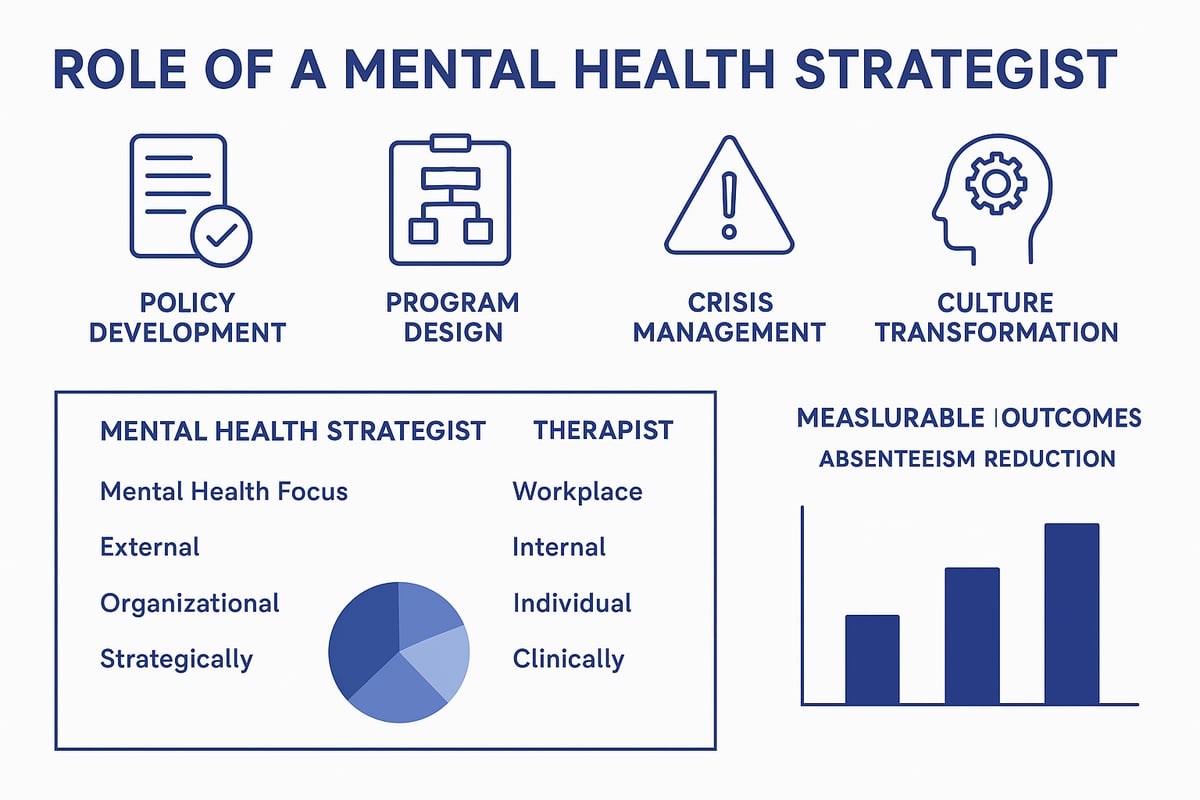
A mental health strategist is a specialist who designs and leads comprehensive mental health initiatives within organizations. Unlike therapists, who focus on individual care, or HR professionals, who manage broader personnel issues, the mental health strategist operates at a strategic level. Their main tasks include developing policies, designing wellbeing programs, managing crises, and transforming organizational culture.
For example, while a wellbeing coordinator may run a mindfulness workshop, the mental health strategist creates the overarching framework that supports such initiatives and ensures long-term impact. This role is less about day-to-day operations and more about shaping the mental health landscape through evidence-based strategy. Policy development is a central responsibility, requiring expertise in compliance, ethics, and best practices. For organizations seeking to create or update policies, resources like Policy for mental health in organizations provide valuable guidance.
The mental health strategist collaborates with leadership, HR, and external partners to ensure mental health is embedded into every aspect of the organization. This approach drives sustainable change and measurable improvement in employee wellbeing.
Evolution of the Role
The mental health strategist role has evolved in response to shifting workplace dynamics and increased awareness of mental wellbeing. Traditionally, organizations relied on reactive support, such as employee assistance programs or counseling. Today, there is a growing recognition that proactive strategy is essential.
Key industry drivers include rising workplace stress, the shift to hybrid work models, and new mental health legislation. According to Mind Share Partners, 76% of employees report that workplace stress impacts their mental health. This data highlights the urgent need for comprehensive strategies, not just isolated interventions.
Modern mental health strategists anticipate issues before they arise. They use data, research, and feedback to tailor their approach, ensuring strategies are relevant and effective. This evolution reflects the broader trend toward prevention and resilience, rather than crisis response alone.
Key Settings and Sectors
Mental health strategists operate across a range of environments. In corporate settings, they develop programs to support diverse teams, address burnout, and foster psychological safety. Tech firms, for example, may engage a mental health strategist to manage stress during rapid growth or organizational change.
In schools, strategists design interventions to support both staff and students, while in healthcare, they help address burnout and trauma among frontline workers. Government agencies employ mental health strategists to shape public health campaigns, and NGOs may leverage their skills to support volunteer wellbeing.
Each sector presents unique challenges and opportunities. The mental health strategist tailors their approach to meet the specific needs of the environment, ensuring broad impact and sustainability.
Impact and Value Proposition
The impact of a mental health strategist is measurable and far-reaching. Organizations with robust mental health strategies often see up to a 33% reduction in absenteeism, improved retention rates, and higher employee engagement. These outcomes are supported by industry reports and underscore the value of investing in mental health strategy.
Return on investment (ROI) is significant. Reduced absenteeism, fewer claims, and a more engaged workforce lead to long-term financial and cultural benefits. The mental health strategist’s work contributes not only to individual wellbeing but also to organizational resilience and success.
By embedding mental health into the core of organizational strategy, the mental health strategist drives positive change that benefits everyone.
Essential Skills and Qualifications for Mental Health Strategists
The path to becoming a mental health strategist requires a blend of education, practical skills, and personal qualities. This unique role is grounded in both formal training and the ability to adapt to changing organizational needs. Let’s break down the essential building blocks for success in this emerging field.
Foundational Education and Credentials
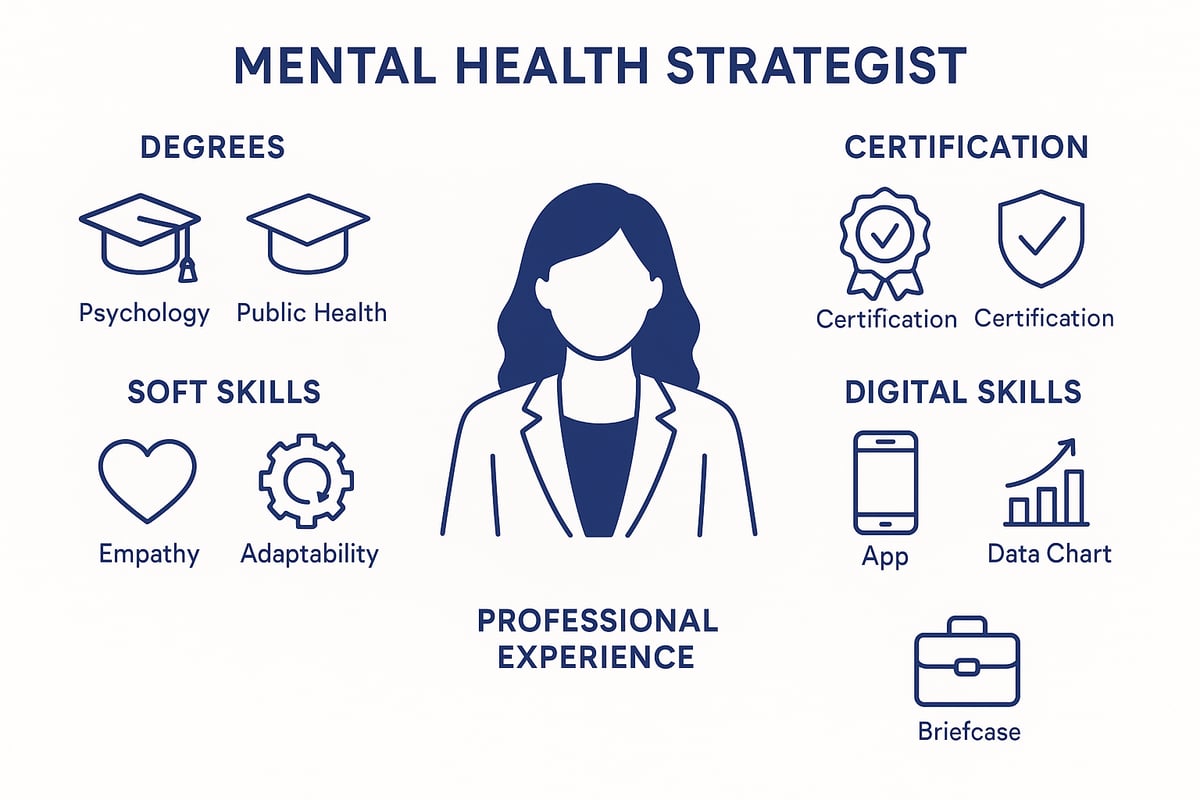
A mental health strategist typically begins with a solid educational foundation. Relevant degrees include psychology, public health, organizational leadership, or social work. These programs provide critical knowledge about mental health, systems thinking, and human behavior.
Certifications are equally important. Credentials such as mental health first aid, trauma-informed care, and wellbeing program management are common. Many professionals also pursue ongoing learning, staying updated on the latest research and best practices.
For those seeking structured pathways, specialized workplace mental health courses and training offer practical skills and recognized qualifications. These programs help aspiring strategists translate theory into actionable strategies within organizations.
Continuous professional development is essential. Attending conferences, workshops, and webinars ensures that a mental health strategist remains current and effective.
Core Competencies
A successful mental health strategist must master a range of core competencies. Leadership is at the forefront, enabling them to guide teams and influence organizational change. Strong communication skills are necessary to present policies, deliver training, and foster dialogue across all levels.
Empathy is vital for building trust and understanding the needs of diverse groups. Data analysis skills allow strategists to interpret wellbeing metrics and measure program impact. Strategic planning, policy writing, and program evaluation complete the toolkit, supporting evidence-based decision-making.
Leading strategists often demonstrate a balance of visionary thinking and practical execution, ensuring that mental health initiatives are both innovative and sustainable.
Soft Skills and Personal Attributes
Beyond technical ability, a mental health strategist relies on key soft skills. Adaptability is crucial in responding to evolving workplace dynamics and unexpected challenges. Cultural competence ensures interventions are sensitive to the unique backgrounds and beliefs of employees.
Confidentiality is non-negotiable, as strategists routinely handle sensitive information. Real-world scenarios often test these qualities, such as supporting a multicultural team through a crisis or safeguarding private health disclosures.
Personal integrity, resilience, and a genuine commitment to wellbeing set exceptional strategists apart.
Technology and Data Literacy
The modern mental health strategist must be comfortable with digital solutions. This includes using mental health apps for employee support, leveraging analytics platforms to monitor trends, and facilitating telehealth sessions.
Staying ahead of digital trends is vital. Many organizations now rely on online assessments, virtual wellbeing programs, and remote support tools. Strategists who can navigate these platforms provide greater value and reach.
Data literacy enables the strategist to transform raw information into actionable insights, driving continuous improvement in mental health outcomes.
Professional Experience
The career path to becoming a mental health strategist is diverse. Many start in human resources, clinical psychology, or consulting roles. Each background brings unique perspectives to the table.
Experience in program management, crisis intervention, or organizational change is highly valued. Case studies show that teams with a mental health strategist from varied backgrounds often achieve more robust and creative solutions.
Building a multidisciplinary skill set through hands-on roles, volunteer work, or cross-functional projects prepares professionals for this impactful position.
Strategic Approaches to Mental Health in Organizations
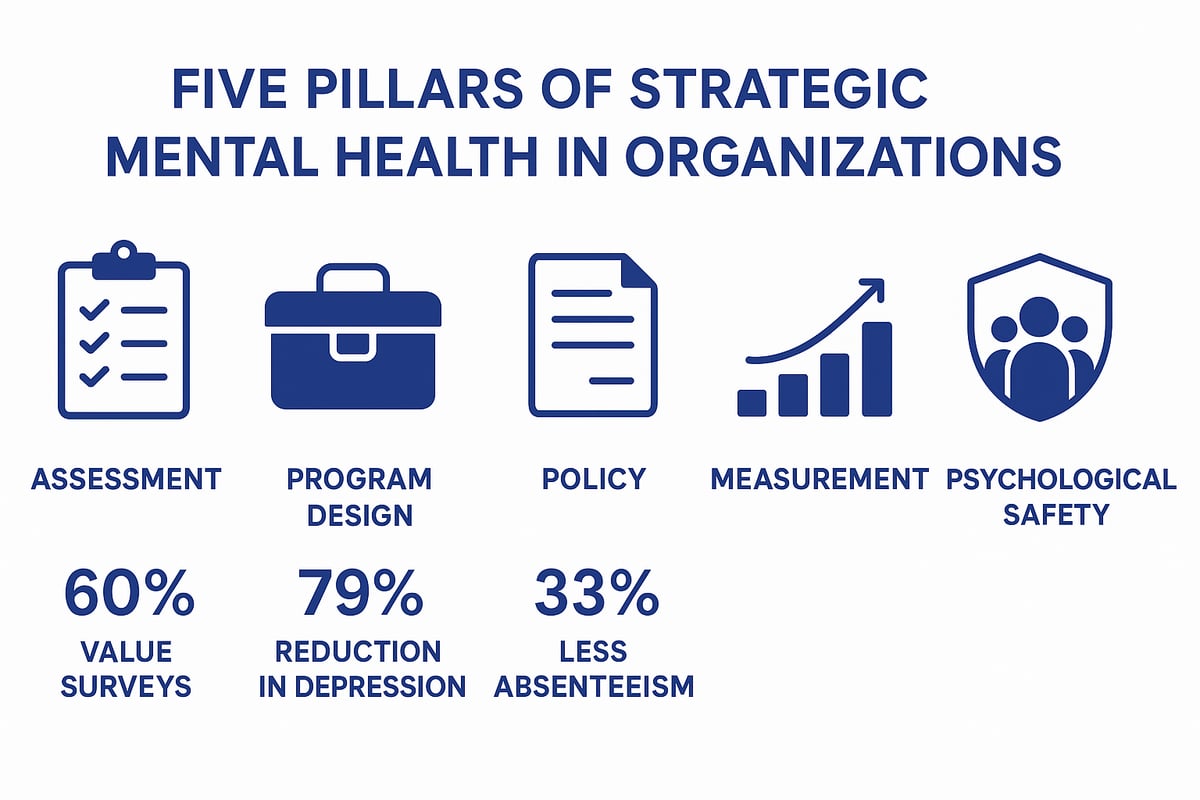
Organizations across all sectors are recognizing the need for a mental health strategist to guide effective, sustainable wellbeing initiatives. Strategic approaches are essential for creating environments where people thrive, not just survive. By focusing on assessment, program design, policy, measurement, and culture, a mental health strategist can transform challenges into measurable successes.
Assessing Organizational Needs
A mental health strategist begins by thoroughly assessing organizational needs. This process uses surveys, focus groups, and wellbeing assessments to gather a holistic view of employee experiences. Tools like the Psychologically Safe Manager Survey provide structured insights into current workplace dynamics.
According to Deloitte, 60% of employees value mental health surveys as a way to voice concerns and suggest improvements. A mental health strategist interprets this data, uncovering trends in stress, burnout, and engagement. These assessments form the evidence base for targeted interventions.
By prioritizing open dialogue and data-driven analysis, organizations can ensure their mental health strategist addresses real, not assumed, needs.
Designing and Implementing Programs
After assessment, a mental health strategist designs and implements tailored programs. Evidence-based interventions—such as resilience training, peer support networks, and crisis response protocols—are selected and adapted to fit the organization’s unique context.
Customization is key. What works for a tech company may differ from solutions needed in healthcare or education. For example, frontline healthcare teams benefit from trauma-informed care, while remote-first tech teams might prioritize digital wellbeing and connection.
A mental health strategist ensures programs are practical, accessible, and inclusive, maximizing participation and long-term impact.
Policy Development and Compliance
Effective mental health strategy relies on robust policy development and compliance. A mental health strategist collaborates with legal and HR teams to craft policies that protect employee privacy, ensure workplace safety, and meet local regulations.
Steps include reviewing current policies, benchmarking against global standards, and engaging stakeholders in policy updates. Legal considerations vary, but a mental health strategist always prioritizes ethical practices and transparency in communication.
Compliance is not just a checkbox—it is a commitment to embedding mental health into the organization’s DNA.
Measuring Impact and ROI
To demonstrate value, a mental health strategist sets clear metrics for success. Key performance indicators (KPIs) include reduced absenteeism, fewer claims, higher engagement, and improved wellbeing scores.
Industry benchmarks highlight the potential: strategic mental health programs can achieve up to a 79% reduction in depression rates and a 33% decrease in absenteeism. Before-and-after case studies offer compelling evidence of ROI, showing increased retention and productivity.
Ongoing measurement allows a mental health strategist to refine approaches, ensuring every initiative delivers measurable benefits.
Building a Culture of Psychological Safety
A lasting impact comes from building a culture of psychological safety. A mental health strategist works with leaders to secure buy-in, train managers, and foster open communication. Research links psychological safety to greater innovation and retention.
Practical strategies include leadership workshops, peer support groups, and transparent feedback channels. Real-world stories show how a mental health strategist can transform even the most challenging cultures.
For organizations seeking to deepen this work, the Building a psychologically safe workplace tool offers actionable insights and proven frameworks for success.
Integrating Mental Health Strategy Across Sectors
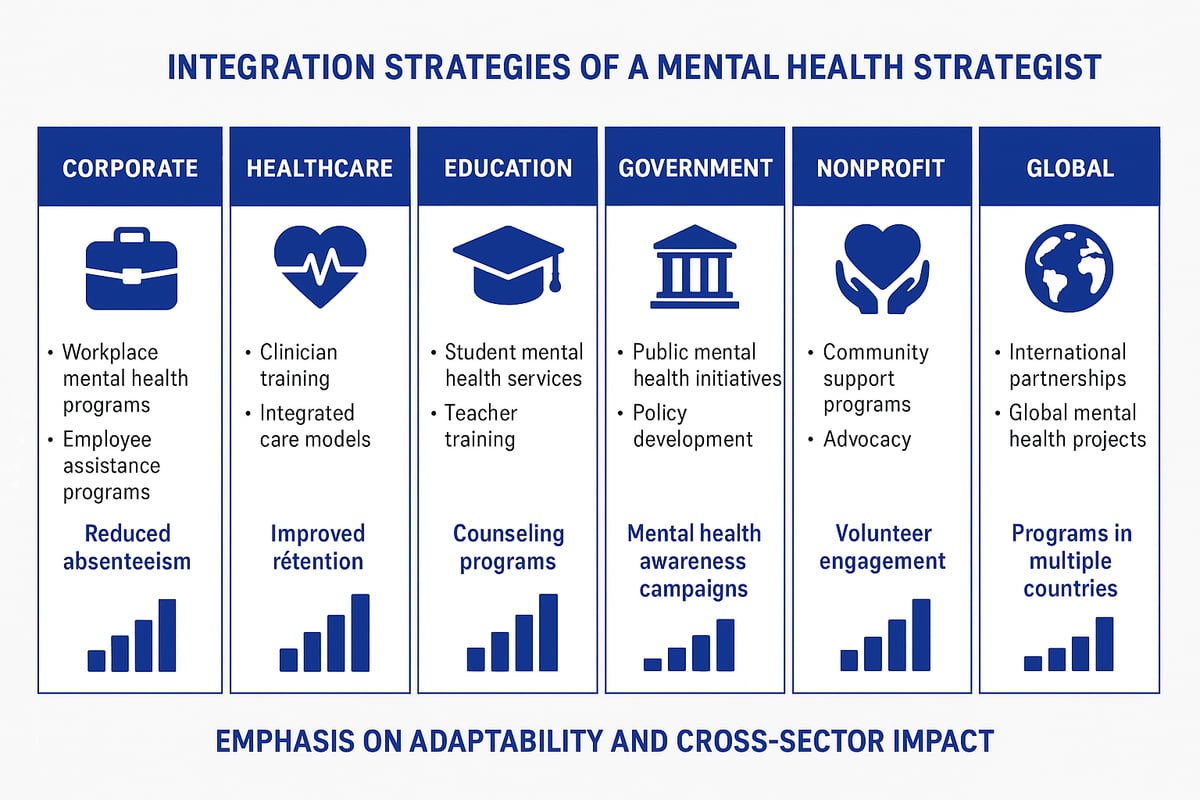
A mental health strategist brings significant value to organizations by adapting strategies to diverse settings. Integration of mental health strategy is not one-size-fits-all. Instead, it requires careful alignment with the unique needs, structures, and cultures of each sector.
Corporate Sector
In the corporate world, integrating a mental health strategist is increasingly viewed as a business necessity. Organizations are investing in leadership training, cross-functional mental health teams, and board-level advocacy. These efforts foster a culture of psychological safety and engagement.
A mental health strategist collaborates with HR, operations, and executive leadership to design policies and programs that address both immediate and long-term challenges. For example, tech and finance firms often roll out resilience workshops and digital wellbeing solutions. According to Corporate Mental Health Initiatives, companies that prioritize mental health experience higher retention and productivity.
- Leadership buy-in drives lasting change.
- Programs are customized to workplace demands.
- Data-driven decisions measure impact.
A mental health strategist ensures these initiatives align with organizational goals and industry standards.
Healthcare and Education
Healthcare and education sectors face unique pressures, including staff burnout, vicarious trauma, and high-stress environments. A mental health strategist plays a vital role in supporting frontline workers, clinicians, and educators.
In hospitals, strategists implement peer support networks, crisis response protocols, and ongoing wellbeing assessments. Schools benefit from staff training, student support programs, and trauma-informed approaches. These interventions help reduce burnout and improve outcomes for both staff and service recipients.
- Address burnout through targeted initiatives.
- Offer continuous support and training.
- Foster resilience and early intervention.
A mental health strategist adapts strategies for the fast-paced, emotionally demanding nature of these environments.
Government and Public Sector
Government and public sector organizations often lead large-scale mental health campaigns and policy implementation. A mental health strategist is crucial in shaping public health initiatives, workplace policies, and compliance with evolving regulations.
In this context, strategists collaborate with policymakers, health departments, and community leaders. They design programs that reach diverse populations, ensuring accessibility and cultural appropriateness. Public sector mental health strategies can influence community wellbeing and set industry standards.
- Develop policies aligned with legislation.
- Launch public awareness campaigns.
- Coordinate multi-agency mental health responses.
A mental health strategist brings expertise in navigating complex regulatory landscapes and driving systemic change.
Nonprofits and NGOs
Nonprofits and NGOs operate with limited resources but have a wide-reaching impact. A mental health strategist focuses on maximizing program effectiveness, leveraging partnerships, and supporting both staff and volunteers.
Grant-based funding often requires clear demonstration of outcomes. Strategists design low-cost, high-impact interventions and measure success through data collection and reporting. Collaborations with local organizations and mental health professionals enhance reach and sustainability.
- Build volunteer support structures.
- Form strategic partnerships for resources.
- Adapt programs for community needs.
A mental health strategist ensures that even resource-constrained organizations can deliver meaningful mental health support.
Global and Multicultural Contexts
In multinational organizations, integrating a mental health strategist requires sensitivity to diverse cultures, languages, and regulations. Global teams benefit from strategies that respect local norms while maintaining consistency across regions.
A mental health strategist develops adaptable frameworks, ensuring compliance with local laws and effective communication across language barriers. Culturally competent training, translated resources, and region-specific assessments are essential.
- Address legal and cultural differences.
- Provide multilingual support and resources.
- Tailor programs to local expectations.
A mental health strategist enables organizations to build truly inclusive, effective mental health strategies worldwide.
Future Trends and Innovations in Mental Health Strategy
The role of the mental health strategist continues to evolve, driven by rapid innovation and shifting workplace needs. As organizations prioritize mental wellbeing, several emerging trends are shaping how mental health strategy is designed and delivered. Staying ahead of these developments is essential for professionals and leaders seeking to maximize impact.
Digital Transformation and AI
Digital transformation is redefining the work of the mental health strategist. The rise of mental health apps, AI-driven assessments, and telehealth platforms offers organizations scalable ways to support wellbeing. Global digital mental health markets are expanding, as companies invest in technology to bridge gaps in access and personalize care.
AI-powered chatbots and virtual therapists provide immediate support, while digital platforms enable remote delivery of resilience training and peer support. For the mental health strategist, leveraging these solutions means evaluating privacy, ethical implications, and ensuring evidence-based practice. The integration of digital tools allows for real-time monitoring and rapid response, but strategists must balance innovation with human connection.
Data-Driven Personalization
Analytics and data-driven decision-making are becoming central to the mental health strategist toolkit. By collecting and analyzing wellbeing data, strategists can tailor programs to individual and group needs. Personalized mental health interventions, informed by predictive analytics, increase engagement and improve outcomes.
For example, tracking stress levels through wearable devices or employee surveys helps identify at-risk groups early. This approach moves beyond generic solutions, allowing the mental health strategist to design targeted initiatives that drive measurable change. Continuous feedback loops support agile adjustment of strategies, maximizing their effectiveness across diverse teams.
Preventive and Proactive Approaches
A significant trend is the shift from reactive to preventive models. The modern mental health strategist focuses on early intervention, resilience building, and promoting overall wellbeing. Proactive approaches, such as stress management workshops and peer support networks, reduce the risk of burnout and chronic stress.
Organizations increasingly recognize the value of addressing issues before they escalate. Strategists utilize resources like Preventing and managing workplace burnout to implement evidence-based prevention strategies. This forward-thinking mindset positions mental health as a core business priority, not just a crisis response.
Policy and Regulatory Shifts
Policy and regulatory frameworks are rapidly evolving, influencing the responsibilities of the mental health strategist. New standards emphasize psychological safety, privacy, and inclusivity. Organizations must navigate regional differences and comply with global best practices.
Staying informed about legal requirements is crucial for the mental health strategist. Resources such as the UN Mental Health Strategy Implementation Guide offer insights into policy development and compliance. Strategists play a key role in shaping policies that support both organizational goals and employee wellbeing.
Collaboration and Ecosystems
Collaboration is at the heart of innovation in mental health strategy. The mental health strategist increasingly works across sectors, building partnerships with healthcare providers, technology firms, and community organizations. These ecosystems enable comprehensive solutions and resource sharing.
Cross-sector collaborations lead to scalable impact, blending clinical expertise with digital innovation. By fostering open communication and aligning objectives, the mental health strategist ensures that mental health strategy is integrated into broader organizational and societal initiatives.
Skills for the Future
The future demands a new set of competencies for the mental health strategist. Digital fluency, cross-cultural awareness, and ethical leadership are becoming essential. Strategists must continuously upskill to keep pace with technological advances and shifting workplace dynamics.
Ongoing professional development, participation in global forums, and engagement with emerging research are key. The mental health strategist who embraces learning and adapts to change will remain at the forefront of driving meaningful, measurable mental health outcomes in organizations.
Actionable Steps to Become or Work with a Mental Health Strategist
Becoming or collaborating with a mental health strategist requires a thoughtful approach. Whether you aim to step into this role or want to leverage their expertise in your organization, these actionable steps will guide your journey.
For Aspiring Strategists
Start by building a strong educational foundation. Degrees in psychology, public health, or organizational leadership are highly valuable. Next, pursue relevant certifications such as mental health first aid or trauma-informed care to enhance your credentials.
Gaining practical experience is essential. Seek roles in HR, clinical settings, or consulting to understand diverse workplace dynamics. Networking and mentorship accelerate growth, so join professional associations and attend industry conferences. Explore reputable online programs like thewmhionline.com for specialized training. To understand how the role has evolved from traditional support to proactive strategy, review Mental Health Practitioner Responsibilities & Duties.
For Organizations
Organizations benefit from integrating a mental health strategist into their structure. Begin by evaluating whether to hire externally or develop in-house talent. Assess your current mental health initiatives and identify gaps.
When selecting a strategist or provider, look for proven experience, relevant certifications, and alignment with your culture. Develop cross-functional teams to support implementation. For guidance on designing and implementing effective programs, consult resources like Workplace Mental Health Implementation Strategies. Ensure that your mental health strategist aligns initiatives with organizational goals and legal requirements.
For Individuals and Teams
Advocating for a mental health strategist within your workplace can be transformative. Encourage leadership to prioritize mental health by presenting data on its benefits. Participate in training sessions and wellbeing initiatives to foster a supportive environment.
Get involved in peer support programs or volunteer as a mental health champion. Continuous learning is crucial, so access videos from the Workplace Mental Health Institute YouTube Channel for ongoing insights and strategies.
Tools and Resources
Equip yourself and your team with practical tools. Essential resources include books, podcasts, and online communities focused on workplace mental health. Downloadable toolkits, policy templates, and assessment checklists streamline program development.
Stay updated with the latest research and trends. Joining professional forums and subscribing to industry newsletters can expand your knowledge base. These resources empower anyone engaging with a mental health strategist to drive meaningful change.
As we’ve explored, the role of a mental health strategist is set to become indispensable in organizations aiming for real, lasting wellbeing and performance. If you’re ready to take the next step—whether you’re considering this career path, seeking to integrate effective strategies into your team, or want to understand the practical tools and qualifications involved—you don’t have to navigate it alone. Let’s make mental health a strategic priority together.
Find Out More about how you or your organization can benefit from the latest insights, training, and support on this vital topic.