
Work-related mental health conditions are becoming an increasingly important focus for employees, employers, and policymakers. With many workers experiencing stress, burnout, anxiety, and other psychological challenges related to their work, understanding workers compensation for mental health has never been more important.
This comprehensive guide explains the key aspects of workers compensation claims for mental health conditions, including eligibility requirements, relevant legislation, qualifying conditions, and the steps involved in lodging a claim.
You will also learn about differences between jurisdictions, common challenges during the claims process, practical tips for navigating the system, and strategies that may help support a successful outcome. Whether you are an employee seeking support or an employer looking to better understand workplace mental health obligations, this guide provides valuable information to help you navigate the process with confidence.
Understanding Workers Compensation for Mental Health
Understanding workers compensation for mental health requires looking at how far the system has come. Today, mental health is recognized as a core workplace safety issue. This section explores how legal, societal, and workplace attitudes have shifted, what counts as a claim, why more people are filing in 2026, and the distinct challenges employees face. If you are considering a claim, knowing these fundamentals is crucial for navigating the process successfully.

The Evolution of Workers Compensation and Mental Health
The journey of workers compensation for mental health began with a focus on physical injuries. Over time, there has been a significant shift to include psychological conditions. Notably, legislative changes—such as New York’s 2024 PTSD law—have broadened coverage. Societal awareness soared after the pandemic, as people recognized that 1 in 6 employees face mental health challenges at work. For example, PTSD coverage now often extends to non-first responders, demonstrating how mental health is viewed as a mainstream workplace issue. Today, workers compensation for mental health is an essential part of employee protection.
What Qualifies as a Work-Related Mental Health Condition?
Not every psychological condition is eligible under workers compensation for mental health. Covered conditions typically include PTSD, anxiety disorders, depression, and acute stress disorder. To qualify, the mental health issue must be directly caused or worsened by work, not by personal factors or pre-existing conditions. A licensed professional must provide a formal diagnosis. For example, PTSD after experiencing workplace violence may qualify, while general work stress without a clear event does not. Causation and documentation are crucial, so understanding these distinctions is key before pursuing workers compensation for mental health.
Why Mental Health Claims Are Increasing
Several factors have driven the rise in workers compensation for mental health claims. Increased awareness and reduced stigma mean employees are more willing to seek help. Legislative expansions across many states have also made it easier to file claims for mental health alone. High-profile cases and media coverage have brought attention to the issue, while employers are now focusing on psychosocial risk management. According to mental health statistics at work, up to 33% of workers feel emotional support is lacking on the job. The result is a surge in claims, especially among office staff and first responders.
Challenges Unique to Mental Health Claims
Filing workers compensation for mental health claims presents unique hurdles. Mental health symptoms are often subjective and invisible, making them harder to prove than physical injuries. The burden of proof is higher, and insurers may be skeptical, leading to more denials. State laws vary widely, adding complexity. Robust documentation, including medical records and witness statements, is essential. Early legal and medical support can make a significant difference. Navigating these challenges requires persistence, preparation, and a clear understanding of the requirements for workers compensation for mental health.
State-by-State Coverage: Key Differences
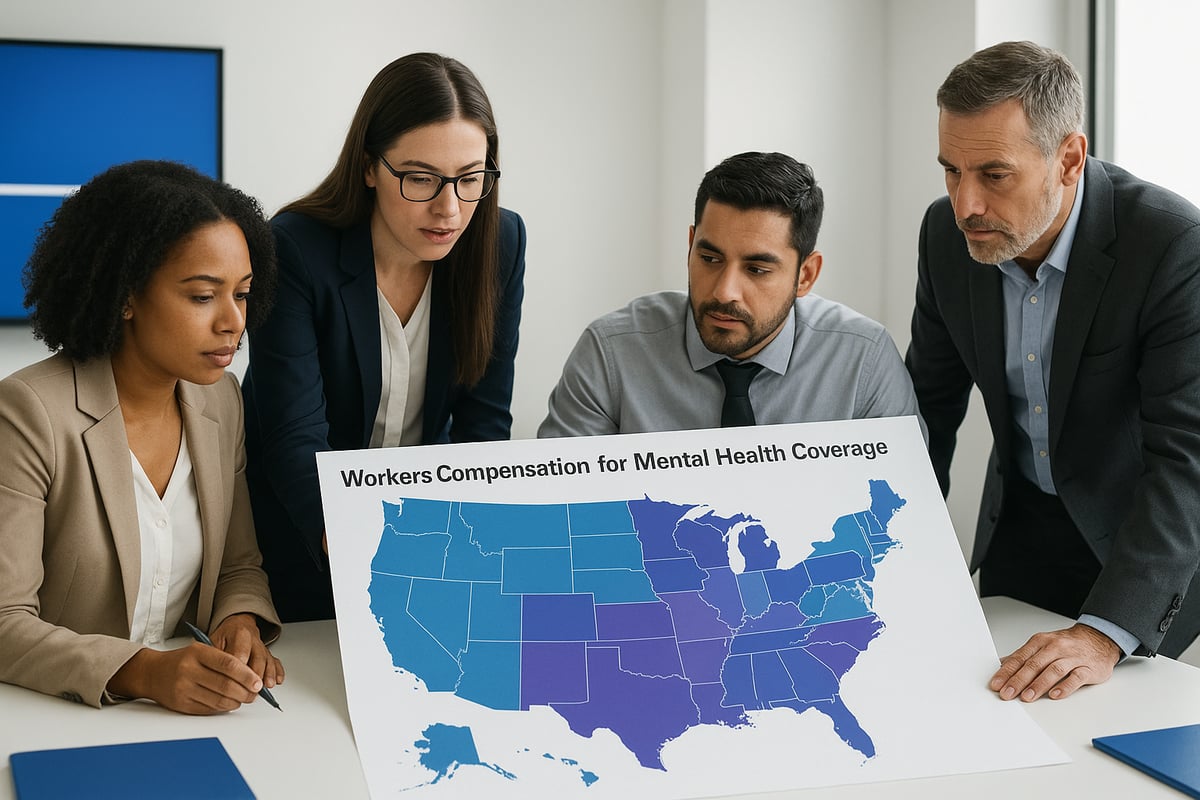
Understanding how workers compensation for mental health is handled means looking closely at where you live and work. State laws set the rules for eligibility, covered conditions, and the path to benefits. Some states lead the way with comprehensive coverage, while others still lag behind. Let us break down the landscape so you know what to expect.
States with Comprehensive Mental Health Coverage
Some states have made significant progress in workers compensation for mental health. California, New York, and Colorado offer broad protection, accepting both mental-only and physical-mental claims. In these states, you can file for PTSD, depression, or anxiety even without a physical injury, as long as you provide evidence linking your condition to your job. California, for example, requires proof that work caused or worsened your condition. Recent laws have expanded eligibility, making it easier for more employees to qualify for benefits under workers compensation for mental health.
States with Limited or Conditional Coverage
Other states still restrict workers compensation for mental health by requiring a physical injury as the basis for any claim. Alabama, Arkansas, and Florida are examples where only “physical-mental” claims are usually accepted. This means if you develop anxiety or depression, you must show it followed a documented workplace injury. Alabama, for instance, only recognizes mental health claims that result from a physical trauma. Many employees in these states face barriers when seeking workers compensation for mental health, especially if their mental health issues are not tied to a specific injury.
States Recognizing PTSD and First Responders
Many states now have special rules for first responders, acknowledging the unique trauma they face. PTSD is often covered for police, firefighters, and EMTs, but states like New York have expanded these laws to include non-first responders as well. Nebraska and Minnesota have specific statutes for PTSD, allowing wider access to workers compensation for mental health. Data from 2025 and 2026 show most new PTSD claims come from sectors outside emergency services, reflecting broader societal recognition of trauma in the workplace.
States with Minimal or No Coverage
Some states still lag in recognizing the importance of workers compensation for mental health. Delaware and Montana, for example, exclude most mental health claims unless there is a related physical injury. Legislative changes are being discussed, but progress is slow. In Delaware, only physical injuries qualify for compensation. This means workers in these states have a much harder time getting benefits for mental health conditions. Where you live can make or break your chance of a successful claim for workers compensation for mental health.
Commonalities and Differences: What to Watch for
Across the country, there are both shared requirements and important differences. Many states include “extraordinary or unusual work-related stress” clauses, setting a high bar for approval. Waiting periods and minimum employment durations, like California’s six-month rule, are common. Exclusions often apply to stress from layoffs, disciplinary actions, or self-diagnosis. With more states updating their statutes since 2024, it is crucial to review current laws. For the latest legislative trends and employer strategies, see Mental Injuries Top List for Expanded Workers’ Compensation Coverage.
How to Find Out Your State’s Rules
Navigating workers compensation for mental health starts with knowing your state’s specific requirements. Reliable sources include state workers compensation boards, official government websites, and local legal aid organizations. You can also consult a workers compensation attorney for personalized advice. Tools like Atticus state-by-state tables make it easier to compare rules and deadlines. Ultimately, state law is the most important factor in determining your eligibility for workers compensation for mental health, so always check the current regulations before filing a claim.
Types of Mental Health Workers Compensation Claims
Navigating workers compensation for mental health means understanding the various types of claims you can file. Each type has unique criteria, documentation needs, and challenges. Knowing which claim applies is the first step to protecting your rights and accessing support.

Physical-Mental Claims: When Mental Health Follows Injury
A physical-mental claim arises when a mental health condition develops as a direct result of a workplace physical injury. For example, an employee who suffers a serious back injury on the job might later experience depression due to chronic pain or lost mobility.
In many states, this is the primary or only pathway for workers compensation for mental health claims. To qualify, you must demonstrate that the mental health condition is linked to the initial work-related injury.
Key documentation includes medical records, incident reports, and a clear timeline connecting the injury to your mental health symptoms. This pathway is generally more straightforward, but you still need robust evidence to prove causation.
Mental-Mental Claims: Work-Related Stress Without Physical Injury
Mental-mental claims involve mental health conditions that stem solely from workplace events or environments, without any accompanying physical injury. For instance, an employee who witnesses workplace violence and develops PTSD, despite not being physically harmed, may pursue this type of claim.
States that allow mental-mental claims often have strict requirements for workers compensation for mental health eligibility. The burden of proof is higher, and claimants frequently face skepticism from insurers.
PTSD is a leading example, and the process is detailed in PTSD in the workplace explained. Understanding the nuances is crucial, as documentation and expert testimony are often required to succeed.
Common Qualifying Conditions in 2026
Several mental health conditions commonly qualify for workers compensation for mental health claims. These include PTSD, acute stress disorder, major depressive disorder, and anxiety disorders. Data shows PTSD is especially recognized, particularly for first responders, but recent laws now extend coverage to more workers.
For example, New York’s 2024 law allows all employees to file for PTSD after traumatic workplace events. However, general stress, burnout, and personality disorders are typically excluded.
Diagnosis from a licensed mental health professional and clear links to a work incident are essential for claim approval. Exclusions often stem from conditions not directly tied to work.
Conditions That Rarely or Never Qualify
Not all mental health issues meet the criteria for workers compensation for mental health. Claims based on general workplace stress, organizational changes like layoffs, disciplinary actions, or self-diagnosed conditions are rarely approved.
Some states require at least six months of employment before cumulative trauma claims are considered. For example, California enforces this rule to prevent frivolous filings.
Most denials occur because of insufficient connection between the mental health condition and specific workplace events. Clear evidence of causation remains the deciding factor in these cases.
Proving Work-Relatedness: Documentation and Evidence
Strong documentation is the backbone of any successful workers compensation for mental health claim. Essential evidence includes a formal diagnosis from a licensed psychiatrist or psychologist, detailed incident reports, and witness statements that corroborate your account.
A timeline showing symptom onset shortly after a workplace event strengthens your case. Emails, internal communications, and coworker testimony can provide additional support.
Ultimately, workers compensation for mental health claims are won or lost based on the quality and completeness of your evidence. Take time to gather and organize all relevant documentation before filing.
Step-by-Step Guide: Filing a Mental Health Workers Compensation Claim
Filing a workers compensation for mental health claim can feel overwhelming, but understanding each step makes the process manageable. Below, you will find a clear, actionable guide to help you navigate the requirements and maximize your chances of success.
Step 1: Recognize Symptoms and Seek Professional Help
The first step in any workers compensation for mental health claim is to recognize when your symptoms might be work-related. Common signs include persistent anxiety, depression, flashbacks, or insomnia following a specific workplace event. Early intervention is critical, so consult a licensed mental health professional as soon as possible.
Prompt action not only supports your recovery but also strengthens your claim. According to Sedgwick’s 2025 Report, early professional support significantly increases claim approval rates. Document your initial visit and keep records of all recommendations.
Step 2: Notify Your Employer Promptly
After seeking help, the next step in the workers compensation for mental health process is to report your condition to your employer. Most states require notification within a specific timeframe, often within days of the incident or diagnosis.
Always provide written notice, even if verbal reporting is acceptable. Specify the date, time, and details of the workplace event that triggered your symptoms. Delayed reporting is one of the main reasons claims are denied, so act quickly and keep a copy of your notification for your records.
Step 3: Obtain a Formal Diagnosis and Medical Evidence
To proceed with a workers compensation for mental health claim, you must have a formal diagnosis from a qualified mental health professional. This diagnosis should reference the DSM-5 and clearly link your condition to a workplace incident or environment.
Request a detailed treatment plan and ensure your provider documents how your symptoms relate to your job. Supporting evidence may include therapy notes, progress reports, and recommendations for recovery. Self-diagnosis is never accepted, so thorough medical documentation is essential.
Step 4: Complete and Submit Claim Forms
Filing the correct paperwork is vital in the workers compensation for mental health process. Obtain the appropriate forms from your employer or your state’s workers compensation board. Common forms include California’s DWC-1 or New York’s C-3.
Fill out all sections carefully, providing accurate incident details, medical evidence, and witness information if available. Incomplete or inaccurate forms can delay your claim or result in denial. Double-check everything before submission and keep copies for your records.
Step 5: Cooperate with Insurer and Independent Medical Exams
Once your claim is filed, expect the insurer to request additional information or schedule an independent medical exam. Cooperation is key in the workers compensation for mental health process. Prepare for assessments by reviewing your records and being consistent in your account of events.
Insurers may send you to their own psychiatrist for evaluation. Stay honest and provide all relevant details. Consistency between your statements, documentation, and medical reports helps build credibility and increases your chances of claim approval.
Step 6: Navigating Disputes, Appeals, and Legal Support
Even with robust evidence, workers compensation for mental health claims are often challenged or denied. Common reasons include insufficient documentation, questions about work-related causation, or pre-existing conditions.
If denied, review the insurer’s explanation carefully. The appeals process usually involves strict deadlines, hearings, and additional evidence. Legal representation can be invaluable, often doubling approval odds. Do not hesitate to seek legal advice if your claim is contested.
Workplace Mental Health Institute: Building Resilience and Prevention
Prevention is as important as compensation in the workers compensation for mental health landscape. Organizations that invest in proactive mental health training and resilience programs see fewer claims and healthier employees.
Evidence-based initiatives, like those from the Workplace Mental Health Institute, have been shown to reduce psychological injury claims by up to 50 percent and cut absenteeism by a third. These programs support both managers and staff, creating a safer, more supportive work environment. Early intervention and prevention are your best tools for long-term wellbeing.
Maximizing Your Chances: Tips and Common Pitfalls
Maximizing your chances of a successful workers compensation for mental health claim requires careful planning and awareness of potential pitfalls. With the right approach, you can increase your odds of approval and protect your wellbeing.
How to Strengthen Your Claim
Building a strong workers compensation for mental health case starts on day one. Begin by gathering all relevant documentation, including medical records, therapy notes, and incident reports.
Keep a detailed diary of your symptoms and treatment. Secure statements from colleagues who witnessed the event or can speak to changes in your behavior. Expert opinions from mental health professionals can provide crucial support.
| Step | Action Item | Why It Matters |
|---|---|---|
| Documentation | Collect medical and incident records | Proves work connection |
| Witness Statements | Ask coworkers for testimony | Supports your narrative |
| Symptom Diary | Track symptoms and treatment | Shows progression and impact |
By presenting comprehensive evidence, you help ensure your workers compensation for mental health claim stands on solid ground.
Common Reasons Claims Are Denied
Many workers compensation for mental health claims are denied due to preventable mistakes. The most common reason is insufficient medical documentation or lack of a clear diagnosis from a licensed professional.
Missing reporting or filing deadlines can also result in automatic denial. Claims are often rejected if there is no obvious work-related cause, such as when stress stems from personal issues instead of workplace factors.
For a deeper dive into emerging denial trends and the evolving landscape, see the 2025 Workers Compensation Outlook: Key Trends and Challenges.
Ensuring your paperwork is complete and your condition is clearly tied to your job is essential for workers compensation for mental health approval.
Navigating Employer Pushback and Stigma
Facing skepticism or resistance from your employer is a common challenge when filing a workers compensation for mental health claim. Some employers may question the legitimacy of your claim or worry about increased insurance costs.
Know your legal rights. Anti-retaliation statutes protect you from unfair treatment after filing a claim. If your employer disputes your case, stay calm and keep communication professional.
Document all interactions and consider seeking support from HR or a union representative. Remember, pursuing workers compensation for mental health is your legal right, not a sign of weakness.
The Role of Legal and Mental Health Professionals
Consulting a workers compensation attorney can significantly increase your chances of success. Legal experts ensure your claim meets all requirements and help you navigate complex appeals processes.
Ongoing treatment with a mental health professional not only aids your recovery but also provides essential documentation for your claim. Attorneys and clinicians work together to build a compelling case for workers compensation for mental health.
Their involvement can double approval rates and provide reassurance during a stressful process.
What to Do If Your Claim Is Denied
If your workers compensation for mental health claim is denied, do not lose hope. First, review the denial letter to understand the specific reasons. Common issues include missing evidence, unclear work connection, or procedural errors.
Gather additional documentation, such as a more detailed medical report or new witness statements. File your appeal within the required timeline, as delays may forfeit your right to challenge the decision.
Persistence pays off. Many successful workers compensation for mental health claims are approved on appeal after presenting stronger evidence and expert support.
Proactive Strategies for Employees and Employers
Prevention is key for both employees and organizations. Encourage open conversations about mental health and provide access to resources. Regular training and resilience programs can reduce the risk of psychological injury.
For example, organizations that invest in building resilience at work report fewer claims and improved employee wellbeing. Proactive strategies help both individuals and teams manage stress before it escalates.
By prioritizing prevention, you can reduce the need for workers compensation for mental health claims and foster a healthier, more supportive workplace.
Frequently Asked Questions About Workers Compensation for Mental Health
Navigating workers compensation for mental health can be complex because eligibility requirements and benefits vary by state. Below are answers to some of the most common questions employees ask.
Can I get workers compensation for mental health if I only have stress or anxiety?
It depends on your state’s workers compensation laws and the circumstances of your claim. Some states allow claims for work-related mental health conditions when there is clear evidence that workplace factors significantly contributed to the condition. Documentation from qualified healthcare professionals is often required.
Do I need a physical injury to file a claim?
Not necessarily. Some states recognize mental health conditions as stand-alone workplace injuries, while others have more restrictive requirements. Eligibility depends on the laws in your jurisdiction and the specific facts of your case.
What if my mental health condition existed before I started my job?
A pre-existing condition does not automatically prevent you from filing a claim. In some situations, benefits may be available if workplace factors significantly aggravated or worsened an existing mental health condition. Medical evidence is typically required to establish this connection.
How long do I have to file a claim?
Workers compensation reporting and filing deadlines vary by state. It is important to notify your employer and begin the claims process as soon as possible after becoming aware of a work-related mental health condition. Missing deadlines can affect your eligibility for benefits.
What benefits are available for mental health claims?
Depending on the state and circumstances of the claim, benefits may include medical treatment, counseling services, wage replacement payments, rehabilitation support, and other approved expenses related to the work-related condition.
Can I lose my job for filing a mental health claim?
Many states have laws that prohibit employers from retaliating against employees for exercising their legal rights under workers compensation legislation. If you believe you have experienced retaliation, consider seeking legal advice or contacting the appropriate state agency.
How do I find a workers compensation attorney?
Consider seeking an attorney who specializes in workers compensation law and has experience handling psychological injury or mental health-related claims. State bar associations and legal referral services can often help you identify qualified professionals.
Where can I find information about my state’s workers compensation laws?
The most reliable source is your state’s workers compensation agency or board. Because laws and eligibility requirements vary by jurisdiction, reviewing official state resources can help you understand your rights, responsibilities, and available benefits.
Disclaimer: This information is intended for educational purposes only and should not be considered legal advice. Workers compensation laws vary by state. If you have questions about a specific situation, consult a qualified attorney or your state’s workers compensation authority.
As we’ve explored, understanding workers compensation for mental health requires awareness of state-specific laws, eligibility requirements, and proper documentation. Staying informed and seeking appropriate support can help employees navigate the process more effectively while encouraging healthier, safer workplaces. For organizations, investing in mental health awareness, psychological safety, and workplace wellbeing initiatives can help reduce risks, support employees, and foster a more resilient workforce. Let us help you create a healthier, more resilient work environment—Find Out More.

