
Did you know that organizations prioritizing wellbeing in the workplace see up to 33% less absenteeism and significantly higher employee engagement? As the demand for healthier, happier teams rises, fostering wellbeing in the workplace is now essential for sustainable success.
This guide offers practical strategies to help you create a thriving environment where people and performance flourish. You will discover what workplace wellbeing truly means, why it matters, the key pillars, actionable tactics, the latest trends, and how to measure your progress.
Start your journey toward a healthier, more productive workplace today.
Understanding Workplace Wellbeing
Workplace wellbeing is no longer a trend, it is a necessity for successful organizations. Companies are recognizing that wellbeing in the workplace is foundational to both employee satisfaction and business performance. By focusing on all aspects of health, organizations can unlock greater engagement and resilience in their teams.
Defining Workplace Wellbeing
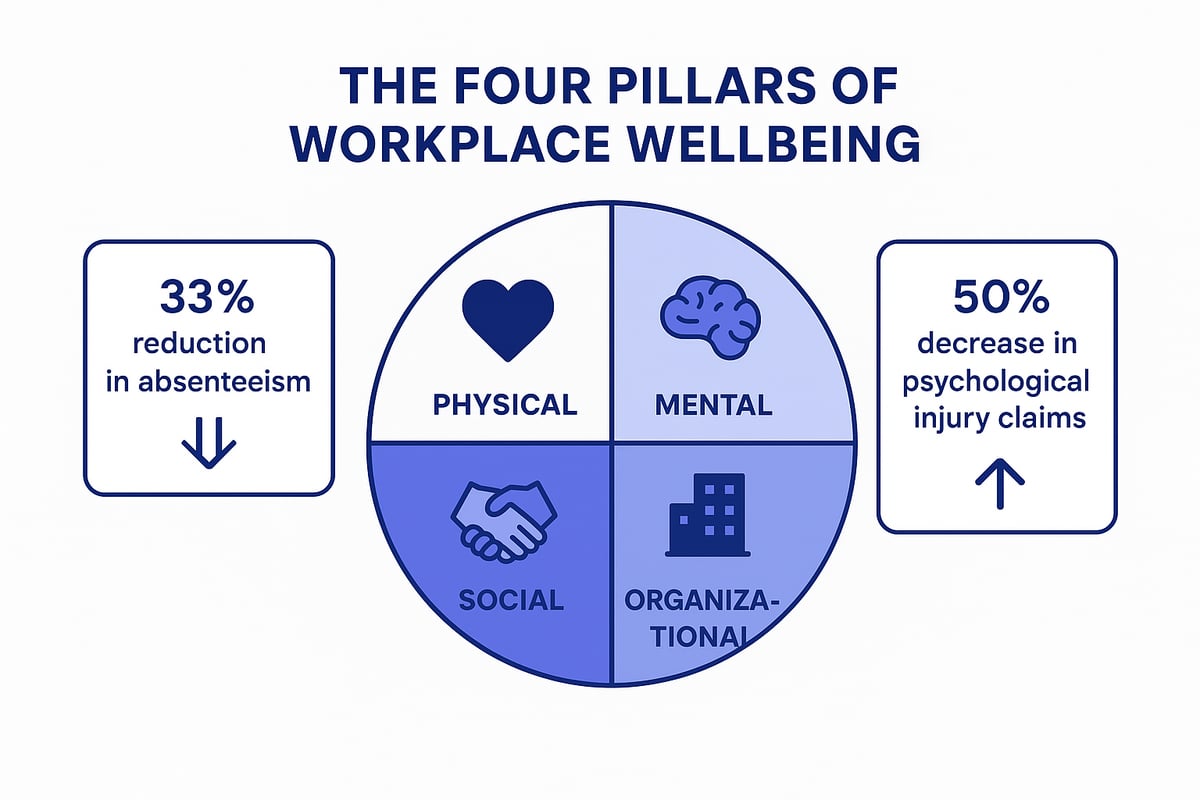
Wellbeing in the workplace is a holistic concept that goes beyond traditional wellness programs. It covers physical, mental, emotional, and social health, acknowledging that each dimension impacts employee experience. According to the World Health Organization and industry leaders, true workplace wellbeing means creating an environment where people thrive physically and psychologically.
This approach differs from standard wellness offerings by integrating mental health support, social connection, and personal growth into daily work life. A holistic strategy ensures that employees feel valued and supported on all fronts, not just in their physical health. Embracing this broader perspective sets the foundation for lasting wellbeing in the workplace.
Why Workplace Wellbeing Matters
The impact of wellbeing in the workplace is significant and measurable. Organizations with strong wellbeing cultures see higher employee engagement, productivity, and retention. For example, research shows a 33% reduction in absenteeism and a 50% decrease in psychological injury claims when wellbeing strategies are implemented effectively.
Companies that prioritize wellbeing also experience reduced turnover and a stronger employer brand. Real-world examples include businesses that have embedded strategies for workplace wellbeing into their core values, resulting in healthier, more motivated teams. Focusing on wellbeing in the workplace is not only good for people, it is good for business.
Key Benefits for Organizations and Employees
Investing in wellbeing in the workplace delivers clear benefits for both employers and staff. Consider the following advantages:
| Benefit | Organizational Impact | Employee Impact |
|---|---|---|
| Improved morale and satisfaction | Higher engagement | Greater job satisfaction |
| Enhanced creativity and innovation | Competitive advantage | Opportunities to contribute |
| Lower health-related costs | Reduced absenteeism | Better overall health |
| Stronger employer brand | Attracts top talent | Pride in workplace culture |
These outcomes demonstrate how comprehensive wellbeing in the workplace can transform company culture and drive success.
Common Challenges and Barriers
Despite its benefits, achieving wellbeing in the workplace presents real challenges. Stigma around mental health can prevent open conversations. Some organizations struggle with limited resources or lack of leadership buy-in, making it difficult to prioritize wellbeing initiatives.
Remote and hybrid work models add complexity, as employees may feel disconnected or unsupported. Balancing individual needs with organizational goals is another hurdle. Addressing these barriers requires commitment, creativity, and ongoing effort from leadership and staff alike.
The Pillars of Workplace Wellbeing
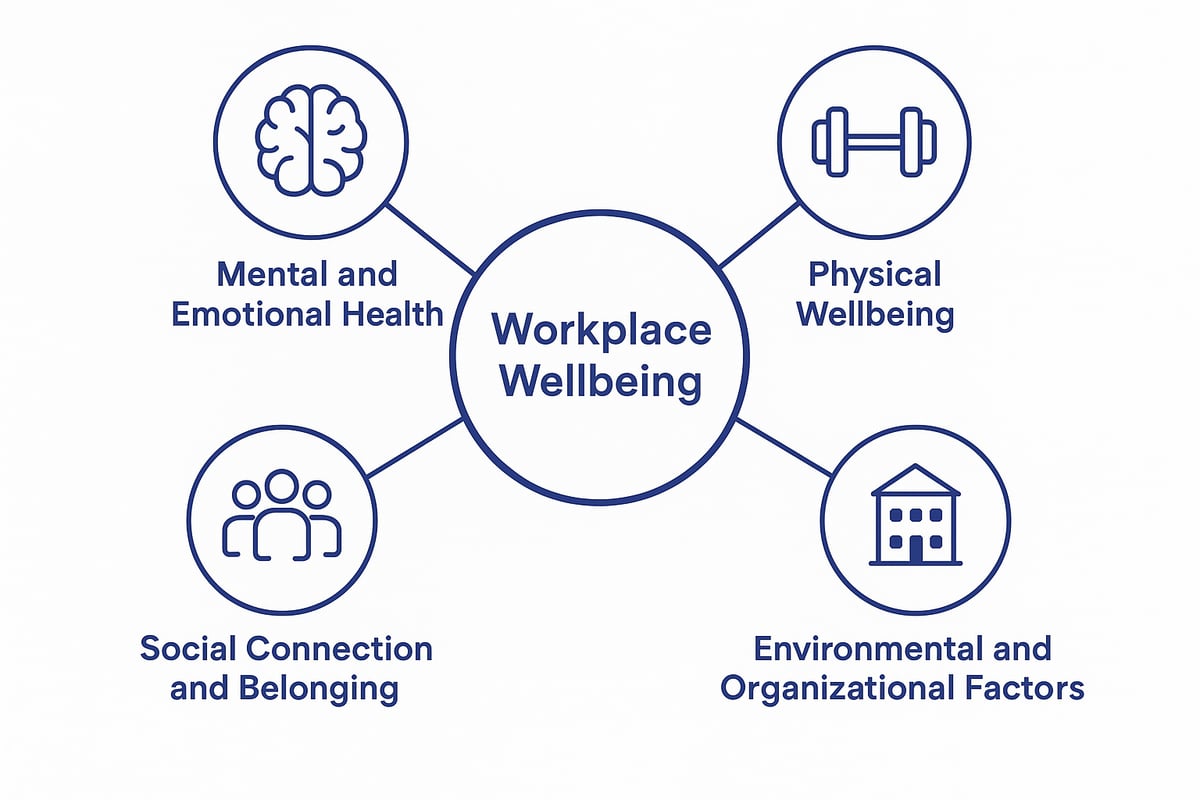
A robust approach to wellbeing in the workplace relies on several foundational pillars. Each supports the holistic health of employees and contributes to a thriving organizational culture. By addressing these pillars, leaders can create environments where people feel valued, engaged, and empowered to do their best work.
Mental and Emotional Health
Mental and emotional health is a core element of wellbeing in the workplace. Employees need access to resources that help them manage stress, anxiety, and daily pressures. Fostering open dialogue about mental health and providing psychological safety allows individuals to voice concerns without fear of judgment.
Organizations can implement mental health first aid programs, offer confidential counseling, and encourage regular check-ins. These initiatives help reduce stigma, increase support, and promote resilience among team members.
Physical Wellbeing
Physical wellbeing in the workplace goes beyond traditional fitness programs. It encompasses ergonomic workspaces, opportunities for movement, and access to nutritious food options. When employees are encouraged to take breaks, use standing desks, or join wellness challenges, it directly influences their physical and mental health.
Simple changes, like healthy snack offerings or flexible scheduling for exercise, contribute to sustained energy and focus. Supporting physical wellbeing is essential for long-term productivity and satisfaction.
Social Connection and Belonging
Social connection is a powerful driver of wellbeing in the workplace. Creating spaces for team-building, peer support, and inclusive interactions helps foster a sense of belonging. Positive relationships at work reduce isolation and boost morale.
Regular team check-ins, social events, and peer recognition programs are effective strategies. For more insights on cultivating meaningful connections, explore building social connection at work. A connected workforce is more collaborative, innovative, and engaged.
Growth and Purpose
Opportunities for growth and purpose are vital for wellbeing in the workplace. When employees can pursue meaningful development and align their goals with the organization’s mission, motivation and satisfaction rise.
Mentorship programs, ongoing training, and clear career paths support professional advancement. Recognizing individual strengths and providing purposeful work experiences encourage people to invest their best efforts.
Environmental and Organizational Factors
The physical and organizational environment shapes wellbeing in the workplace. Safe, adaptable workspaces and flexible arrangements demonstrate a commitment to employee health. Leadership must prioritize supportive policies, clear communication, and a culture that values wellbeing.
Adjustable workstations, natural lighting, and responsive management practices make a significant difference. When leaders model positive behaviors and invest in workplace improvements, they lay the groundwork for sustained wellbeing.
Actionable Strategies for Fostering Wellbeing
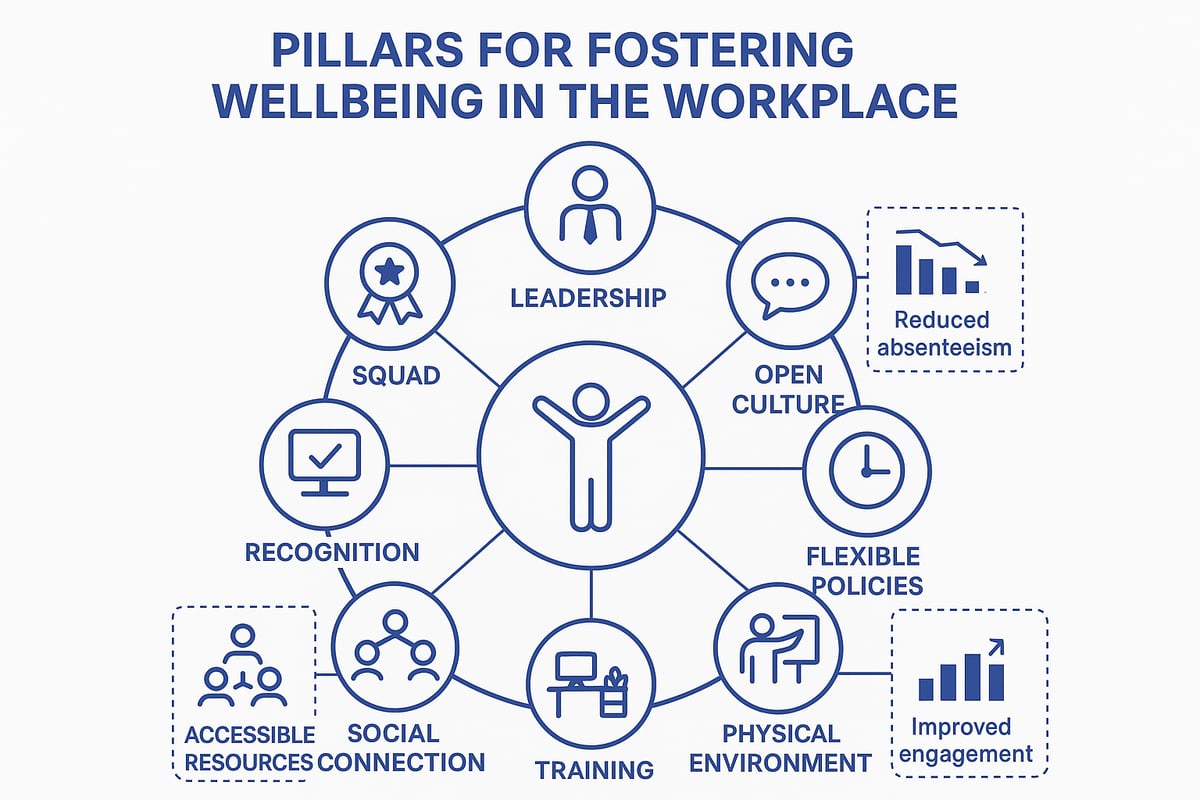
To create real change, organizations must embed practical strategies into daily operations. Meaningful improvements in wellbeing in the workplace begin with intentional actions from leadership and a supportive culture. The following strategies offer a comprehensive approach for organizations determined to foster healthier, more engaged teams.
Leadership Commitment and Role Modeling
Leaders set the standard for wellbeing in the workplace. When senior executives and managers prioritize their own wellbeing, it signals to employees that health and balance matter.
Providing training in psychosocial safety equips leaders to recognize and respond to stressors among staff. Leadership wellbeing workshops are effective for developing empathy, resilience, and awareness.
- Leaders who model healthy boundaries, use available resources, and support flexible work inspire similar behaviors.
- Regular check-ins and open-door policies show genuine commitment.
- Leadership support is the foundation for sustainable wellbeing in the workplace.
Building a Culture of Openness and Support
A culture that encourages open conversations about mental health reduces stigma and builds trust. Employees need to know it is safe to share challenges without fear of judgment.
Initiatives might include anti-stigma campaigns, peer support groups, and visible mental health champions within teams.
- Regularly scheduled forums for discussion foster openness.
- Managers should be approachable and trained to listen empathetically.
- When wellbeing in the workplace is openly discussed, employees feel valued and supported.
Designing Flexible Work Policies
Flexibility is crucial for supporting wellbeing in the workplace, especially in hybrid or remote environments. Organizations can offer flexible hours, accommodate personal needs, and manage workloads thoughtfully.
Best practices include:
- Allowing employees to adjust schedules for family or health reasons.
- Implementing clear guidelines for remote work expectations.
- Supporting work-life integration through technology and communication.
Flexibility empowers employees, reduces stress, and enhances engagement.
Investing in Training and Development
Ongoing learning opportunities are essential for building resilience and supporting wellbeing in the workplace. Training in stress management, trauma-informed care, and resilience equips staff to handle workplace pressures.
Organizations can access a range of Workplace mental health courses to support staff development and mental health.
- Provide workshops on mindfulness and emotional intelligence.
- Encourage employees to pursue further training and upskilling.
- Promote a growth mindset that sees challenges as opportunities for learning.
Enhancing Physical Work Environments
The physical workspace plays a significant role in wellbeing in the workplace. Ergonomic assessments help identify adjustments needed for comfort and safety, such as standing desks or supportive chairs.
Other strategies include:
- Maximizing natural light and providing access to outdoor spaces.
- Supplying healthy snacks and hydration stations.
- Encouraging regular movement breaks throughout the day.
A well-designed environment reduces physical strain and supports mental clarity.
Promoting Social Connection and Inclusion
Positive relationships at work are vital for wellbeing in the workplace. Team-building activities, mentorship programs, and employee resource groups foster a sense of belonging.
Inclusive events that celebrate diversity help employees feel seen and respected.
- Schedule regular team check-ins, both formal and informal.
- Encourage peer recognition and support.
- Create opportunities for cross-team collaboration.
Strong social bonds make the workplace more resilient and enjoyable.
Providing Accessible Wellbeing Resources
Employees thrive when they have easy access to wellbeing in the workplace resources. This includes Employee Assistance Programs (EAPs), mental health apps, and online support platforms.
Clear communication about available resources ensures everyone knows where to find help.
- Offer digital tools for sleep, mindfulness, and stress reduction.
- Provide access to confidential counseling services.
- Regularly update staff on new or enhanced wellbeing offerings.
Accessibility helps remove barriers to seeking support.
Recognizing and Rewarding Wellbeing Efforts
Recognition reinforces the importance of wellbeing in the workplace. Publicly celebrating wellbeing champions and incentivizing healthy behaviors shows that the organization values employee health.
Integrating wellbeing into performance reviews and goal-setting drives ongoing commitment.
- Offer awards or perks for participation in wellbeing initiatives.
- Highlight individual and team achievements in company communications.
- Make wellbeing a regular topic in performance discussions.
Rewarding positive actions encourages a culture where wellbeing is part of everyday success.
Measuring and Sustaining Workplace Wellbeing
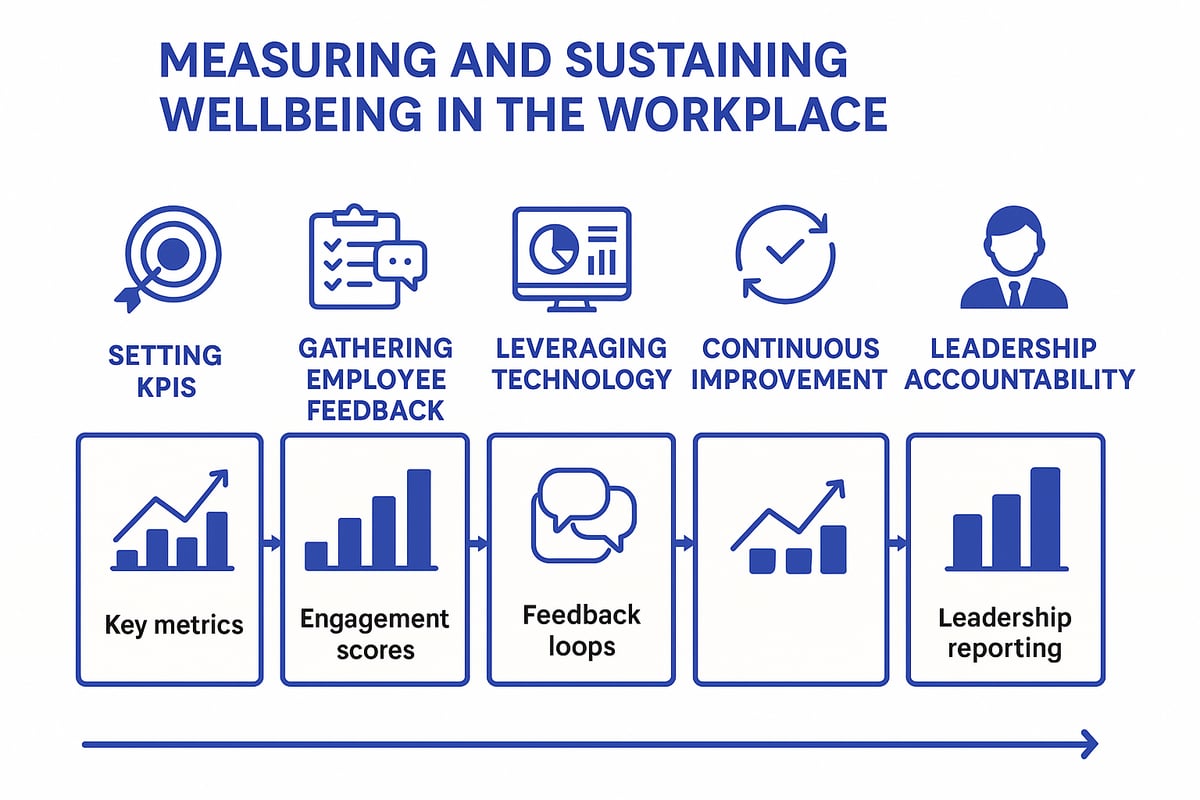
Measuring and sustaining wellbeing in the workplace is essential for long-term impact. Organizations that track their progress can identify what works, adapt quickly, and demonstrate value to both employees and stakeholders. A robust measurement framework ensures that wellbeing initiatives remain relevant and effective as the workforce evolves.
Setting Clear Goals and KPIs
To effectively measure wellbeing in the workplace, begin by establishing clear goals and key performance indicators (KPIs). These might include metrics such as absenteeism rates, employee engagement, and satisfaction scores. Align each KPI with broader business objectives to ensure that wellbeing efforts support organizational success.
A useful approach is to benchmark current levels before launching new initiatives. For example, some organizations have reported a 282% increase in positive wellbeing measures after implementing targeted programs. To guide your process, consult resources like the Workplace wellbeing assessment guide, which outlines best practices for setting measurable objectives. A table summarizing typical KPIs can help you track progress:
| KPI | Description | Example Target |
|---|---|---|
| Absenteeism Rate | Days lost per employee | < 5 days/year |
| Engagement Score | Survey-based measurement | > 80% positive |
| Wellbeing Index | Composite of key indicators | Improve by 10% |
Ongoing Assessment and Feedback
Sustaining wellbeing in the workplace requires regular assessment and honest feedback. Conduct frequent employee surveys and pulse checks to capture changing needs and perceptions. Anonymous feedback channels encourage openness, allowing staff to share concerns without fear of reprisal.
Listen actively to what employees say about wellbeing in the workplace. Use structured interviews or focus groups for deeper insights. The data collected should guide adjustments to current strategies, ensuring your initiatives remain responsive and impactful. Continuous feedback keeps efforts aligned with employee expectations.
Leveraging Technology and Data Analytics
Integrating technology into your approach unlocks new ways to monitor wellbeing in the workplace. Digital platforms and wellbeing apps can track participation, engagement, and outcomes in real time. Analytics dashboards help visualize trends and pinpoint areas needing attention.
For example, analyzing Employee Assistance Program (EAP) usage rates or engagement with online resources provides valuable insights. Data-driven decision making enables leadership to quickly adapt to emerging needs, ensuring that investments in wellbeing in the workplace yield measurable results. Technology also streamlines reporting and supports transparency.
Continuous Improvement and Adaptation
A commitment to continuous improvement is vital for sustaining wellbeing in the workplace. Treat each initiative as a pilot, regularly reviewing outcomes and seeking new evidence-based practices. Stay informed about emerging research and trends to keep your programs fresh and effective.
As workforce demographics shift, adapt wellbeing in the workplace strategies to reflect generational preferences and new challenges. Encourage a culture of experimentation, where feedback and results drive ongoing refinement. This approach ensures your programs remain relevant and valued over time.
Leadership Accountability and Reporting
Leadership plays a crucial role in sustaining wellbeing in the workplace. Transparent reporting on outcomes builds trust and demonstrates commitment. Hold leaders accountable by including wellbeing metrics in performance reviews and organizational scorecards.
Regularly share successes and lessons learned with stakeholders to foster a culture of continuous learning. Leadership reviews should focus on both quantitative results and qualitative feedback. By embedding wellbeing in the workplace into leadership responsibilities, organizations ensure sustained focus and long-term success.
Emerging Trends in Workplace Wellbeing
Emerging trends are transforming how organizations approach wellbeing in the workplace. As employee expectations evolve, companies are embracing new practices that prioritize individual needs, harness technology, and integrate wellbeing into core business strategies. Understanding these trends is essential for building resilient, engaged teams in a rapidly changing landscape.
Personalization and Employee-Led Initiatives
Personalization is redefining wellbeing in the workplace by empowering employees to shape their own experiences. Organizations are moving away from one-size-fits-all approaches, instead offering tailored wellbeing plans and self-directed programs. Employees now have greater input in designing initiatives, ensuring relevance and engagement.
Examples include personalized mental health check-ins, flexible benefit selections, and options for remote or hybrid work setups. This trend supports diverse needs, making wellbeing in the workplace more effective for every individual. By actively involving employees, organizations foster a sense of ownership, boosting morale and program participation.
Technology-Driven Wellbeing Solutions
Technology is rapidly advancing wellbeing in the workplace through AI-powered mental health apps, digital platforms, and virtual reality experiences. These tools provide scalable, accessible support for employees regardless of location. AI can identify stress patterns, recommend resources, and offer real-time interventions.
Virtual reality is being used for stress reduction, guided mindfulness, and immersive learning. Online support communities and learning platforms further enhance engagement. According to the Top Workplace Wellness Trends for 2026, organizations adopting these solutions report higher participation and improved outcomes, making technology a cornerstone of modern wellbeing in the workplace.
Focus on Psychological Safety and Trauma-Informed Approaches
A growing focus on psychological safety and trauma-informed care is shaping wellbeing in the workplace. Training leaders and staff in trauma-informed approaches equips them to recognize and address the impact of stress and adversity. Creating safe spaces for open, honest conversations encourages trust and reduces stigma.
Organizations are implementing vicarious trauma training, especially for frontline teams, to build resilience and support recovery. Prioritizing psychological safety allows employees to express concerns without fear, fostering a culture where wellbeing in the workplace is genuinely valued and protected.
Integrating Wellbeing into Organizational Strategy
Integrating wellbeing in the workplace into core business strategy is becoming a top priority. Companies are establishing cross-functional wellbeing committees and aligning initiatives with ESG and DEI objectives. This holistic approach ensures wellbeing is not a standalone effort but a fundamental business value.
Leadership commitment and transparent reporting are critical for long-term success. Organizations are embedding wellbeing goals into strategic plans, making it part of performance metrics and decision-making processes. As a result, wellbeing in the workplace drives not just employee satisfaction, but also organizational growth and reputation.
Steps to Implement a Workplace Wellbeing Program
Creating an effective wellbeing in the workplace program requires a structured approach. Organizations that follow a clear process are more likely to see positive, lasting results. Below, we break down each step into actionable tasks, helping you build a foundation for sustainable wellbeing in the workplace.
Step 1: Assess Current State and Employee Needs
Begin by evaluating the current state of wellbeing in the workplace. Use surveys, focus groups, and one-on-one interviews to gather honest feedback from employees. This helps identify strengths, gaps, and opportunities for improvement.
Collect both qualitative and quantitative data, such as engagement levels and wellbeing indicators. Benchmark your findings against industry standards, using resources like the State of the Global Workplace Report, to gain perspective on global trends.
Engage employees in the process to ensure their voices are heard. This collaborative approach builds trust and lays the groundwork for effective wellbeing in the workplace initiatives.
Step 2: Develop a Tailored Wellbeing Strategy
With assessment data in hand, create a strategy aligned with your organization’s culture and values. Define clear objectives and prioritize actions that address the most pressing needs for wellbeing in the workplace.
Involve stakeholders from all levels, including leadership, managers, and frontline staff. This ensures buy-in and diverse perspectives when designing programs.
Outline measurable goals, timelines, and responsibilities. Consider integrating a mix of mental, physical, and social wellbeing initiatives to create a balanced approach. A tailored strategy sets the stage for meaningful impact on wellbeing in the workplace.
Step 3: Launch and Communicate Initiatives
Roll out your wellbeing in the workplace initiatives with clear, consistent communication. Announce programs through multiple channels, such as email, intranet, and team meetings, to reach all employees.
Leadership endorsement is critical. When leaders participate and share their own experiences, it encourages wider engagement. Provide accessible resources and training to help employees understand and use new offerings.
Celebrate early wins to build momentum. Use stories and testimonials to make wellbeing in the workplace relatable and inspiring. Ongoing communication keeps the program visible and top of mind.
Step 4: Monitor, Evaluate, and Refine
Track progress by measuring key wellbeing in the workplace metrics, such as participation rates, engagement scores, and employee feedback. Use regular surveys and pulse checks to gather ongoing insights.
Analyze data to identify trends and areas for improvement. Adjust programs as needed to address changing needs and preferences. Transparent reporting helps maintain trust and accountability within the organization.
Commit to continuous improvement. As the workforce evolves, so should your wellbeing in the workplace strategy, ensuring long-term impact and organizational resilience.
As you’ve seen throughout this guide, prioritizing wellbeing at work isn’t just a passing trend—it’s a powerful strategy for building resilient, engaged teams and a thriving organization. Whether you’re interested in comprehensive mental health training, resilience programs, or practical steps to boost employee morale, there’s never been a better time to start making positive changes. If you’re ready to explore tailored solutions, access practical resources, or get strategic guidance for your organization, let’s take the next step together.
Find Out More

