
Are you passionate about breaking mental health stigma and making a real difference in your community or workplace? The mental health crisis continues to affect millions, making advocacy more urgent than ever.
This expert guide demystifies the path to mental health advocate certification in 2026. You will find clear steps, essential requirements, and practical opportunities to help you amplify your impact as a certified advocate.
Discover how the role of mental health advocates is evolving, explore trusted certification programs, and unlock new career pathways. Ready to take action? Follow our step-by-step roadmap to become a certified changemaker.
Understanding Mental Health Advocacy
Mental health advocacy has transformed dramatically in recent years. As society recognizes the importance of mental health, the role of certified advocates has become central to change. Understanding what it means to be a mental health advocate today—and how certification enhances your impact—is essential for anyone considering this path.

The Evolving Role of Mental Health Advocates
A mental health advocate is an individual who champions the rights and well-being of those affected by mental health challenges. Their responsibilities include raising awareness, reducing stigma, and driving actionable change in workplaces, schools, and communities. Today, advocacy extends beyond public education to influencing policies and improving access to care.
Recent trends show a shift from passive awareness campaigns to active involvement in shaping mental health strategies. Certified advocates are now leading peer support groups, advising on workplace policies, and collaborating with professionals. Since the pandemic, the need for trained advocates has grown, making their influence on stigma reduction and systemic change more vital than ever. Pursuing mental health advocate certification ensures advocates are equipped to meet these evolving demands.
Why Certification Matters
While informal advocacy is valuable, certified roles demonstrate a higher level of expertise and commitment. Certification validates your skills, ensuring you adhere to ethical standards and best practices. The demand for certified advocates is rising rapidly, with mental health jobs expected to grow three times faster than other sectors by 2026, according to mental health jobs to grow 3X more than the rate of all US jobs.
Employers, including healthcare providers and large organizations, increasingly require or prefer certified advocates. This recognition opens doors to career advancement, leadership positions, and greater influence within your field. Earning a mental health advocate certification sets you apart, providing credibility and access to specialized opportunities.
Key Skills and Qualities of Effective Advocates
To succeed in mental health advocate certification, candidates must develop a diverse set of skills. Effective advocates communicate clearly, empathize with others, and demonstrate cultural competence. Understanding trauma-informed care and maintaining confidentiality are critical, as is the ability to collaborate with mental health professionals.
Employers value advocates with formal training; in fact, 82% seek candidates who have completed structured programs. Real-world success stories often highlight advocates who blend technical knowledge, compassion, and resilience. By honing these abilities, certified advocates can deliver meaningful support and drive lasting change.
Global Standards and Regional Differences
Mental health advocate certification is governed by various international frameworks, each with unique requirements. In the US, UK, Australia, and Canada, differences exist in accreditation bodies, training hours, and recognized credentials. For example, Australia emphasizes workplace mental health, with programs tailored to organizational settings and a focus on practical skills.
Accreditation trends point toward harmonization of standards and greater global recognition. Bodies such as Mental Health First Aid International set benchmarks for training and ethical practice. As certification evolves, advocates benefit from clearer pathways and increased mobility across regions, ensuring their skills remain relevant and impactful.
Step-by-Step Guide to Mental Health Advocate Certification
Embarking on the journey to mental health advocate certification involves a clear, actionable process. Whether you are just starting or seeking to formalize your advocacy, each step brings you closer to making a measurable impact. Here is your roadmap to earning certification in 2026.
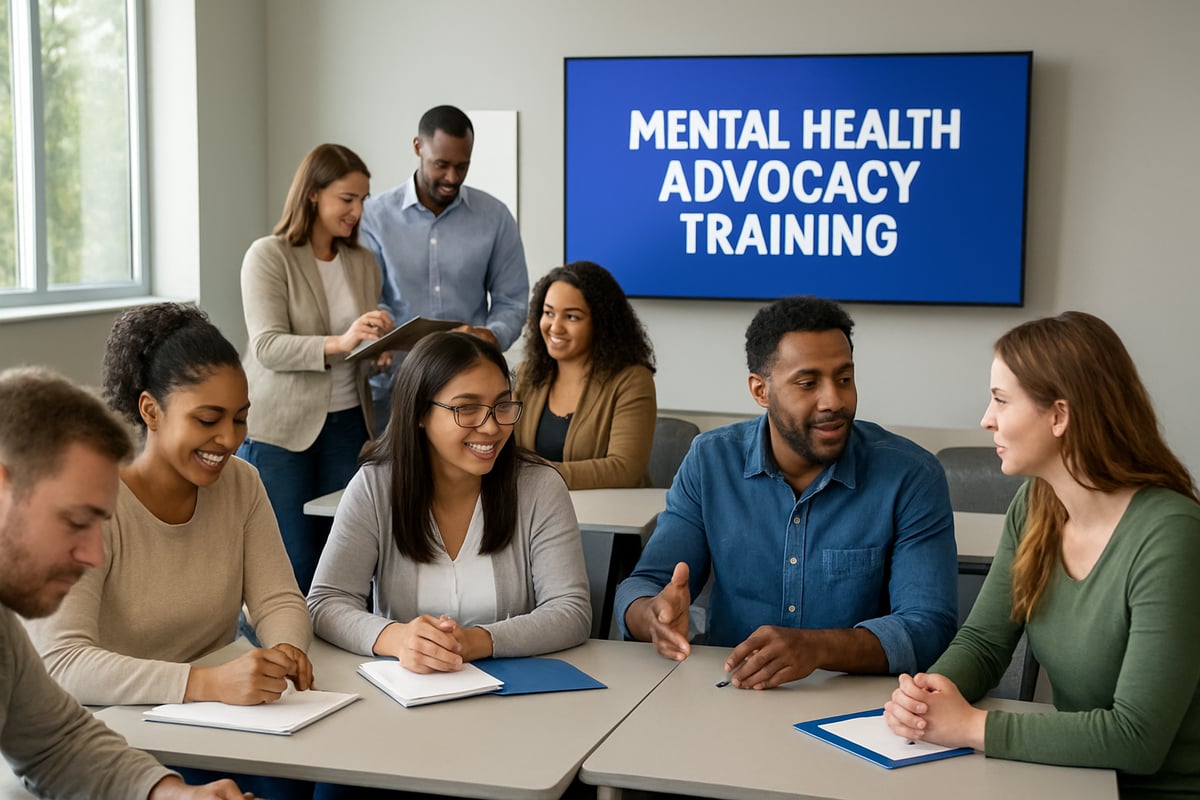
Step 1: Assessing Your Readiness and Motivation
Begin your mental health advocate certification journey with honest self-reflection. Ask yourself why you want to become a certified advocate and what you hope to achieve. Consider your passion for reducing stigma, supporting others, or driving systemic change.
Identify your strengths, such as empathy, communication, or lived experience. At the same time, recognize gaps in knowledge or skills that certification can help address. Assess your availability and resources, as programs may require time, fees, and commitment.
Many successful advocates cite personal experiences or a desire to improve their communities as key motivators. By clarifying your purpose, you set a strong foundation for your mental health advocate certification path.
Step 2: Researching Accredited Certification Programs
The next step is to identify reputable mental health advocate certification programs. Look for providers accredited by recognized bodies, such as the National Council for Mental Wellbeing, Mental Health First Aid (MHFA), or NAMI. Compare in-person, online, and hybrid learning options to fit your schedule and learning style.
Review program prerequisites, including education level and prior experience. Some programs, like Mental Health First Aid Certification, offer foundational training suitable for various backgrounds. Others may require peer support or healthcare experience.
When evaluating programs, consider curriculum content, instructor expertise, and support services. Reach out to alumni or join online forums to gather authentic feedback. A thoughtful selection process ensures your mental health advocate certification aligns with your goals.
Step 3: Meeting Educational and Experience Requirements
Most mental health advocate certification programs specify minimum education and experience requirements. While some accept applicants with a high school diploma, others prefer a bachelor’s degree or relevant coursework.
Practical experience, such as volunteering, peer support, or working in healthcare, is often essential. Gather references and documentation to demonstrate your background and commitment. According to recent data, 60 percent of programs require candidates to have prior advocacy involvement or lived experience.
By meeting these prerequisites, you enhance your readiness for the next stages of mental health advocate certification and demonstrate your dedication to the field.
Step 4: Completing Core Curriculum and Training
Certification programs typically include a structured curriculum covering mental health basics, crisis intervention, ethical guidelines, and advocacy skills. Expect modules on communication, setting boundaries, and referral processes.
Practical training emphasizes trauma-informed and culturally responsive care. Many programs offer online learning platforms, such as https://thewmhionline.com, which provide accessible, high quality instruction. Assessment methods often include exams, case studies, and role-plays to test your knowledge and real-world application.
A comprehensive curriculum equips you with the competencies needed for effective mental health advocate certification and prepares you for supervised practice.
Step 5: Fieldwork, Practicum, or Supervised Experience
Hands-on experience is a cornerstone of mental health advocate certification. Most programs require a practicum or supervised fieldwork, typically ranging from 40 to 120 hours. This may take place in schools, nonprofits, healthcare settings, or workplaces.
During this phase, you will work under the guidance of experienced supervisors, applying your classroom knowledge in real-world scenarios. Documentation of your hours and regular feedback sessions are essential for tracking progress.
Fieldwork not only builds your confidence but also deepens your understanding of advocacy challenges and solutions.
Step 6: Certification Exam and Application Process
After completing training and fieldwork, you will move on to the certification exam and application. Exams may include multiple choice questions, scenario-based problem solving, or live interviews. Review the application checklist carefully, ensuring all documents and references are prepared.
Be aware of timelines for submission and any associated fees. Some programs offer financial aid or scholarship opportunities. Pass rates and retake policies vary, so check with your chosen provider for details.
Successfully passing the exam is a critical milestone in your mental health advocate certification journey.
Step 7: Maintaining Certification and Continuing Education
Mental health advocate certification is not a one-time achievement. Most certifications require renewal every one to three years, along with proof of continuing professional development (CPD). Approved CPD activities may include workshops, conferences, webinars, or online courses.
Staying current with best practices and evolving research ensures your advocacy remains effective. Some programs are updating requirements to reflect new standards in trauma-informed care and cultural competence.
By committing to ongoing education, you sustain the value of your mental health advocate certification and continue to grow as a leader in the field.
Top Mental Health Advocate Certification Programs
Choosing the right mental health advocate certification program is essential for developing foundational knowledge, practical skills, and professional credibility. Today, there is a wide range of certification options available globally, with programs designed to meet diverse learning needs, professional goals, and career pathways.

Leading Global and National Programs
Today’s leading mental health advocate certification programs are recognized for their rigorous standards, evidence-based curricula, and international reach. Top providers include Mental Health First Aid International, NAMI (National Alliance on Mental Illness), and Mental Health America. These organizations offer a variety of tracks, from community advocacy to peer support.
Below is a comparison of key features:
| Program | Format | Length | Cost (USD) | Specialization |
|---|---|---|---|---|
| Mental Health First Aid | In-person/Online | 8-12 hours | $100-$250 | Crisis intervention |
| NAMI Peer-to-Peer | Hybrid | 8 weeks | Free | Lived experience focus |
| Mental Health America Advocacy | Online | 12-16 hours | $150-$300 | Policy and community action |
Program enrollments have surged since 2020, reflecting growing awareness and demand for mental health advocate certification. Many programs now offer flexible schedules and multilingual resources.
Certified advocates gain access to alumni networks, ongoing education, and leadership roles. With two keyword mentions here, the section builds a foundation for understanding what to expect from top certification pathways.
Specialized Workplace Mental Health Certifications
Workplace-focused mental health advocate certification programs are increasingly sought after by organizations prioritizing employee wellbeing. These certifications equip professionals to develop mental health policies, lead awareness campaigns, and respond to crises at work.
Australia stands out for its national emphasis on psychosocial safety. Programs there integrate leadership development and compliance with government guidelines. Globally, 45% of large companies now require workplace-specific certification for mental health roles.
Specialized tracks may include modules on risk assessment, return-to-work planning, and legal responsibilities. Completing a workplace mental health advocate certification can set you apart in corporate and nonprofit sectors.
Workplace Mental Health Institute: Empowering Workplace Advocates
The Workplace Mental Health Institute (WMHI) delivers psychologist-designed mental health advocate certification programs for managers and employees. WMHI’s evidence-based training focuses on practical, real-world skills such as early intervention, referral processes, and stigma reduction.
Clients have reported up to a 33% reduction in absenteeism and a 79% reduction in depression rates following WMHI interventions. Programs are available in-person, virtually, and online via thewmhionline.com, making them accessible worldwide. Multilingual support and international accreditation help professionals meet evolving certification standards and maintain ongoing professional development.
WMHI’s offerings directly align with the requirements for mental health advocate certification and support sustained impact in the workplace.
Online and Hybrid Certification Options
Flexible, self-paced online programs are now a mainstay in mental health advocate certification. Accredited platforms partner with leading organizations to deliver interactive courses, video modules, and live virtual workshops.
Options like Online Peer Support Training provide accessible pathways for global learners, allowing advocates to balance study with work or family commitments. Popular providers offer assessments, peer forums, and digital credentials.
Online learning removes geographic barriers, but some programs still require in-person practicum or supervised experience. Choosing between online and hybrid formats depends on your learning style, schedule, and need for hands-on practice.
Choosing the Right Program for Your Goals
When selecting a mental health advocate certification, consider your career objectives, preferred learning style, and the recognition of the credential in your region or sector.
Use this checklist:
- Confirm accreditation and reputation
- Review curriculum and specialization tracks
- Assess flexibility and support services
Testimonials from recent graduates can provide valuable insights. With the right certification, you can build expertise and make a lasting difference.
Career Opportunities and Impact for Certified Mental Health Advocates
Certified mental health advocates are experiencing a surge in demand across multiple sectors. With a mental health advocate certification, you unlock new career pathways, higher earning potential, and the ability to make a tangible difference. Let us explore the expanding roles, salary prospects, measurable impacts, common challenges, and the future of this profession.

Expanding Roles Across Sectors
A mental health advocate certification opens doors to roles in healthcare, education, corporate, nonprofit, and government settings. Certified advocates are being hired as peer specialists, workplace wellbeing coordinators, and policy advisors.
The need for advocates has grown sharply since 2020. According to the Mental health counselors projected 18% job growth, employment in mental health-related fields is expected to outpace most other sectors by 2026. This trend reflects a societal shift, with organizations recognizing the value of certified advocates for improving wellbeing and reducing stigma.
Certified advocates work in hospitals, schools, HR departments, and community organizations. Their presence is crucial for early intervention, crisis response, and ongoing support.
Salary Expectations and Advancement
Earning a mental health advocate certification can significantly impact your salary and advancement opportunities. Compensation varies based on role, sector, and geographic location, but certified advocates consistently earn more than their non-certified peers.
According to Compensation and Benefits Trends in Mental Health Employment 2025, salaries for certified advocates range from $38,000 to $75,000 in the US, with higher earnings possible in leadership or specialized roles.
| Sector | Entry Salary | Median Salary | Top Salary |
|---|---|---|---|
| Healthcare | $40,000 | $55,000 | $80,000 |
| Education | $38,000 | $50,000 | $70,000 |
| Corporate | $45,000 | $60,000 | $90,000 |
Advancement is often tied to additional training, experience, and specialization. Many certified advocates transition into supervisory, training, or policy positions.
Making a Measurable Difference
The impact of a mental health advocate certification extends far beyond career benefits. Certified advocates drive real change by increasing access to care, reducing stigma, and influencing organizational policy.
For example, organizations with certified advocates report up to a 50% decrease in psychological injury claims and improved employee wellbeing. In schools, advocates help reduce absenteeism and promote safe, supportive environments.
Case studies show that certified advocates are often the catalyst for new programs, support groups, and mental health awareness campaigns. Their contribution can be measured in both individual lives changed and broader community outcomes.
Challenges and How to Overcome Them
While a mental health advocate certification provides valuable skills and recognition, the work can be demanding. Common barriers include burnout, vicarious trauma, and navigating complex systems.
Advocates should prioritize self-care, seek supervision, and connect with peer support networks. Many organizations now offer resources for resilience and mental health, recognizing the unique pressures advocates face.
Building resilience involves setting boundaries, ongoing professional development, and maintaining a balanced workload. Staying connected with other certified advocates can provide essential support and shared learning.
Future Trends and Emerging Opportunities
The landscape for mental health advocate certification is rapidly evolving. Digital advocacy, telehealth, and cross-sector partnerships are creating new roles and opportunities.
Emerging trends point to micro-credentials, specialized certifications, and a focus on underserved communities. By 2026, advocates with digital skills and cultural competence will be especially valued.
Organizations are increasingly seeking advocates who can bridge gaps between mental health services, policy, and community needs. The future holds expanding opportunities for those who stay current and continue to develop their expertise.
Expert Tips for Success as a Certified Mental Health Advocate
Becoming successful after earning your mental health advocate certification requires more than just technical knowledge. To truly make an impact, you need to build connections, stay informed, keep growing your skills, and measure your progress over time.
Building Your Professional Network
A strong professional network is a cornerstone for anyone with a mental health advocate certification. Start by joining mental health associations and advocacy organizations, both locally and internationally. These groups offer access to mentorship, peer support, and exclusive resources.
Engage with online communities, forums, and professional platforms like LinkedIn. Sharing your experiences and learning from others can help you stay motivated and informed. Seek out mentors in the field who can provide guidance as you navigate new challenges.
Attending networking events and workshops also expands your reach. By building meaningful relationships, you open doors to collaboration and career advancement in mental health advocacy.
Staying Informed and Up-to-Date
Continual learning is essential for those holding a mental health advocate certification. Stay current by following mental health research, new legislation, and best practices in advocacy.
Subscribe to reputable journals, listen to industry podcasts, and attend webinars to broaden your knowledge base. Explore the Workplace Mental Health Institute YouTube channel for expert interviews, case studies, and practical tips.
Participating in conferences and workshops keeps you connected to the latest developments. This proactive approach ensures your advocacy remains effective and relevant in a rapidly changing field.
Enhancing Your Advocacy Skills
To maximize your effectiveness, keep enhancing your skills beyond your initial mental health advocate certification. Prioritize advanced training in trauma-informed care, cultural competence, and effective communication.
Consider pursuing a Certification in Trauma-Informed Care to deepen your understanding of trauma’s impact and improve your ability to support diverse populations.
Volunteering in community initiatives or engaging in ongoing education, such as online courses or workshops, can also boost your confidence and expertise. Expanding your skill set ensures you remain adaptable and responsive to the evolving needs of those you advocate for.
Measuring and Showcasing Your Impact
Demonstrating the value of your mental health advocate certification involves tracking and sharing your achievements. Start by setting clear goals and regularly evaluating outcomes at the individual, organizational, and community levels.
Document your advocacy efforts with measurable data, testimonials, and case studies. Build a professional portfolio highlighting key successes, such as stigma reduction campaigns or improved access to care.
Share your stories and lessons learned through presentations, articles, or social media. By showcasing your impact, you inspire others and position yourself as a leader in the mental health advocacy community.
You’ve just explored the key steps, essential skills, and industry insights that can set you apart as a certified mental health advocate in 2026. If you’re ready to take the next step—whether that means deepening your knowledge, finding the right certification program, or implementing proven strategies in your workplace—now is the perfect time to act. Let’s build healthier, more resilient workplaces together. If you want to learn more about practical training options, certification pathways, or how you can make a tangible impact in your organization, Find Out More.

