
Workplace resilience has become a critical capability for organizations navigating constant change, economic uncertainty, and evolving employee expectations. Developing resilience in the workplace extends beyond individual coping mechanisms to encompass team dynamics, leadership practices, and organizational culture. This comprehensive capability enables employees to adapt to challenges, recover from setbacks, and maintain performance during periods of sustained pressure. Research demonstrates that resilient workplaces experience lower turnover, reduced absenteeism, and stronger business outcomes. Understanding how to systematically build this capacity requires examining both the foundational elements of resilience and the practical strategies that translate theory into measurable results.
Understanding Workplace Resilience as an Organizational Asset
Workplace resilience represents the collective ability of individuals, teams, and organizations to withstand adversity while maintaining productivity and wellbeing. This multidimensional concept encompasses psychological flexibility, problem-solving capacity, emotional regulation, and the ability to maintain perspective during challenging circumstances.
Unlike the outdated notion of resilience as simply "bouncing back," modern understanding recognizes resilience as the capacity to adapt, grow, and even thrive through difficulty. Organizations that prioritize developing resilience in the workplace create environments where employees feel psychologically safe, supported, and equipped to handle whatever challenges arise.
The Business Case for Resilience Development
The financial and operational benefits of resilient workforces extend across multiple business metrics:
- Reduced healthcare costs through lower stress-related illness and mental health claims
- Decreased turnover rates as employees feel better equipped to manage workplace demands
- Enhanced innovation because resilient teams take calculated risks and learn from failures
- Improved customer service when employees maintain composure under pressure
- Faster organizational change adoption as resilient cultures embrace rather than resist transformation
Research consistently shows that organizations investing in resilience programs see measurable returns on investment. Studies indicate resilience training can reduce absenteeism by up to 25% while improving employee engagement scores by 30% or more.

Building Individual Resilience Capabilities
Individual resilience forms the foundation of organizational resilience. Employees need specific psychological skills and practical strategies to manage stress, regulate emotions, and maintain performance during challenging periods.
Core Psychological Skills
Developing resilience in the workplace requires cultivating fundamental psychological capabilities:
Cognitive flexibility enables employees to reframe challenges, consider alternative perspectives, and adjust their approach when initial strategies prove ineffective. This skill prevents rigid thinking patterns that amplify stress and reduce problem-solving effectiveness.
Emotional awareness and regulation allow individuals to recognize their emotional responses, understand their triggers, and implement strategies to manage intense feelings. Employees who develop these skills maintain clearer judgment during high-pressure situations.
Self-efficacy represents confidence in one's ability to handle challenges successfully. Organizations can strengthen this by providing opportunities for skill development, celebrating small wins, and offering constructive feedback that highlights growth.
| Resilience Skill | Workplace Application | Development Strategy |
|---|---|---|
| Cognitive Flexibility | Adapting to process changes | Perspective-taking exercises, scenario planning |
| Emotional Regulation | Managing conflict professionally | Mindfulness practices, stress management training |
| Self-Efficacy | Taking on stretch assignments | Incremental challenges, mentorship support |
| Problem-Solving | Resolving customer complaints | Structured decision-making frameworks |
| Optimism | Maintaining morale during setbacks | Gratitude practices, strengths identification |
Practical Resilience-Building Habits
Individual employees can strengthen their resilience through consistent daily practices. Building sustainable resilience requires developing habits that support physical health, mental clarity, and emotional balance.
- Establish clear boundaries between work and personal time to prevent burnout
- Maintain physical wellness through regular movement, adequate sleep, and nutritious eating
- Build diverse support networks both within and outside the workplace
- Practice regular reflection to process experiences and identify learning opportunities
- Engage in meaningful activities that provide purpose beyond work responsibilities
These practices create the physiological and psychological foundation necessary for sustained resilience. Organizations should actively support these habits through policies, resources, and cultural norms that prioritize wellbeing.
Creating Resilient Team Environments
Team-level resilience amplifies individual capabilities while creating collective strength that exceeds the sum of individual contributions. Managers and team leaders play pivotal roles in shaping the conditions that enable teams to function resiliently.
Psychological Safety as a Foundation
Psychological safety represents the shared belief that team members can take interpersonal risks without fear of embarrassment, rejection, or punishment. This foundation enables the open communication, creative problem-solving, and mutual support essential for team resilience.
Leaders cultivate psychological safety by modeling vulnerability, responding constructively to mistakes, and actively soliciting diverse perspectives. When team members feel safe to voice concerns, ask questions, and challenge assumptions, teams navigate challenges more effectively.
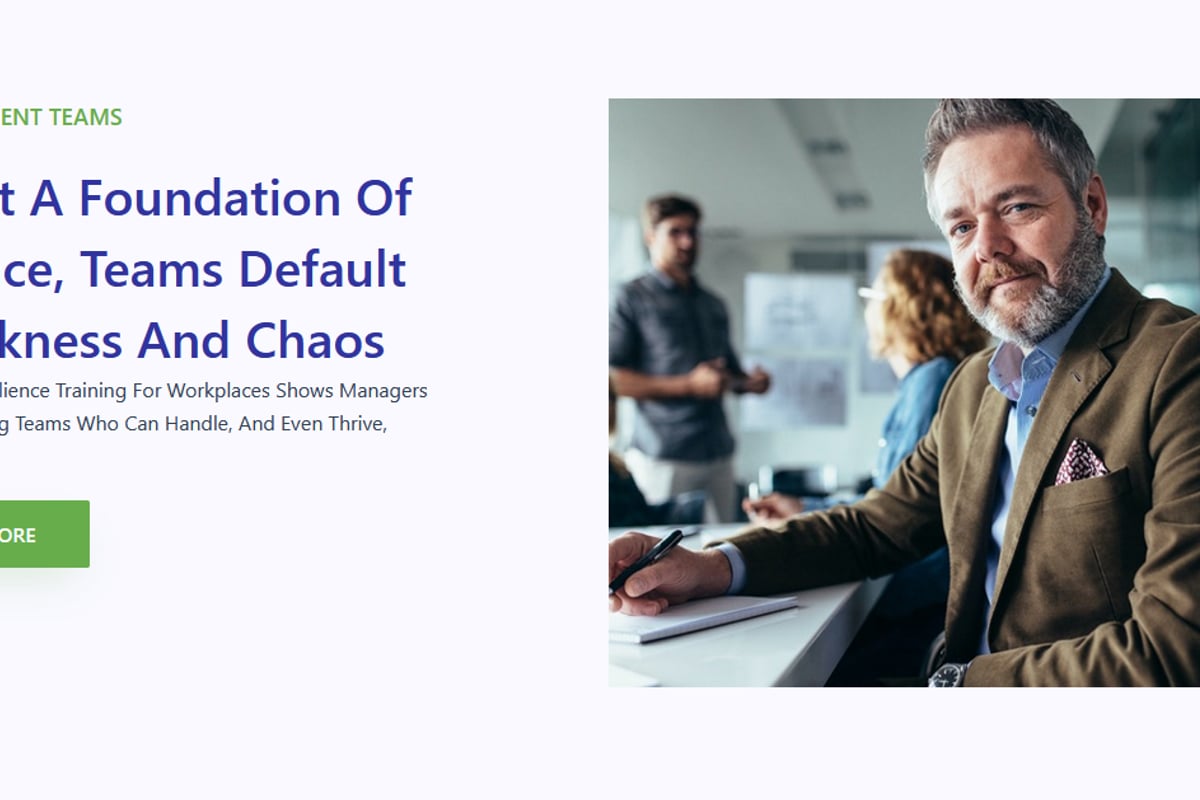
Structured approaches like Building Resilient Teams equip leaders with evidence-based strategies to strengthen team cohesion, prevent burnout, and create cultures where employees thrive under pressure.
Communication Patterns That Build Resilience
Resilient teams establish communication norms that support transparency, collaboration, and rapid problem-solving:
- Regular check-ins that address both task progress and team wellbeing
- Structured feedback processes that separate person from performance
- Clear escalation pathways for addressing concerns before they become crises
- Inclusive decision-making that leverages diverse perspectives and expertise
- Celebration rituals that acknowledge achievements and reinforce positive team identity
These patterns create predictability and trust, reducing the cognitive load teams experience during high-stress periods. When communication channels function reliably, teams can focus energy on solving problems rather than navigating interpersonal dynamics.
Leadership Practices That Foster Organizational Resilience
Leadership behavior fundamentally shapes organizational resilience. Leaders set the tone for how challenges are perceived, communicated, and addressed throughout the organization.
Demonstrating Adaptive Leadership
Resilient leadership requires balancing stability with flexibility. Leaders must provide clear direction while remaining open to new information and willing to adjust course when circumstances change.
Transparent communication during uncertain times reduces anxiety and speculation. Leaders who share what they know, acknowledge what remains uncertain, and outline decision-making processes build trust that sustains teams through difficulty.
Empowering decision-making at appropriate levels distributes cognitive load and develops resilience throughout the organization. When employees have authority to solve problems within their domains, organizations respond more rapidly to challenges.
Modeling resilient behaviors demonstrates that seeking support, acknowledging limitations, and maintaining wellbeing practices are valued organizational behaviors rather than signs of weakness.

Supporting Manager Development
Middle managers occupy a critical position in developing resilience in the workplace. They translate organizational strategy into team action while supporting individual employee wellbeing. Yet managers often receive insufficient training for this complex role.
Organizations should invest in comprehensive manager development that addresses:
- Recognizing signs of employee distress before crisis points are reached
- Conducting supportive conversations about performance and wellbeing
- Accessing appropriate resources for employees experiencing challenges
- Managing their own resilience while supporting team members
- Creating psychologically safe team environments through daily practices
Managers equipped with these capabilities become force multipliers for organizational resilience, creating ripple effects that extend throughout their teams and beyond.
Systemic Approaches to Resilience Development
Individual skills and leadership practices require organizational systems that reinforce and sustain resilient behaviors. Developing resilience in the workplace demands intentional policies, processes, and cultural elements that align with resilience principles.
Policy Frameworks That Enable Resilience
Organizational policies send powerful signals about valued behaviors and acceptable practices:
| Policy Area | Resilience-Supporting Approach | Implementation Example |
|---|---|---|
| Workload Management | Realistic expectations, adequate resources | Capacity planning tools, project prioritization frameworks |
| Flexibility | Autonomy over when and where work occurs | Hybrid work options, flexible scheduling policies |
| Leave and Recovery | Adequate time off, disconnection rights | Minimum vacation requirements, after-hours communication norms |
| Professional Development | Ongoing skill building, career growth | Learning budgets, development planning processes |
| Mental Health Support | Accessible, stigma-free resources | Employee assistance programs, mental health days |
These policies create the structural conditions that allow resilience practices to flourish. Without supportive systems, even well-intentioned individual efforts struggle to gain traction.
Proactive Resilience Training Programs
Rather than waiting for crises to emerge, forward-thinking organizations invest in proactive resilience development. Structured training programs build capabilities before employees need them, creating organizational muscle memory for managing challenges.
Effective programs combine knowledge building with skill practice and ongoing application support. Participants learn the science of resilience while developing practical techniques they can immediately implement. Follow-up sessions, peer support groups, and manager reinforcement help new behaviors stick.
Training should address both general resilience principles and specific challenges relevant to the organization's context. Healthcare workers face different stressors than technology professionals, requiring tailored approaches that acknowledge industry-specific demands.
Measuring and Sustaining Resilience Initiatives
Developing resilience in the workplace requires ongoing measurement, refinement, and reinforcement. Organizations must establish baselines, track progress, and adjust strategies based on evidence of what works within their specific context.
Key Resilience Indicators
Comprehensive resilience measurement combines quantitative metrics with qualitative insights:
Organizational metrics include turnover rates, absenteeism patterns, workers' compensation claims, engagement survey results, and performance indicators. Changes in these measures over time reveal whether resilience initiatives deliver intended outcomes.
Team-level indicators encompass collaboration quality, conflict resolution effectiveness, innovation rates, and collective efficacy assessments. These measures capture how well teams function under normal conditions and during high-pressure periods.
Individual assessments might include validated resilience scales, stress perception measures, skill confidence ratings, and satisfaction with available support. Anonymous aggregated data protects privacy while providing actionable insights.
Creating Sustainable Change
Short-term initiatives rarely produce lasting resilience gains. Sustainable resilience development requires integrating resilience principles into standard operating procedures, performance management systems, and organizational culture.
Organizations sustain momentum by:
- Embedding resilience language in mission statements, values, and strategic plans
- Including resilience competencies in hiring criteria and promotion decisions
- Celebrating resilience stories that illustrate desired behaviors and outcomes
- Providing ongoing learning opportunities rather than one-time training events
- Allocating resources that demonstrate organizational commitment to resilience
Leadership consistency proves particularly important. When senior leaders reference resilience in communications, model resilient behaviors, and hold managers accountable for supporting team wellbeing, resilience becomes woven into organizational DNA.
Addressing Specific Workplace Challenges
Different workplace scenarios require tailored resilience strategies. Understanding how to apply resilience principles across various challenges strengthens organizational preparedness.
Managing Change and Uncertainty
Organizational change represents one of the most significant resilience tests. Mergers, restructuring, technology implementations, and market shifts create sustained uncertainty that challenges even naturally resilient employees.
Resilient change management involves:
- Providing clear rationale for why change is necessary and how it aligns with organizational goals
- Offering multiple information channels to ensure all employees receive consistent messages
- Creating opportunities for input that give employees influence over how change affects their work
- Acknowledging losses associated with change rather than exclusively focusing on future benefits
- Celebrating early wins that demonstrate progress and build confidence
These practices help employees process change psychologically while maintaining engagement and performance throughout transition periods.
Supporting Remote and Hybrid Teams
Distributed work arrangements present unique resilience challenges. Physical distance can reduce social connection, blur work-life boundaries, and create communication gaps that amplify stress.
Organizations support remote team resilience through intentional practices that replicate the informal interactions and social support previously available in physical offices. Regular video check-ins, virtual social events, clear communication protocols, and explicit permission to set boundaries help remote workers maintain wellbeing and connection.
Managers of hybrid teams need particular support in creating equity between in-office and remote employees while preventing proximity bias that could undermine psychological safety.
Navigating Collective Trauma
Some challenges affect entire workforces simultaneously. Economic downturns, public health crises, natural disasters, or workplace tragedies require collective resilience responses that acknowledge shared experience while supporting individual processing.
Organizations demonstrate resilience during collective trauma by acknowledging impact, providing accessible support resources, maintaining operational continuity where possible, and allowing space for grief and recovery. Leaders who authentically acknowledge difficulty while maintaining hope help employees process trauma without becoming overwhelmed.
Professionals supporting trauma-affected populations face additional risks that require specific attention through vicarious trauma training to prevent compassion fatigue and maintain their own wellbeing while serving others.

Integrating Wellbeing and Performance
A persistent misconception positions resilience and performance as competing priorities. In reality, developing resilience in the workplace enhances sustainable performance by preventing burnout, maintaining cognitive function, and enabling consistent execution.
The Performance-Wellbeing Connection
High performance without adequate recovery leads to declining outputs, increased errors, and eventual breakdown. Organizational support for resilience enables employees to sustain high performance over extended periods by incorporating recovery, maintaining energy, and preventing depletion.
Resilient organizations recognize that wellbeing investments produce performance returns. Employees with strong resilience skills manage time more effectively, maintain focus during complex tasks, collaborate more productively, and deliver higher quality work.
Preventing Toxic Resilience
Organizations must avoid expecting employees to simply "be more resilient" in the face of systemic problems, inadequate resources, or unrealistic demands. This toxic resilience narrative places responsibility solely on individuals rather than addressing organizational factors that undermine wellbeing.
Genuine resilience development requires organizations to examine and address root causes of excessive stress. Are workloads sustainable? Do employees have adequate resources? Are expectations realistic? Do policies support healthy work practices?
Resilience training complements rather than replaces organizational responsibility for creating conditions where employees can reasonably succeed and thrive.
Building Resilience Through Professional Development
Continuous learning and skill development strengthen both individual confidence and organizational adaptability. Professional development opportunities signal organizational investment in employee growth while building capabilities that enhance resilience.
Creating Learning Cultures
Organizations committed to developing resilience in the workplace foster environments where learning is expected, supported, and celebrated. Mistakes become opportunities for growth rather than occasions for punishment. Employees receive time and resources for skill development rather than being expected to learn exclusively on their own time.
Learning cultures normalize asking questions, seeking feedback, and acknowledging knowledge gaps. This psychological safety enables employees to develop new capabilities without fear of appearing incompetent.
Leveraging Peer Support Networks
Formal peer support programs create structured opportunities for employees to share experiences, exchange strategies, and provide mutual encouragement. These networks reduce isolation, normalize challenges, and accelerate learning by exposing participants to diverse approaches.
Peer support proves particularly valuable during transitions, following critical incidents, or when navigating shared challenges. The collective wisdom of experienced colleagues often provides more practical, context-specific guidance than generic training materials.
Organizations can facilitate peer networks through mentoring programs, communities of practice, lunch-and-learn sessions, and online platforms that connect employees with similar interests or challenges.
Developing resilience in the workplace requires coordinated efforts across individual skill-building, team dynamics, leadership practices, and organizational systems. Organizations that approach resilience strategically create environments where employees adapt to challenges, maintain wellbeing, and deliver sustained performance. The Workplace Mental Health Institute provides comprehensive training programs and strategic consultation that equip organizations with evidence-based approaches to building workplace resilience, reducing mental health risks, and creating cultures where both people and performance thrive. Workplace Mental Health Institute partners with organizations worldwide to develop practical, measurable resilience capabilities tailored to specific workplace contexts and challenges.

