
The capacity to navigate adversity, manage uncertainty, and maintain performance under pressure has become essential for organizational success. Building resilience at work represents far more than simple stress management. It encompasses a sophisticated set of psychological, behavioral, and organizational capacities that enable individuals and teams to adapt effectively to challenges while maintaining mental health and productivity. Research published in academic studies examining workplace resilience demonstrates that resilient employees experience lower rates of burnout, reduced absenteeism, and superior long-term performance outcomes.
Understanding Workplace Resilience as a Core Competency
Workplace resilience operates as a dynamic capability rather than a fixed personality trait. This distinction holds significant implications for organizations seeking to develop their workforce systematically.
The construct encompasses multiple interrelated dimensions that function together to support adaptive responses to workplace demands. Cognitive flexibility allows individuals to reframe challenges and identify alternative solutions when initial approaches prove ineffective. Emotional regulation enables professionals to manage stress responses without becoming overwhelmed or disengaged. Social connectedness provides essential support networks that buffer against isolation during difficult periods.
The Neurobiology Behind Resilient Responses
Understanding the biological foundations of resilience informs more effective development strategies. When confronted with workplace stressors, the human nervous system activates threat responses that can either facilitate or impair performance depending on their intensity and duration.
Key neurobiological factors include:
- Autonomic nervous system regulation that determines recovery speed following stressful events
- Prefrontal cortex engagement supporting rational decision-making under pressure
- Hippocampal function affecting memory consolidation and learning from challenging experiences
- Neuroplasticity enabling new neural pathways that support adaptive behaviors
Building resilience at work requires interventions that address these biological systems through both behavioral practices and environmental modifications. Organizations that recognize these mechanisms can design programs targeting specific physiological outcomes rather than relying solely on cognitive approaches.
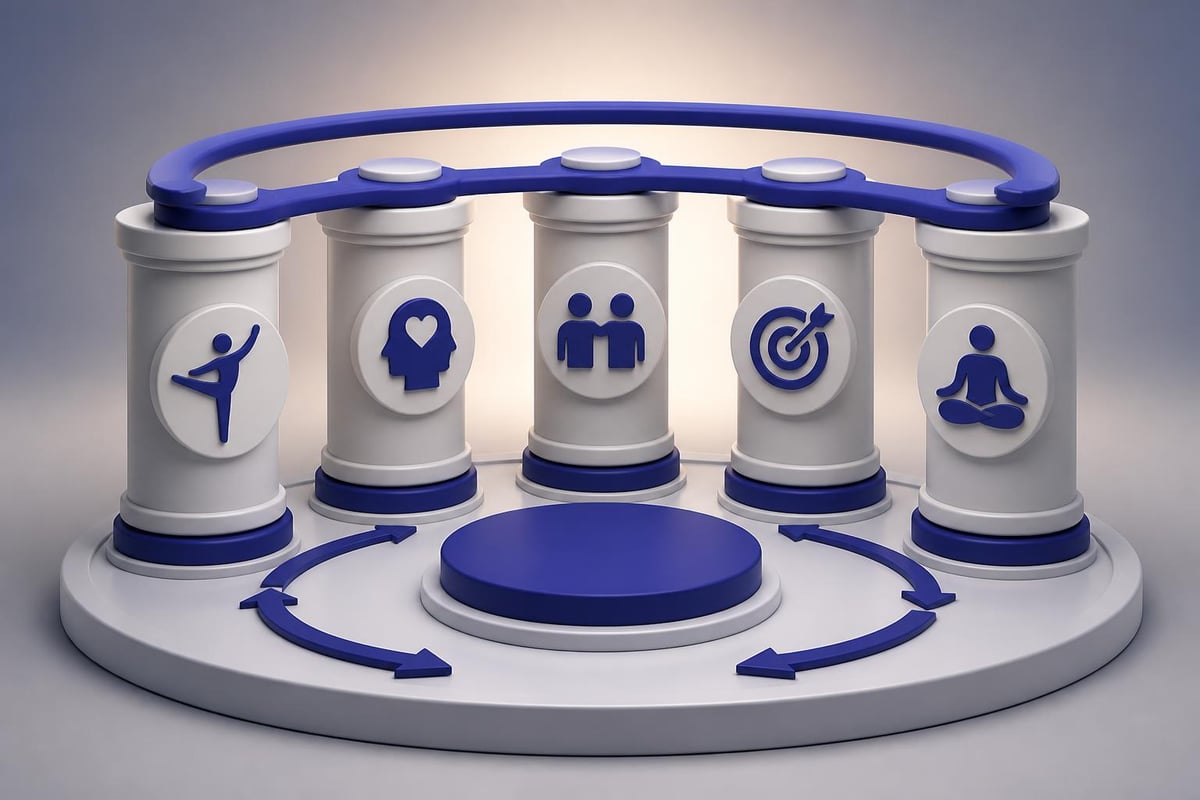
Evidence-Based Strategies for Individual Resilience Development
Individual capacity-building forms the foundation of organizational resilience efforts. Meta-analytic research on resilience training programs reveals that structured interventions produce measurable improvements in employee wellbeing and performance when designed using evidence-based principles.
Cognitive Restructuring Techniques
Cognitive patterns significantly influence how individuals interpret and respond to workplace challenges. Professionals who develop awareness of automatic thought patterns gain greater control over their emotional and behavioral responses.
Effective cognitive restructuring involves identifying distorted thinking patterns such as catastrophizing, overgeneralization, or black-and-white thinking that amplify stress responses. Once recognized, these patterns can be systematically challenged and replaced with more balanced, realistic assessments of situations.
- Monitor internal dialogue during challenging situations to identify recurring negative patterns
- Examine evidence supporting and contradicting automatic negative thoughts
- Generate alternative interpretations that account for complexity and uncertainty
- Practice perspective-taking by considering how others might view the same situation
- Document successful reframing experiences to reinforce new cognitive habits
This structured approach builds psychological flexibility that extends beyond specific stressful events to create lasting changes in how professionals process workplace challenges.
Behavioral Activation and Engagement
While cognitive approaches address thinking patterns, behavioral strategies focus on action-oriented responses that build momentum during difficult periods. Building resilience at work requires maintaining engagement with meaningful activities even when motivation decreases.
| Resilience Practice | Implementation Approach | Expected Outcome |
|---|---|---|
| Values-based goal setting | Identify 3-5 core professional values; align weekly objectives with these values | Increased sense of purpose and direction during uncertainty |
| Micro-recovery routines | Schedule 5-minute breaks every 90 minutes for physical movement or mindfulness | Reduced cumulative stress; improved sustained attention |
| Social connection rituals | Initiate brief check-ins with colleagues; participate in team activities | Enhanced support networks; decreased isolation |
| Skill development challenges | Dedicate time weekly to learning new competencies related to role | Greater confidence; expanded capacity for complex problems |
These behavioral interventions create positive feedback loops where small actions generate reinforcing results that motivate continued engagement.
Manager and Leadership Responsibilities in Building Team Resilience
Leadership approaches profoundly influence the resilience capacity of teams and entire organizations. Resources for supervisors building team resilience emphasize that manager behaviors shape the psychological safety and adaptive capacity of their direct reports.
Creating Psychologically Safe Environments
Psychological safety-the belief that one can speak up, take risks, and make mistakes without facing punishment or humiliation-serves as a prerequisite for resilience development. Teams lacking this foundation struggle to adapt effectively because members withhold information, avoid innovation, and fail to seek help when overwhelmed.
Leaders cultivate psychological safety through consistent behaviors that demonstrate genuine openness to feedback, acknowledgment of uncertainty, and appropriate vulnerability. When managers share their own challenges and learning processes, they normalize struggle as part of professional growth rather than evidence of inadequacy.
Leadership practices that enhance psychological safety:
- Explicitly inviting dissenting opinions during decision-making processes
- Responding constructively to mistakes by focusing on learning rather than blame
- Acknowledging the limits of one's own knowledge and expertise
- Creating formal mechanisms for upward feedback and acting on input received
- Celebrating innovative attempts even when they don't produce desired outcomes
Supporting Recovery and Preventing Cumulative Stress
Managers play a critical role in monitoring team workload and ensuring adequate recovery opportunities. Harvard Business Review’s insights on building resilience highlight that sustained high performance requires deliberate oscillation between periods of effort and recovery.
Leaders who view recovery as productive time rather than wasted capacity achieve superior long-term results. This perspective shift enables managers to design workflows that build sustainability into normal operations rather than treating burnout as an individual failure.
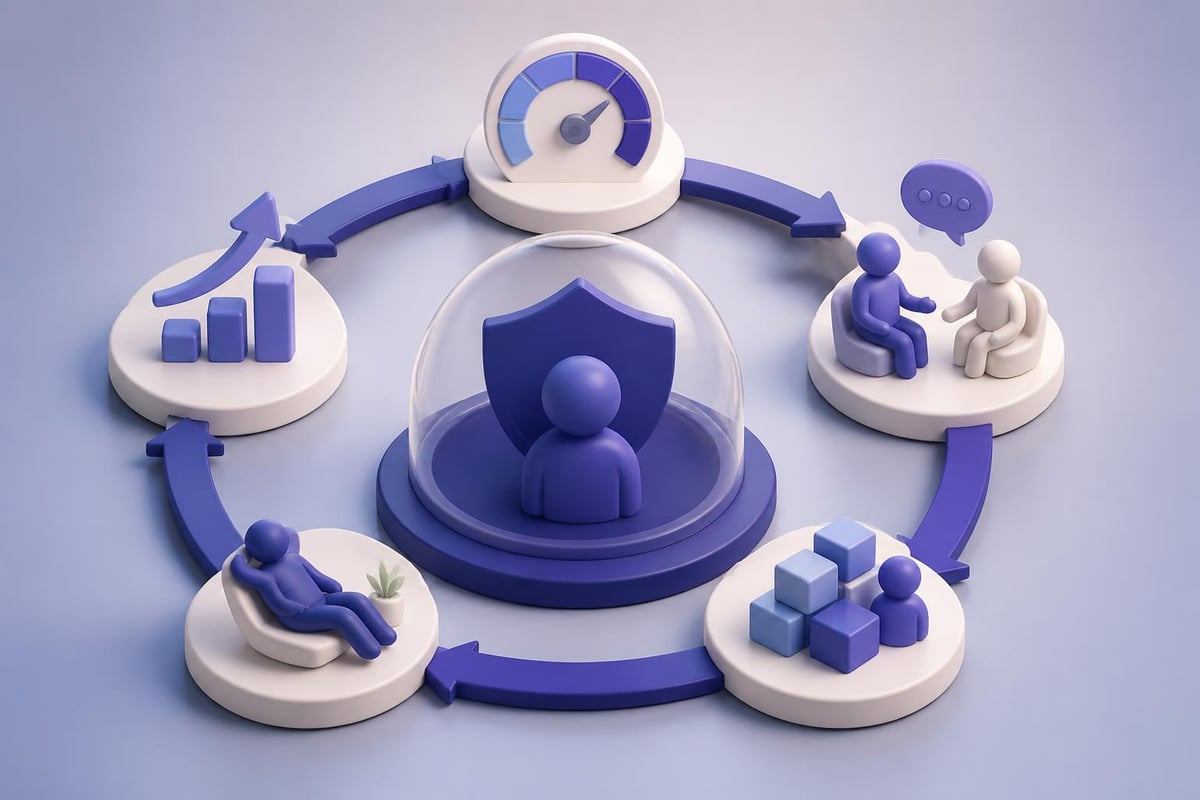
Organizational Systems That Sustain Resilience
Individual and team-level interventions achieve limited impact when organizational structures and policies undermine resilience. Systemic approaches address the environmental factors that either support or erode employee capacity to manage challenges effectively.
Workload Design and Job Control
The combination of high demands and low control represents one of the most reliably documented sources of workplace stress and reduced resilience. Organizations can modify this dynamic through intentional job design that provides employees with appropriate autonomy over how they accomplish objectives.
Effective workload management involves regular capacity assessments that account for both visible tasks and invisible emotional labor. Many organizations underestimate the cognitive and emotional resources required for complex interpersonal work, leading to chronic overload even when technical task lists appear manageable.
- Conduct realistic time-demand audits that include meetings, emails, and coordination activities
- Establish clear prioritization frameworks that help employees make decisions about competing demands
- Create protected time blocks for focused work on complex projects
- Implement collaborative workload monitoring where teams collectively manage capacity
- Regularly eliminate low-value activities rather than continuously adding new initiatives
Trauma-Informed Organizational Practices
Building resilience at work requires acknowledging that many employees navigate current or past trauma that affects their capacity to manage workplace stress. Trauma-informed approaches create environments that minimize retraumatization while supporting healing and growth.
Organizations adopting trauma-informed principles recognize that behavior patterns often interpreted as poor performance or resistance may represent adaptive responses to previous overwhelming experiences. This understanding shifts intervention approaches from punitive to supportive frameworks.
The Workplace Mental Health Institute’s psychological injury resources provide frameworks for organizations seeking to implement trauma-informed practices that protect employee wellbeing while maintaining accountability for results.
Measuring and Monitoring Resilience Capacity
Effective resilience initiatives require assessment strategies that capture meaningful changes in individual and organizational capacity. Measurement approaches should balance quantitative metrics with qualitative insights that reveal the nuanced ways resilience manifests in workplace contexts.
Individual-Level Resilience Indicators
Traditional employee surveys often miss critical dimensions of resilience by focusing exclusively on satisfaction or engagement. Comprehensive assessment examines multiple factors that collectively indicate adaptive capacity.
| Resilience Dimension | Assessment Method | Actionable Data Generated |
|---|---|---|
| Recovery capacity | Daily micro-surveys measuring energy levels before and after work | Identifies patterns of incomplete recovery requiring intervention |
| Cognitive flexibility | Scenario-based assessments presenting ambiguous situations | Reveals how employees process uncertainty and generate solutions |
| Social support quality | Network analysis mapping support relationships and reciprocity | Highlights isolated employees needing connection facilitation |
| Meaning and purpose | Values alignment questionnaires linking work to personal significance | Indicates engagement sustainability and potential retention risks |
These multilevel assessments provide actionable intelligence that enables targeted interventions rather than generic wellness programs.
Team and Organizational Metrics
Beyond individual measures, organizational resilience requires examining collective capacity to absorb disruption and maintain core functions during challenges. SHRM guidance on building long-term resilience emphasizes that sustainable approaches require attention to structural factors affecting entire workforces.
Critical organizational indicators include:
- Time-to-recovery following major disruptions or changes
- Distribution of stress across teams rather than concentration in specific roles
- Knowledge redundancy ensuring critical functions continue during absences
- Innovation rates during challenging periods as evidence of maintained cognitive capacity
- Voluntary turnover patterns revealing whether high performers exit during stress
Organizations that systematically monitor these indicators can identify vulnerabilities before they escalate into crises requiring reactive intervention.

Integration With Broader Wellbeing Strategies
Building resilience at work functions most effectively when integrated with comprehensive workplace mental health approaches rather than implemented as an isolated initiative. Resilience development complements but does not replace other essential supports including mental health literacy, early intervention protocols, and clinical resources.
Connecting Resilience to Prevention and Early Intervention
Organizations sometimes mistakenly position resilience training as sufficient mental health support, potentially creating harmful expectations that employees should simply become tougher rather than receiving appropriate care when needed. Effective approaches clearly distinguish between building adaptive capacity and addressing clinical mental health conditions requiring professional intervention.
Resilience programs should explicitly acknowledge their scope and limitations while connecting participants to additional resources. Training that enhances stress management skills simultaneously increases awareness of when stress exceeds manageable levels and professional support becomes necessary.
The relationship between resilience development and understanding mental ill-health in the workplace creates a comprehensive framework where organizations both strengthen employee capacity and provide appropriate support when challenges overwhelm individual resources.
Aligning Resilience With Strategic Organizational Objectives
Resilience initiatives achieve greater sustainability and resource allocation when clearly connected to business outcomes rather than positioned solely as employee benefits. HBR’s curated resources on resilience demonstrate how resilient workforces drive competitive advantage through superior adaptation, innovation, and sustained performance.
Leaders should articulate explicit connections between resilience capacity and organizational priorities such as customer service quality, innovation rates, project delivery timelines, or safety performance. These connections transform resilience from optional wellness programming to strategic capability development warranting serious investment.
Sustaining Resilience Development Over Time
Initial resilience training produces temporary benefits unless organizations create ongoing systems that reinforce and deepen capacity development. Sustainable approaches embed resilience practices into daily workflows and organizational culture rather than treating them as discrete events.
Creating Communities of Practice
Peer learning communities provide powerful mechanisms for sustaining resilience development beyond formal training programs. These groups enable employees to share challenges, exchange strategies, and provide mutual support that reinforces adaptive approaches.
Effective communities of practice require facilitation structures that maintain focus and psychological safety while allowing organic development of group norms and relationships. Organizations might designate trained facilitators who guide discussions without dominating them, ensuring communities remain employee-driven while benefiting from professional guidance.
Building Resilience Into Performance Management
Traditional performance management systems often inadvertently undermine resilience by rewarding unsustainable work patterns or punishing appropriate boundary-setting. Progressive organizations are redesigning these systems to explicitly value behaviors that support long-term capacity.
Performance conversations might assess how employees manage energy and recovery, seek support when needed, adapt approaches when facing obstacles, and contribute to team resilience. These expanded criteria signal that sustainable high performance matters more than short-term results achieved through harmful practices.
Organizations committed to building resilience at work recognize that sustainable performance requires ongoing attention to the systems, behaviors, and mindsets that enable adaptation and growth. This comprehensive approach positions resilience not as crisis management but as foundational capability supporting excellence across all organizational functions.
Developing genuine resilience capacity requires moving beyond superficial stress management tips toward comprehensive, evidence-based approaches that address individual skills, leadership practices, and organizational systems simultaneously. When organizations commit to this multilevel work, they create environments where employees can navigate inevitable challenges while maintaining wellbeing and performance. Workplace Mental Health Institute provides specialized training and consultation services designed to build lasting resilience capabilities tailored to your organization's specific context and challenges, combining psychological expertise with practical implementation support that drives measurable outcomes.

