Teachers encounter students carrying invisible burdens every day. Childhood adversity, family disruption, community violence, and systemic marginalization shape how young people engage with learning, relationships, and authority. Without understanding these dynamics, even well-intentioned educators can inadvertently retraumatize vulnerable students or misinterpret survival behaviors as defiance. Trauma informed training for teachers addresses this gap by equipping educators with the neurobiological knowledge, relational skills, and practical strategies needed to create psychologically safe learning environments where all students can thrive.
Understanding Trauma’s Impact on Learning and Development
Trauma fundamentally alters brain architecture and stress response systems. When children experience chronic adversity-whether through abuse, neglect, household dysfunction, or exposure to violence-their developing nervous systems adapt to prioritize survival over learning. The prefrontal cortex, responsible for executive functioning, planning, and impulse control, develops more slowly in traumatized children. Meanwhile, the amygdala becomes hyperactive, constantly scanning for threat.
These neurobiological changes manifest in classrooms as difficulty concentrating, heightened emotional reactivity, struggles with peer relationships, and apparent behavioral challenges. A student who seems oppositional may actually be experiencing a trauma response triggered by something in the environment. Understanding this distinction represents the foundation of trauma informed training for teachers.
Recognizing Trauma Responses in Educational Settings
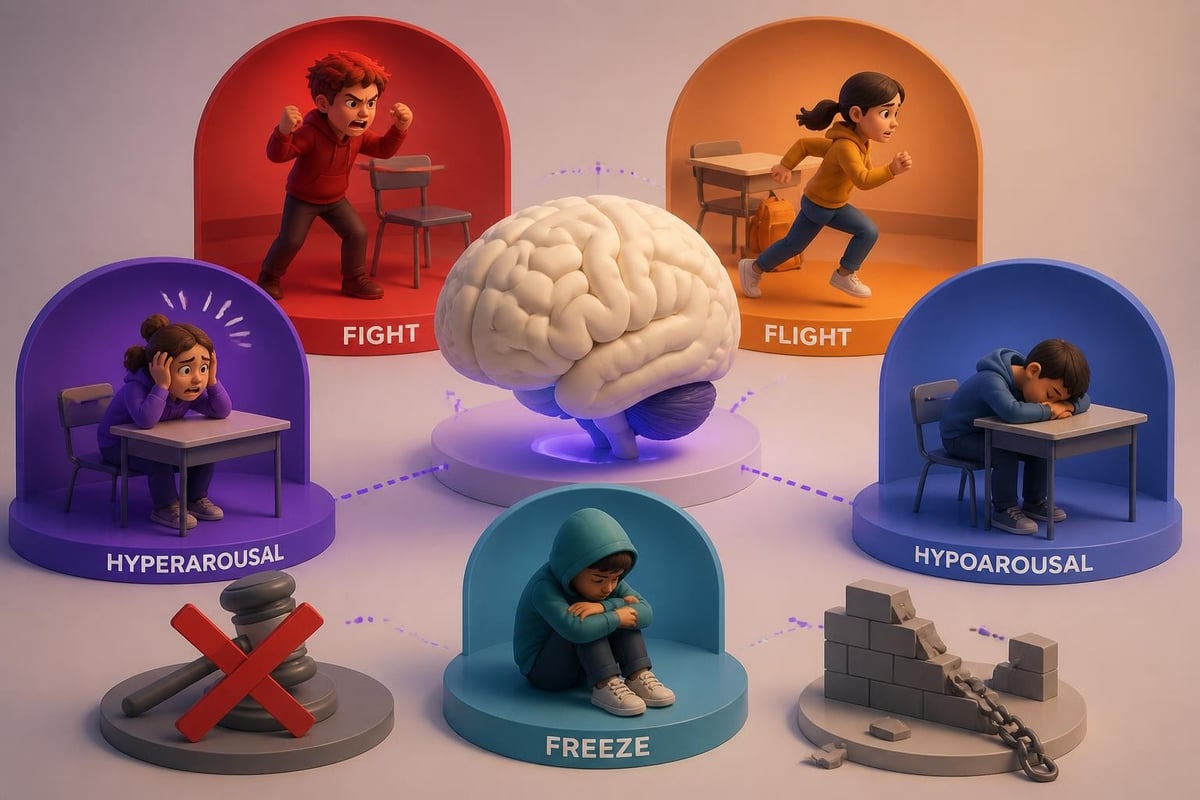
Trauma responses follow predictable patterns that educators must recognize:
- Hyperarousal: Constant vigilance, difficulty sitting still, overreaction to minor incidents
- Hypoarousal: Withdrawal, appearing “checked out,” emotional numbness
- Fight response: Aggression, verbal outbursts, defiance toward authority
- Flight response: School avoidance, frequent bathroom trips, leaving class unexpectedly
- Freeze response: Inability to respond when called upon, appearing stuck or paralyzed
Each response represents an adaptive survival strategy, not willful misbehavior. Trauma-Free World offers foundational training that helps educators distinguish between behavioral choices and neurobiological reactions.
Core Principles of Trauma Informed Educational Practice
Trauma informed training for teachers builds upon six fundamental principles adapted specifically for educational contexts. These principles shift institutional culture from “What’s wrong with you?” to “What happened to you?”
Safety extends beyond physical security to include emotional, social, and cultural safety. Students must feel protected from shame, humiliation, and retraumatization. This requires examining classroom policies, language patterns, and environmental triggers that might activate stress responses.
Trustworthiness and transparency demand consistent, predictable educator behavior. Traumatized students have often experienced broken promises and unreliable adults. Teachers must follow through on commitments, explain decisions clearly, and acknowledge when they make mistakes.
| Principle | Traditional Approach | Trauma Informed Approach |
|---|---|---|
| Discipline | Punishment for rule-breaking | Understanding behavior as communication |
| Authority | Power over students | Collaboration with students |
| Expectations | One-size-fits-all standards | Differentiated, developmentally appropriate |
| Relationships | Professional distance | Warm, consistent connection |
Peer support recognizes that healing happens in relationship. Trauma informed classrooms intentionally cultivate positive peer connections through structured collaboration, conflict resolution skills, and community-building activities.
Collaboration and mutuality flatten traditional power hierarchies. Students participate in decision-making about classroom norms, learning activities, and problem-solving. This shared power helps traumatized students regain a sense of agency.
Empowerment, voice, and choice counteract the powerlessness inherent in traumatic experiences. Even small choices-where to sit, which assignment to complete first, how to demonstrate learning-restore students’ sense of control.
Cultural, Historical, and Gender Considerations
Trauma informed training for teachers must address how marginalization and systemic oppression constitute ongoing traumatic stress for many students. Historical trauma affects entire communities across generations. Racial trauma, immigration-related stress, poverty, and discrimination compound individual adversity.
Effective training examines implicit bias, cultural responsiveness, and how school policies may perpetuate harm for already vulnerable populations. Understanding trauma-informed approaches across different contexts, including digital environments where students spend significant time, provides valuable perspective.
Practical Strategies for Trauma Responsive Classrooms
Trauma informed training for teachers translates theory into actionable classroom practices. These strategies create environments where traumatized students can access learning while developing regulatory capacity.
Regulation Before Education
Dysregulated students cannot learn. The brain’s survival systems override cognitive functioning during stress activation. Teachers must prioritize co-regulation-using their own calm presence to help students return to a regulated state.
Practical regulation strategies include:
- Sensory supports: Flexible seating, fidget tools, calm-down corners with specific sensory inputs
- Movement breaks: Scheduled opportunities for physical activity throughout the day
- Breathing exercises: Simple techniques students can use independently
- Predictable routines: Consistent schedules that reduce uncertainty and anxiety
- Transition warnings: Advance notice before changes to minimize surprises
Teachers learn to recognize early signs of dysregulation and intervene before students reach crisis. This proactive approach prevents escalation and preserves the learning environment for everyone.
Relationship-Based Classroom Management
Connection, not compliance, drives trauma responsive discipline. Students who feel genuinely seen, known, and valued by their teachers demonstrate improved behavior, engagement, and academic performance. This doesn’t mean lowering expectations-it means understanding that meeting expectations requires felt safety and regulatory capacity.

Greeting rituals start each day with individual acknowledgment. A brief check-in allows teachers to gauge students’ emotional states and adjust support accordingly.
Restorative practices replace punitive discipline with accountability and repair. When harm occurs, students engage in conversations about impact, take responsibility, and make amends. This builds social-emotional skills while preserving relationships.
Strength-based language focuses on what students can do rather than deficits. Traumatized children often carry deep shame and negative self-beliefs. Teachers who consistently highlight competencies, effort, and growth help rewire these internal narratives.
Professional Development and Implementation Frameworks
Effective trauma informed training for teachers requires comprehensive professional development, not a single workshop. Sustainable change demands ongoing learning, practice, reflection, and organizational support.
Evidence-Based Training Programs
Several institutions offer rigorous training specifically designed for educators. Oregon State University’s trauma-informed classroom resources provide video-based learning modules covering neurobiology, teacher wellness, and behavior management. The University of St. Thomas delivers specialized training for both K-12 and higher education contexts.
For deeper expertise, Starr Commonwealth’s certification program offers credentials in trauma-informed teaching with specific focus on resilience-building and positive youth development.
School-Wide Implementation Considerations
Individual classroom practice, while valuable, reaches its full potential within trauma informed school systems. Comprehensive implementation includes:
- Administrative commitment: Leadership must allocate resources, adjust policies, and model trauma informed principles
- Universal training: All staff-teachers, administrators, support personnel-need foundational knowledge
- Ongoing consultation: Access to mental health professionals for complex situations
- Data collection: Monitoring discipline referrals, attendance, academic outcomes to assess impact
- Family engagement: Partnering with caregivers using trauma informed communication
Arkansas provides state-level support through TRIS, offering virtual and in-person training tailored to different educational audiences. These comprehensive approaches recognize that sustainable change requires systemic transformation.
| Implementation Level | Key Components | Expected Outcomes |
|---|---|---|
| Individual Teacher | Personal practice, classroom environment | Improved student-teacher relationships, reduced conflicts |
| Grade Level/Department | Consistent expectations, shared strategies | Predictable experience for students, peer support for teachers |
| School-Wide | Policy alignment, universal training | Cultural shift, reduced discipline referrals, improved climate |
| District-Level | Resource allocation, accountability structures | Sustained practice, equitable access across schools |
Teacher Wellness and Secondary Traumatic Stress
Trauma informed training for teachers must address educator wellbeing. Working with traumatized students carries occupational risks, including secondary traumatic stress, compassion fatigue, and burnout. Teachers absorb students’ pain, navigate complex behavioral situations, and often lack adequate support for their own emotional needs.
Recognizing Secondary Traumatic Stress
Secondary traumatic stress mirrors primary trauma symptoms: intrusive thoughts about students’ experiences, emotional numbing, hypervigilance, and sleep disturbance. Without intervention, these symptoms compromise both teacher health and instructional effectiveness.
Warning signs include:
- Persistent preoccupation with particular students’ trauma histories
- Difficulty maintaining professional boundaries
- Increased cynicism or hopelessness about student potential
- Physical symptoms like headaches, digestive issues, or chronic fatigue
- Relationship difficulties outside work
Effective training normalizes these reactions and provides concrete self-care strategies. Just as students need regulation support, teachers require organizational structures that protect their wellbeing.
Sustainable Self-Care Practices
Self-care in trauma-informed education goes beyond bubble baths and individual responsibility. While personal practices matter-adequate sleep, physical activity, supportive relationships-institutional change prevents burnout more effectively than individual coping.
Schools must provide:
- Reasonable caseloads and class sizes that allow meaningful relationships
- Scheduled collaboration time for peer consultation and emotional processing
- Access to professional mental health support without stigma
- Clear boundaries around work hours and communication expectations
- Recognition and validation of the emotional labor involved in trauma-informed teaching
For educators seeking structured support in rebuilding personal patterns and resilience, resources like DoReset offer personalized approaches to habit change and mindset transformation that complement professional development.

Measuring Impact and Continuous Improvement
Trauma informed training for teachers should generate measurable improvements in student outcomes and school climate. Organizations implementing these approaches track multiple indicators to assess effectiveness and guide refinement.
Key Performance Indicators
Academic metrics tell only part of the story. Comprehensive evaluation examines:
- Discipline data: Reduction in office referrals, suspensions, expulsions
- Attendance patterns: Improved daily attendance and decreased chronic absenteeism
- Academic achievement: Growth in grades, test scores, graduation rates
- School climate surveys: Student, teacher, and family perceptions of safety and belonging
- Teacher retention: Reduced staff turnover and increased job satisfaction
California’s Diagnostic Center provides training emphasizing clear expectations and communication strategies, with built-in assessment of how these approaches help students cope with traumatic stress.
Creating Feedback Loops
Continuous improvement requires systematic reflection. Schools establish processes for:
- Regular data review examining disparities across student groups
- Teacher feedback sessions identifying implementation challenges
- Student voice opportunities allowing young people to share their experience
- External consultation bringing fresh perspective and expertise
- Adjustment of practices based on what data reveals
This iterative process ensures trauma informed training for teachers remains responsive, relevant, and effective rather than becoming a static checklist.
Building Organizational Capacity for Trauma Informed Culture
Sustainable trauma informed practice requires more than training individual teachers. Organizations must develop institutional capacity through strategic planning, resource allocation, and cultural transformation.
Leadership plays a critical role in modeling trauma informed principles. Administrators who demonstrate transparency, share power, and prioritize staff wellbeing create conditions where teachers can extend the same to students. Conversely, authoritarian leadership that relies on compliance and punishment undermines trauma informed classroom practice.
Policy alignment ensures that institutional rules support rather than contradict trauma informed values. Zero-tolerance discipline policies, rigid behavioral consequences, and practices that shame or isolate students actively harm traumatized youth. Comprehensive review identifies contradictions and redesigns systems accordingly.
Resource investment demonstrates genuine commitment. Trauma informed practice requires time for planning, collaboration, and professional development. Schools must allocate funding for training, reduce teacher workload to allow relationship-building, and provide mental health support for both students and staff.
Community partnerships extend trauma informed principles beyond school walls. Collaboration with mental health providers, child welfare agencies, community organizations, and families creates comprehensive support networks that address trauma’s root causes while mitigating its effects.
Organizations seeking to develop workplace mental health expertise across their institution can access specialized consultation and training through Workplace Mental Health Institute’s comprehensive programs, which adapt trauma informed principles for various organizational contexts.
Integration with Broader Mental Health Initiatives
Trauma informed training for teachers fits within larger efforts to support student mental health and wellbeing. These approaches complement rather than replace other evidence-based practices like social-emotional learning, positive behavior interventions and supports, and multi-tiered systems of support.
The most effective schools integrate trauma informed principles as an overarching framework that shapes how all other initiatives are implemented. Social-emotional learning curricula become more effective when delivered by teachers who understand trauma’s impact. Behavior intervention plans achieve better outcomes when designed with nervous system regulation in mind.
This integration prevents initiative fatigue and helps educators see connections rather than experiencing each new program as an additional burden. Trauma informed principles provide a coherent philosophy unifying diverse practices.
Mental health literacy among educators continues expanding, with growing recognition that psychological safety and wellbeing are prerequisites for learning. Organizations across sectors are recognizing similar dynamics in workplace contexts, where employees require psychological safety to perform optimally. Australian organizations seeking workplace mental health guidance can access region-specific resources addressing these parallel needs.
Trauma informed training for teachers represents an essential evolution in educational practice, grounding pedagogy in neurobiological reality while centering relationship and compassion. These approaches benefit all students while specifically addressing the needs of those carrying adversity’s burdens. As schools continue recognizing trauma’s pervasive impact, demand for evidence-based professional development will only increase. Workplace Mental Health Institute brings extensive expertise in trauma-informed care training across organizational contexts, offering customized programs that build capacity for psychologically informed practice while supporting staff wellbeing throughout the implementation journey.