
Resilience in the work place has emerged as a fundamental determinant of organizational success and employee wellbeing in contemporary work environments. This psychological capacity enables individuals and teams to navigate adversity, adapt to changing circumstances, and maintain performance under pressure. For HR professionals and organizational leaders, understanding and cultivating resilience represents not merely a wellbeing initiative but a strategic imperative that directly influences productivity, retention, and competitive advantage.
Understanding Workplace Resilience as a Psychological Construct
Resilience in the work place extends beyond simple stress tolerance or positive thinking. It encompasses a complex set of cognitive, emotional, and behavioral capabilities that enable individuals to recover from setbacks, learn from challenges, and emerge stronger from difficult experiences.
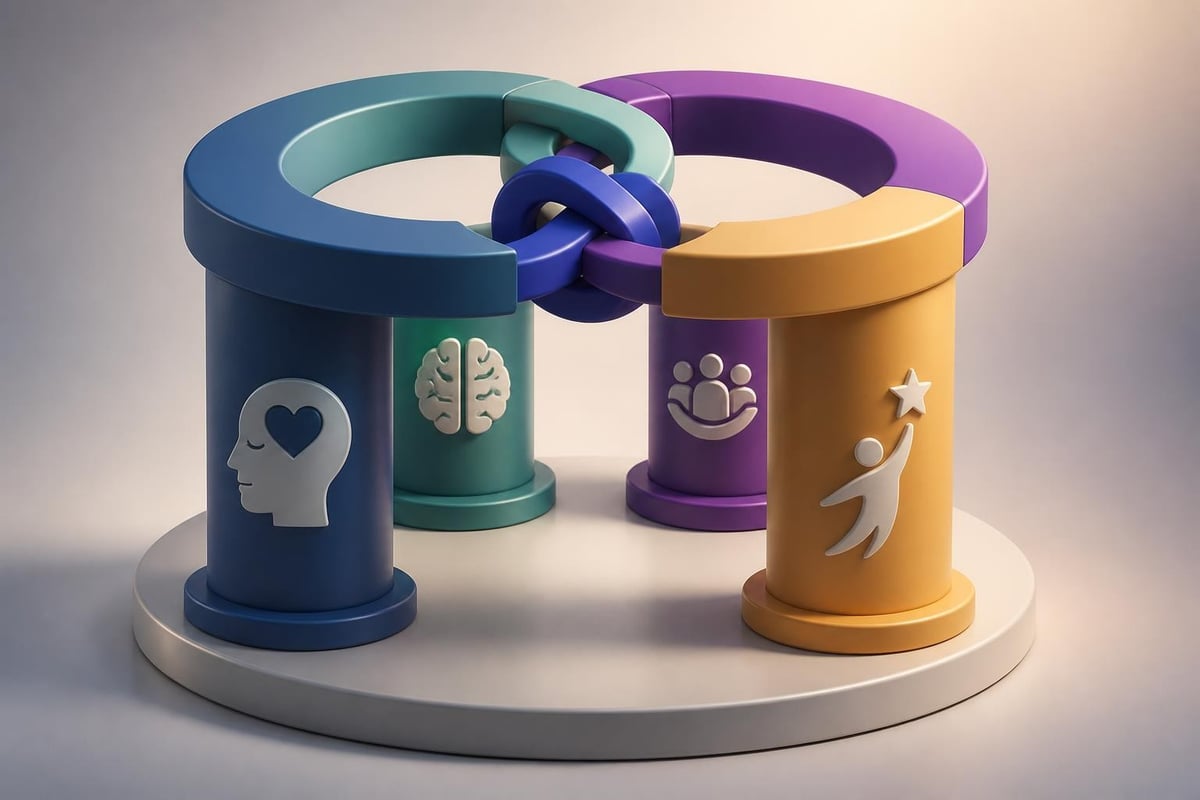
Psychological research identifies several core components:
- Emotional regulation and self-awareness
- Cognitive flexibility and reframing abilities
- Strong interpersonal connections and support networks
- Sense of purpose and meaning in work
- Adaptive coping strategies and problem-solving skills
The concept of workplace resilience encompasses both individual and organizational dimensions. While individual resilience focuses on personal psychological resources, organizational resilience addresses systemic capacity to absorb shocks, adapt to disruption, and maintain operations during crisis periods.
The Neurobiological Basis of Resilience
Understanding resilience requires acknowledging its neurobiological foundations. The brain’s plasticity allows individuals to develop resilience through deliberate practice and environmental support. Stress responses involve the amygdala, prefrontal cortex, and hippocampus, creating either adaptive or maladaptive patterns depending on chronic stress exposure and recovery opportunities.
Organizations that recognize these biological realities create environments supporting recovery, cognitive restoration, and psychological safety. This neurobiological perspective shifts resilience from abstract concept to measurable, trainable capacity with concrete intervention points.
Individual-Level Strategies for Building Resilience
Developing personal resilience requires intentional practice across multiple domains. Evidence-based approaches focus on strengthening psychological resources while building practical skills for navigating workplace challenges.
Cognitive Reframing and Growth Mindset Development
Cognitive reframing represents one of the most powerful tools for building resilience in the work place. This skill involves consciously shifting perspective on challenging situations, identifying opportunities within obstacles, and separating temporary setbacks from permanent failures.
Practical reframing techniques include:
- Identifying automatic negative thoughts and challenging their accuracy
- Distinguishing between controllable and uncontrollable factors
- Extracting learning opportunities from failures and mistakes
- Recognizing temporary challenges as opportunities for skill development
- Maintaining balanced perspective during high-stress periods
Research demonstrates that individuals with growth mindsets consistently demonstrate higher resilience levels, viewing challenges as developmental opportunities rather than threats to competence.
Emotional Intelligence and Self-Regulation
Emotional intelligence serves as a cornerstone of resilience in the work place. The capacity to recognize, understand, and manage emotions directly influences stress response, relationship quality, and decision-making under pressure.
| Emotional Intelligence Component | Resilience Application | Workplace Impact |
|---|---|---|
| Self-awareness | Recognizing stress triggers early | Proactive stress management |
| Self-regulation | Managing emotional reactions | Maintaining composure during crisis |
| Social awareness | Reading team emotional climate | Building supportive relationships |
| Relationship management | Navigating conflict constructively | Strengthening collaboration |
Developing these capabilities requires consistent practice, feedback, and reflection. Organizations supporting emotional intelligence development through training and coaching see measurable improvements in employee resilience and team functioning.
Team and Organizational Resilience Frameworks
While individual capacity matters significantly, resilience in the work place ultimately depends on collective capabilities and organizational systems. High-performing organizations recognize that sustainable resilience requires cultural and structural support.
Creating Psychologically Safe Environments
Psychological safety enables resilience by allowing individuals to take risks, admit mistakes, and seek help without fear of negative consequences. Teams characterized by psychological safety demonstrate superior problem-solving, innovation, and stress recovery.
Leaders cultivate psychological safety through:
- Modeling vulnerability and acknowledging uncertainty
- Responding constructively to mistakes and failures
- Actively soliciting diverse perspectives and concerns
- Rewarding learning and improvement over perfection
- Addressing toxic behaviors that undermine safety
This foundation allows resilience-building initiatives to gain traction, as employees feel secure engaging with challenges rather than concealing difficulties.

Building Connection and Social Support Systems
Strong social connections represent perhaps the most robust predictor of individual resilience. Workplace relationships provide emotional support, practical assistance, diverse perspectives, and meaning during challenging periods.
Organizations can strengthen social infrastructure through deliberate design choices. Cross-functional collaboration opportunities, mentorship programs, peer support networks, and inclusive team practices all contribute to connection density.
The quality of relationships matters more than quantity. Surface-level networking provides limited resilience benefit compared to authentic relationships characterized by trust, reciprocity, and genuine care.
Leadership’s Role in Fostering Resilience
Leaders exert disproportionate influence on organizational resilience through their behaviors, decisions, and the cultures they create. Resilience-focused leadership requires shifting from purely performance-driven approaches to sustainable capacity-building.
Trauma-Informed Leadership Practices
Workplace Mental Health Institute emphasizes trauma-informed approaches that recognize widespread exposure to adversity and its impacts on workplace functioning. Trauma-informed leadership principles directly enhance resilience in the work place by creating conditions for safety, trust, and recovery.
Core trauma-informed principles include:
- Recognizing signs of stress and trauma in team members
- Providing predictability and transparency in decision-making
- Offering choice and autonomy where possible
- Maintaining appropriate boundaries and consistency
- Acknowledging power dynamics and their impacts
These practices reduce re-traumatization while building individual and collective capacity to navigate difficulty.
Adaptive Leadership During Change and Uncertainty
Resilience becomes most critical during periods of significant change, uncertainty, or crisis. Adaptive leadership focuses on guiding teams through ambiguity while maintaining core functioning and psychological wellbeing.
Building resilience at work requires leaders to balance stability with flexibility, providing clear direction while remaining open to emerging information and adaptation. This paradox challenges traditional command-and-control approaches, requiring comfort with uncertainty and distributed decision-making.
Effective adaptive leaders communicate frequently, acknowledge challenges honestly, involve teams in problem-solving, and celebrate progress amid ongoing difficulty. These behaviors model resilience while building collective capacity.
Evidence-Based Training and Development Approaches
Structured training programs significantly enhance resilience in the work place when designed according to evidence-based principles. Effective programs combine knowledge acquisition with skill practice, reflection, and ongoing support.
Core Components of Resilience Training
Research-supported resilience programs address multiple domains rather than focusing on isolated techniques. Comprehensive approaches yield superior outcomes compared to single-focus interventions.
| Training Component | Learning Objectives | Duration |
|---|---|---|
| Stress physiology | Understanding stress responses and recovery needs | 2-3 hours |
| Cognitive strategies | Reframing, problem-solving, decision-making | 4-6 hours |
| Emotional regulation | Identifying and managing emotions effectively | 3-4 hours |
| Relationship skills | Communication, boundary-setting, support-seeking | 3-4 hours |
| Meaning and purpose | Connecting work to values and larger purpose | 2-3 hours |
Training delivery matters as much as content. Interactive formats, practice opportunities, peer learning, and follow-up support sessions enhance skill transfer and application.
Measuring Resilience Development
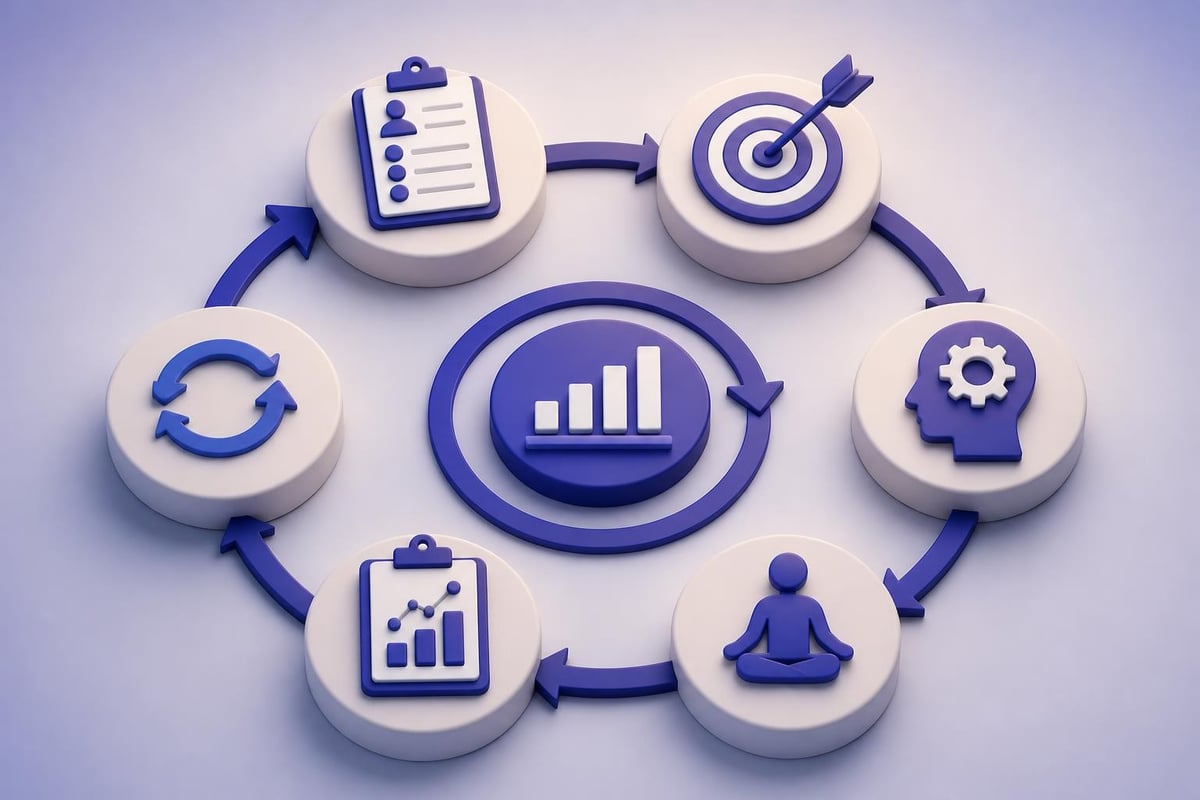
Organizations serious about building resilience in the work place implement measurement systems tracking individual and collective capacity changes over time. Valid assessment tools include standardized resilience scales, stress response inventories, and workplace wellbeing measures.
Effective measurement approaches:
- Establish baseline resilience levels before intervention
- Use validated instruments with demonstrated reliability
- Measure multiple indicators including behaviors and outcomes
- Track both individual and team-level changes
- Assess leading indicators (skills) and lagging indicators (performance, wellbeing)
Data-informed approaches allow organizations to refine programs based on actual impact rather than assumptions.
Sustaining Resilience Through Systems and Culture
Short-term initiatives generate temporary improvements, but sustainable resilience in the work place requires systemic integration into organizational operations, policies, and culture.
Policy and Practice Alignment
Organizations demonstrating genuine commitment to resilience align formal policies with stated values. Disconnection between rhetoric and reality undermines trust and resilience-building efforts.
Critical policy areas include:
- Workload management and realistic performance expectations
- Flexible work arrangements supporting recovery and life integration
- Access to mental health resources and support services
- Professional development opportunities and career pathways
- Recognition systems acknowledging effort and improvement
Research on resilience in the workplace consistently demonstrates that supportive policies create conditions allowing individual resilience strategies to flourish.
Cultural Narratives and Shared Meaning
Organizational culture shapes how employees interpret challenges, setbacks, and stress. Cultures viewing difficulty as opportunity rather than threat enable greater resilience development.
Leaders influence culture through the stories they tell, the behaviors they recognize, and the language they use. Shifting cultural narratives from blame-oriented to learning-focused creates psychological permission for vulnerability, experimentation, and growth.
Organizations with strong resilience cultures normalize struggle, celebrate persistence, and honor recovery needs. These cultural elements become embedded in daily interactions, meeting structures, and informal norms.
Manager Development as Resilience Leverage Point
Frontline managers occupy a critical position in building resilience in the work place. They mediate between organizational demands and employee wellbeing, directly influencing daily experiences that either strengthen or undermine resilience.
Essential Manager Capabilities
Managers supporting team resilience require specific skills beyond traditional performance management competencies. These capabilities center on psychological awareness, supportive communication, and adaptive leadership.
Success magazine highlights that effective managers demonstrate self-awareness about their own stress responses and recovery needs, modeling healthy patterns for team members.
Priority development areas include:
- Recognizing early warning signs of burnout and distress
- Conducting supportive conversations about wellbeing concerns
- Adjusting workload and expectations during high-stress periods
- Connecting team members with appropriate resources
- Creating team norms supporting recovery and boundary-setting
Many organizations fail to equip managers with these capabilities, assuming good intentions suffice. Structured training addressing these specific skills significantly enhances manager effectiveness in fostering resilience.
Manager Self-Care and Sustainability
Managers cannot effectively support team resilience while experiencing chronic stress and depletion themselves. Organizations must prioritize manager wellbeing as foundational to broader resilience efforts.
This requires reducing administrative burden, providing peer support networks for managers, ensuring reasonable span of control, and offering targeted resilience training addressing unique manager challenges.
Manager burnout cascades throughout teams, undermining resilience-building initiatives and creating cynicism about organizational commitment to wellbeing.
Integration with Broader Wellbeing Strategies
Resilience in the work place functions most effectively as one component within comprehensive wellbeing strategies rather than isolated initiative. Integrated approaches address multiple dimensions of wellbeing while recognizing their interconnections.
Workplace wellbeing encompasses physical health, mental health, social connection, financial security, and purpose. Resilience training gains traction when supported by policies and programs addressing these broader determinants.
Organizations pursuing integration conduct wellbeing assessments identifying priority needs, develop coordinated action plans addressing multiple domains, and measure holistic outcomes beyond single-program metrics.
This systems perspective recognizes that resilience cannot be built through training alone when organizational conditions create chronic stress, inequity, or unsafe working conditions. Authentic commitment requires addressing root causes while building individual capacity.
Building sustainable resilience in the work place requires coordinated efforts addressing individual skills, team dynamics, leadership practices, and organizational systems. By implementing evidence-based approaches that balance personal development with cultural and structural support, organizations create environments where employees can navigate challenges effectively while maintaining wellbeing and performance. Workplace Mental Health Institute provides comprehensive training programs, strategic consultation, and practical tools designed to help organizations develop lasting resilience capacity across all levels, transforming workplace mental health from reactive crisis management to proactive strength-building.

